In this article by Al Mohler [president of The Southern Baptist Theological Seminary] he covers how the Hegelian Dialectic [though not identifying it as such] has effectively been used to disarm and deflate the Christians and Conservatives in America [and throughout the world] so that a battle was won without a shot ever being fired.
Thursday • June 3, 2004
After the Ball–Why the Homosexual Movement Has Won
The spectacular success of the homosexual movement stands as one of the most fascinating phenomena of our time. In less than two decades, homosexuality has moved from “the love that dares not speak its name,” to the center of America’s public life. The homosexual agenda has advanced even more quickly than its most ardent proponents had expected, and social change of this magnitude demands some explanation.
A partial explanation of the homosexual movement’s success can be traced to the 1989 publication of After the Ball: How America Will Conquer Its Fear and Hatred of Gays in the 90s. Published with little fanfare, this book became the authoritative public relations manual for the homosexual agenda, and its authors presented the book as a distillation of public relations advice for the homosexual community. A look back at its pages is an occasion for understanding just how successful their plan was.
Authors Marshall Kirk and Hunter Madsen combined psychiatric and public relations expertise in devising their strategy. Kirk, a researcher in neuropsychiatry, and Madsen, a public relations consultant, argued that homosexuals must change their presentation to the heterosexual community if real success was to be made.
Conceiving their book as a “gay manifesto for the 1990s,” the authors called for homosexuals to repackage themselves as mainstream citizens demanding equal treatment, rather than as a promiscuous sexual minority seeking greater opportunity and influence.
Writing just as the AIDS crisis hit its greatest momentum, the authors saw the disease as an opportunity to change the public mind. “As cynical as it may seem, AIDS gives us a chance, however brief, to establish ourselves as a victimized minority legitimately deserving of America’s special protection and care,” they wrote.
Give them credit: they really did understand the operation of the public mind. Kirk and Madsen called for homosexuals to talk incessantly about homosexuality in public. “Open, frank talk makes gayness seem less furtive, alien, and sinful; more above board,” they asserted. “Constant talk builds the impression that public opinion is at least divided on the subject, and that a sizeable bloc–the most modern, up-to-date citizens–accept or even practice homosexuality.”
Nevertheless, not all talk about homosexuality is helpful. “And when we say talk about homosexuality, we mean just that. In the early stages of the campaign, the public should not be shocked and repelled by premature exposure to homosexual behavior itself. Instead, the imagery of sex per se should be downplayed, and the issue of gay rights reduced, as far as possible, to an abstract social question.”
Portraying homosexuals as victims was essential to their strategy. Offering several principles for tactical advance in their cause, the authors called upon homosexuals to “portray gays as victims of circumstance and depression, not as aggressive challengers.” This would be necessary, they argued, because “gays must be portrayed as victims in need of protection so that straights will be inclined by reflex to adopt the role of protector.”
Such a strategy could, they asserted, lead to something like a “conversion” of the public mind on the question of homosexuality. “The purpose of victim imagery is to make straights feel very uncomfortable; that is, to jam with shame the self-righteous pride that would ordinarily accompany and reward their antigay belligerence, and to lay groundwork for the process of conversion by helping straights identify with gays and sympathize with their underdog status.”
Obviously, this would mean marginalizing some members of the homosexual community. Kirk and Madsen were bold to advise a mainstreaming of the homosexual image. “In practical terms, this means that cocky mustachioed leather-men, drag queens, and bull dykes would not appear in gay commercials and other public presentations. Conventional young people, middle-age women, and older folks of all races would be featured, not to mention the parents and straight friends of gays.” Furthermore, “It cannot go without saying, incidentally, that groups on the farthest margins of acceptability, such as NAMBLA [North American Man-Boy Love Association], must play no part at all in such a campaign. Suspected child molesters will never look like victims.”
What about the origin of sexual orientation? The success of the homosexual movement can be largely traced to the very idea of “orientation” itself. More precisely, homosexuals advanced their cause by arguing that they were born that way. Madsen and Kirk offer this as candid public relations advice. “We argue that, for all practical purposes, gays should be considered to have been born gay–even though sexual orientation, for most humans, seems to be the product of a complex interaction between innate predispositions and environmental factors during childhood and early adolescence.” Alas, “To suggest in public that homosexuality might be chosen is to open the can of worms labeled ‘moral choices and sin’ and give the religious intransigents a stick to beat us with. Straights must be taught that it is as natural for some persons to be homosexual as it is for others to be heterosexual: wickedness and seduction have nothing to do with it.”
There can be no doubt that Christianity represents the greatest obstacle to the normalization of homosexual behavior. It cannot be otherwise, because of the clear biblical teachings concerning the inherent sinfulness of homosexuality in all forms, and the normativity of heterosexual marriage. In order to counter this obstacle, Kirk and Madsen advised gays to “use talk to muddy the moral waters, that is, to undercut the rationalizations that ‘justify’ religious bigotry and to jam some of its psychic rewards.” How can this be done? “This entails publicizing support by moderate churches and raising serious theological objections to conservative biblical teachings. It also means exposing the inconsistency and hatred underlying antigay doctrines.”
Conservative churches, defined by the authors as “homohating” are portrayed as “antiquated backwaters, badly out of step with the times and with the latest findings of psychology.”
A quick review of the last 15 years demonstrates the incredible effectiveness of this public relations advice. The agenda set out by Kirk and Madsen led to nothing less than social transformation. By portraying themselves as mainstream Americans seeking nothing but liberty and self-fulfillment, homosexuals redefined the moral equation. Issues of right and wrong were isolated as outdated, repressive, and culturally embarrassing. Instead, the assertion of “rights” became the hallmark of the public relations strategy.
Other principles offered by the authors included making gays look good by identifying strategic historical figures as being hidden homosexuals, and, on the other hand, making “victimizers” look bad in the public eye. Kirk and Madsen suggested isolating conservative Christians by presenting them as “hysterical backwoods preachers, drooling with hate to a degree that looks both comical and deranged.” They offered a concrete example of how this strategy could be used on television and in print. “For example, for several seconds an unctuous beady-eyed Southern preacher is shown pounding the pulpit in rage against ‘those perverted, abominable creatures.’” While his tirade continues over the soundtrack, the picture switches to heart-rending photos of badly beaten persons, or of gays who look decent, harmless, and likeable; and then we cut back to the poisonous face of the preacher. The contrast speaks for itself. The effect is devastating.”
Public relations is now a major part of the American economy, with hundreds of millions of dollars poured into advertising strategies and image enhancement programs. Observers of the public relations world must look back with slack-jawed amazement at the phenomenal success of the approach undertaken by homosexuals over the last two decades. The advice offered by Marshall Kirk and Hunter Madsen is nothing less than a manifesto for moral revolution. A look back at this strategy indicates just how self-consciously the homosexual movement advanced its cause by following this plan.
Those who oppose the normalization of homosexuality have indeed been presented as backwoods, antiquated, and dangerous people, while those advancing the cause are presented as forces for light, progress, and acceptance. Conservative Christians have indeed been presented as proponents of hatred rather than as individuals driven by biblical conviction. The unprecedented success of this public relations strategy helps to explain why America has accepted everything from homosexual characters and plotlines in prime-time entertainment to the lack of outrage in response to same-sex marriage in Massachusetts.
At least we know what we are up against. Biblical Christians must continue to talk about right and wrong even when the larger world dismisses morality as an outdated concept. We must maintain marriage as a non-negotiable norm–a union of a man and a woman–even when the courts redefine marriage by fiat. At the same time, we must take into account the transformation of the American mind that is now so devastatingly evident to all who have eyes to see.
The real tragedy of After the Ball is that the great result of this is not a party, but the complete rejection of the very moral foundations which made this society possible. In order to address the most fundamental problems, we must understand the shape of the American mind. Looking back at After the Ball after fifteen years, it all comes into frightening focus.
Dr. R. Albert Mohler Jr. serves as president of The Southern Baptist Theological Seminary – the flagship school of the Southern Baptist Convention and one of the largest seminaries in the world.
If you own and watch television, you have been subjected to the Dialectic. If you read a newspaper, internet, listen to radio, or have attended government grade schools and institutes of higher learning, [sarc] you have been subjected to the Dialectic. In most large corporations, hirelings are indoctrinated with the Dialectic. In “seeker-friendly” churches and “Purpose Driven” churches, the Dialectic takes precedence over the Gospel of Jesus Christ.
The Hegelian dialectic is the framework for guiding our thoughts and actions into conflicts that lead us to a predetermined solution. If we do not understand how the Hegelian dialectic shapes our perceptions of the world, then we do not know how we are helping to implement the vision. When we remain locked into dialectical thinking, we cannot see out of the box.
Make no mistake about it – the Dialectic is diabolical. And so is its instigator. His methods have NEVER changed, and the progression of sin is always the same.
Belief in a lie
Pride
Rebellion
The evil one still lies today, and people listen to him and turn from the truth.
2 Corinthians 11:3
But I fear, lest by any means, as the serpent beguiled Eve through his subtilty, so your minds should be corrupted from the simplicity that is in Christ.
We never rebel against God unless we first believe a lie. And it is usually a lie about ourselves. Once we believe a lie about ourselves, pride takes over, and rebellion against God and His authority ensue.
“Everybody’s doing it!”
“It feels good to do it!”
“Life is so unfair!”
“I know more than my {parents, boss, teacher, pastor…}!”
“Those values/music/Bibles are so old fashioned!”
“I am more beautiful/attractive than _____!”
“I am more talented than ______!”
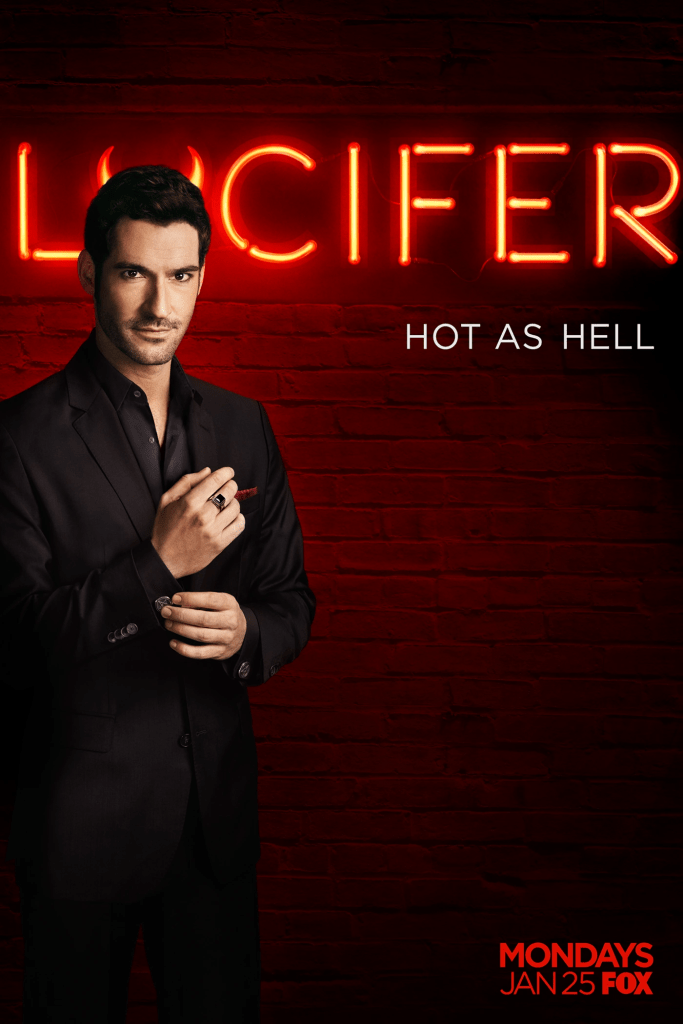
The doctrine of Satan is ridiculed by the world. He is portrayed as wearing a red suit, smelling of brimstone, and even holding a pitchfork! That is not how the Word of God describes him. In 2 Corinthians 11:14, he is called an”angel of light.” And in 4:4, he is called the “god of this world.” Ephesians 2:2 he is the “prince of the power of the air.” Well – this new FOX television series is proof enough of that! And the following linked article should quell any doubts about the true purpose of the FOX networks – including the news branch.
(NaturalNews) The more subtle side of satanism in Hollywood entertainment is now a thing of the past, as primetime television airs blatantly evil shows like the upcoming Fox drama Lucifer, which glorifies the goings about of the “lord of hell” after he fictitiously leaves the lake of fire and retires to Los Angeles.
The premise behind the absurd drama, which is set to release in 2016, centers around so-called “Lucifer Morningstar” and his new life as the owner of Lux, an upscale nightclub located in the City of Angels.
A trailer for the show portrays Lucifer as a handsome, British-accented, well-to-do ladykiller full of charm and wit.
This is the image most people, and especially Roman Catholics, are familiar with. 100% repellent. Sometimes on the cute side, as a “little devil,” other times menacing and hideous.
Through the use of the Dialectic, here is the Satan of today. Attractive, charming, and even – moral. Someone that you might be interested in getting to know. He’s not evil – he’s edgy! What could be more appealing? In the same way Satan has been repackaged for today’s fleshly crowd, so has the Bible, the preachers, and the church of today – Laodicea.
Revelation 3:13-15
13 He that hath an ear, let him hear what the Spirit saith unto the churches.
14 And unto the angel of the church of the Laodiceans write; These things saith the Amen, the faithful and true witness, the beginning of the creation of God;
15 I know thy works, that thou art neither cold nor hot: I would thou wert cold or hot.
16 So then because thou art lukewarm, and neither cold nor hot, I will spue thee out of my mouth.
2 Corinthians 11:13-15
13 For such are false apostles, deceitful workers, transforming themselves into the apostles of Christ.
14 And no marvel; for Satan himself is transformed into an angel of light.
15 Therefore it is no great thing if his ministers also be transformed as the ministers of righteousness; whose end shall be according to their works.
We truly are living in the last days. Do you see where this all leads? First the idea is introduced into popular culture for conditioning of the masses. Does anyone recall the ridiculous “Uncle Arthur” on the 60’s Tv show – “Bewitched?”
He was the penultimate funny “gay guy.” He wore a neck scarf and had homosexual affectations, yet he was appealing because he was so funny. The TV consumer, lets down their guard and the Dialectic has done its job. Now, we are faced with the worst perversions known to mankind being “normalized” into our society. Decades of “funny gay guys” leads to not so funny sodomites parading their sin down the streets of our cities.
I’m not laughing now – are you? I hope you can see how the Dialectic progresses, and how we got to where we are now.
The Laodicean Church in the last half of the 20th century can be defined in one term – New Evangelicalism (or neo-Evangelicalism.) It began within Fundamentalism itself, in the 1940′s, and has proven to be Satan’s strongest weapon in defiling the church – bringing it from the Philadelphia Church Age, 1700-1900, when this country was founded – to a fully lukewarm, weak and ineffectual body.
The term “New Evangelical” was coined by Harold Ockenga, pastor of The Park Street Church in Boston, Massachusetts. In a news release, dated Dec. 8, 1957, Ockenga stated:
The New Evangelicalism has changed its strategy from one of separation to one of infiltration.
Ockenga believed that separation was outdated, and no longer useful in Christianity – despite the Biblical mandate for Christians to avoid being unequally yoked. Like a giant snowball – the movement gained momentum – and doctrine after doctrine was cast aside for what was deemed to be appropriate for the times.
Here you see Evangelical John Hagee in the center, with Mormon Glen Beck on the left, and Patriot David Barton on the right. This performance is done under the auspices of patriotism, but anyone who seriously studies the Bible knows what it is. And we can’t exactly give it a pass under the domain of political expediency, as John Hagee is neither a politician nor a news pundit.
Mixing solid Biblical belief, with cults and liberality equals one very lukewarm church. This tepid soup, has given birth to spiritual poverty, apathy, and utter blindness. The old Jesuit philosophy – “The ends justifies the means” – has brought Romanism right-smack-dab into the middle of the church in the form of “Evangelical ecumenism,” a phrase coined by Billy Graham, wherein he became the “spokesman of the convictions and ideals,” of the New Evangelist. Here is Graham in an interview with Larry King regarding the passing of Pope John Paul II:
KING: You said that he was an Evangelist.
GRAHAM: He was, indeed. He traveled throughout the world to bring his Christian message to the world. And we see tonight the outpouring from the world that he touched. And I think he touched almost everybody in the whole world.
When I see Glen Beck speaking of Joseph Smith, while on stage with Evangelical Sarah Palin during a rally – I point it out to whomever I can. Would you like to know what response I receive? “That’s not so bad. They’re trying to take back this country! You’re being too judgmental!”
The hallmarks of New Evangelicalism:
Liberals and cultists are included in prayer, crusades, committees, and given equal recognition as Christian leaders.
Believes it is appropriate to join forces to reach souls for Christ – “The ends justifies the means.”
Remains in liberal churches and organizations, like a mega or Purpose Driven Church, or the Masonic Lodge. Infiltration is better than separation.
Conforms to the world’s thoughts and preferences.
Questions the authority of Scripture and accommodates evolutionary theory by co-opting it into the Book of Genesis.
And just as Billy Graham received great “puff” press support from William Randolph Hurst in the 40′s and 50′s, so today, does Rick Warren receive the same support from Rupert Murdoch and his powerful news agencies. Living along side and cozying up to evil has served us the same as it served ancient Israel. When they did not eradicate the Canaanites remaining the land – they became just like the nations that were before them. They intermarried, joined in ventures, and worshiped their gods.
We do not need to be “like” the world to “win” the world! Our greatest and only tool is the Word of God. Period. Just as our Savior responded to the devil – every time – with the Word of God.
2 Corinthians 6:14-15
14 Be ye not unequally yoked together with unbelievers: for what fellowship hath righteousness with unrighteousness? and what communion hath light with darkness?
15 And what concord hath Christ with Belial? or what part hath he that believeth with an infidel?
In Proverbs 22:28 the Bible says to “Remove not the ancient landmarks which thy fathers have set.” A landmark is a surveyor’s term and refers to a benchmark or property marker. Today, in most jurisdictions, it is against the law to move or alter a survey landmark.
Christianity has its foundations in an authorizing and governing document. That document is the Bible. Any attorney will understand the critical nature of altering an authorizing and governing document. Because the Bible is in every sense the final and absolute foundation of what we as Christians believe and practice, it only is prudent that we be concerned that the foundation is sure and the benchmark has not been altered.
For almost two millennia the church of Jesus Christ accepted a set of Greek and Hebrew texts that were received by virtually all gospel preaching, Bible believing churches of whatever group. This text was called the Received Text (or Textus Receptus in Latin). Down through the centuries biblical scholars and church leaders had assembled the existing Greek and Hebrew manuscripts of the Bible. From that compilation, the vast majority were in virtual agreement. These formed the basis of the Received Text.
In the year 1611 A.D., King James I of England was influenced to provide a common Bible for the English speaking world. Hence, he authorized a translation of the Bible into English that came to be known as the Authorized Version or as it is more commonly known, the King James Version. King James selected a committee of Greek and Hebrew scholars from the Church of England. These men were “low church” individuals with ties to the Puritans and later the Pilgrims who emigrated to America. They worked from the text of the Greek and Hebrew testaments that had been received” or accepted by virtually all branches of gospel preaching, Bible believing Christians from the apostolic era to that time. Their product, the King James Version of the Bible, has been, until just recently, the universal standard for Bible believing Christians of the English speaking world.
Enter Textual Criticism
Textual criticism is an academic discipline in which scholars study existing Greek and Hebrew biblical manuscripts. Prior to the advent of the moveable type printing press in 1455 by Gutenberg, all copies of the Bible were hand copied by scribes and were called manuscripts. Because they were individually produced by human hands, they were prone to mistakes in manual copying.
Textual critics study the various extant (existing) manuscripts and note any discrepancies that may have occurred between different copies. Then, by comparing them, a majority consensus is established. Should a misspelled word be found, or should a word have been accidentally added or omitted from a given manuscript, the textual critic endeavors to by consensus establish the correct reading.
A major theory of textual criticism is that some later manuscripts were copied from earlier ones, therefore, the earlier manuscripts are presumed to be a more accurate source of the Scriptures. (The presumption is that scribal errors would accumulate in later copies). Hence, textual critics give much more credence to early manuscripts than to later copies even if the later be greater in number.
The problem with this theory is that the early church had great reverence and respect for their “accepted” or “received” manuscripts of the Scriptures. Accordingly, when a given copy of the Scriptures became tattered and worn, it was carefully copied and then burned Hence, there are virtually no copies of me earliest manuscripts used by the churches.
However, there is evidence that certain cults and sects within early Christians followed the opposite practice. They preserved their manuscripts regardless of condition. Therefore, the crucial premise of textual criticism – that the oldest manuscripts are always to be preferred to more recent copies is critically flawed.
Manuscripts Aleph and B
ln the latter half of the 19th century when textual criticism perhaps was at its zenith, two ancient manuscripts were found in the Mediterranean world that would come to revolutionize the work of the textual critics. A manuscript was “found” in a Roman Catholic monastery at the foot of Mt. Sinai in the Sinai desert. It came to be known as Manuscript Aleph and it also was known as Codex Sinaiticus (“codex” being a Latin word for a bound volume).
About the same time another ancient manuscript was “found” in the library of the Vatican. It became known as Manuscript B or Codex Vaticanus. Both of these manuscripts were determined to have come from the 4th century A.D. and are considered the oldest basically complete copies of the New Testament to exist. Hence, they were considered by the textual critics to be the mother lode of ancient Bible manuscripts.
It is noteworthy that both of these manuscripts were “found” in Roman Catholic libraries. (The Roman Catholic Church historically has never given great credence to the Scripture or its teachings). Moreover, the Codex Sinaiticus had been produced by scribes of the Alexandrian sect in early church history. The Alexandrians were a heretical cult similar to the modern Jehovah Witnesses. They held major doctrinal deviations pertaining to the person of Jesus Christ. Notwithstanding the questionable source of Codex Sinaiticus, it became the premiere source for future textual criticism.
Drs. Westcott and Hort
Two British textual critics championed these newly found manuscripts. Their names were Dr. B. F. Westcott and Dr. F. J. A. Hort. They represented a branch of the Church of England which was enamored with the doctrine of the Roman Catholic Church. Westcott and Hort in their writings showed a keen friendliness to Roman Catholic theology, occult spiritism and German Rationalism otherwise known as modernism. They, by no stretch of the imagination, could he considered fundamentalists s the term was later coined and used. Rather, if they lived today, their theology and philosophy (as evidenced by their writings) would be called liberal, humanistic, sacramental and even have occult overtones.
Drs. Hort and Westcott together collated and Text o f the New Testament. The “new” Greek text was in contrast with and in distinction to the text mat had been received by virtually all Bible believing . churches for the preceding 19 centuries. In the last 100 years it has been re-edited by Nestle, Aland and others, and today is generally referred in as the critical text. 11 represents less than 1% of existing manuscripts.
From this critical text and its direct predecessor, the Westcott and Hort Text, virtually all modern translations and versions of the Bible have been translated into English.
WE BELIEVE THAT THE CRITICAL TEXT IS CORRUPT! Not only are its origins and associations suspect, the actual text itself is full of deletions and dilutions of the time honored Scripture received by translations based upon the critical text have diluted reference to the blood of Jesus Christ (e.g. Romans 3:25, Colossians 1:14, Revelation 1:11, Luke 22:20 et al), the Deity of Christ (e g Jude 4, Revelation 1:11). the inspiration of the Scriptures (e.g. 11 Timothy 3:16), and salvation by faith (e.g. John 3:36) to mention a few. Space does not allow us to list the numerous instances of serious dilution or deletions of major doctrinal truth in modern versions, but it is lengthy. There are thousands of textual changes
If a survey benchmark has been moved or altered, all surveying after that point will be distorted. And because the critical text is in our view corrupt. any version of the Bible translated from it is suspect.
Modern Versions
The venerable King James Version of the Bible is not copyrighted. It is considered a public domain publication of the Word of God. However, virtually all modern versions are copyrighted. As any author or publisher knows, a copyright is for protection of commercial rights. It means that no one else may market their Bible without paying the publisher or at the least receiving written permission to do so. Does not the Apostle Peter refer to some in the last days “making merchandise of you” regarding the things of God (II Peter 2:3)?
Moreover, a number of the modem versions (based upon the critical text) have used less than precise methods for translation. Some have used a literary device known as “dynamic equivalence”. This is a fancy term that essentially means some translators have taken the liberty to come up with what they think are modern equivalents for specific words in the manuscript text rather than precisely translating the specific words of the text. In effect, this is a running commentary on the part of the translators, injecting into the translation what they think a given passage means, rather than rendering a precise translation of what the scriptural writers actually wrote. There is nothing wrong with Bible commentaries. However, to insert personal bias under the guise of translation is not only Iess than a faithful rendering of the text, it is deceptive.
In at least one case, a popular version bas bad the honesty to indicate m its subtitle mat it is a paraphrase. Unfortunately, unwary minds often look at such a Bible paraphrase as the Bible nevertheless. Some versions have used vulgar and crude terms m their translations They have seemed oblivious to the unique purity of purpose of the Scripture.
As mentioned above, cardinal New Testament doctrine such as the shed blood of Jesus Christ, the Deity of Christ and the inspiration of Scripture is routinely diluted m recent translations based upon -me critical text. That should give pause for concern!
The Godly Heritage of the KJV
In viewing the distortions, deletions, corruptions, dilutions, changes and questionable associations of the critical text and its resultant modernist translations, we will stick to the venerable King lames Version of the Bible that our forbearers so faithfully used. It is an ancient landmark
Down through the centuries, it has been the Bible used for every major revival to sweep across portions of the English speaking world. It was the Bible of the Pilgrim forefathers of this nation. And. it has been God blessed wherever it bas been used. It is based upon the ancient text which bas been, until just recently, the universally accepted text of the Scriptures from the time of the apostles.
Modern versions have been marketed extensively as being easier to read than the archaic, old fashioned KJV Bible. However, recent computerized document analysis programs have objectively revealed that the King James Version of the Bible is in far easier to read than the NIV or the NASB. The Fleisch-Kincaid research firm has, through computerized analysis, shown that the KJV vocabulary has fewer syllables per word than the NIV or the NASB. Furthermore, the KJV has less complex sentences than the NIV or NASB. In reality, the KJV is easier to read than its modern counterparts in the manner of vocabulary and syntax.
There is undisputed eloquence and beauty in the King James Version. Moreover, the English language was at its zenith in the early 17th century for poetic beauty and eloquence. Interestingly, one of the major criticisms of the King James Version is actually a strength. People unacquainted with proper English complain about the use of “thee” and “thou” etc. in the King James text.
However, as anyone who knows linguistics will attest, many languages have at one time had a common level which was spoken on the street and a higher or formal level that was used in reference to royalty and God. The usage of “thee” and “thou” etc. in old English is a form of higher English that no longer is commonly used. It originally was used in formal situations where deference and respect to nobility, royalty and Deity were appropriate.
Unfortunately, our contemporary American English usage of “you” and “yours” etc. makes no allowance for such deference and brings all of our language back to the lower level. The King James Version respectfully and appropriately refers to God and other notables as “thee” or “thou” in accordance with their due respect. Most modern language translations have diluted that deference.
Dr. Frank Logsdon
Dr. Frank Logsdon was the Co-founder of the New American Standard Bible (NASB). He since has renounced any connection to it.
“I must under God renounce every attachment to the New American Standard Version. I’m afraid I’m in trouble with the Lord . . . We laid the groundwork; I wrote the format; I helped interview some of the translators; I sat with the translator; I wrote the preface . . . I’m in trouble; I can’t refute these arguments; it’s wrong, terribly wrong . . . The deletions are absolutely frightening . . . there are so many . . . Are we so naïve that we do not suspect Satanic deception in all of this?
Upon investigation, I wrote my dear friend, Mr. Lockman, (editor’s note: Mr. Lockman was the benefactor through which the NASB was published) explaining that I was forced to renounce all attachment to the NASV (editor’s note: this is the same as the NASB).
You can say that the Authorized Version (KJV) is absolutely correct. How correct? 100% correct . . .”
Dr. Frank Logsdon
We have determined not to remove the ancient landmark in a matter so crucial as the foundation of our faith . . . the Word of God. And what withal the deletions, dilutions, and questionable origins of the modern versions, we will stick to the King James Version!
(C) Northstar Ministries, 1994 1820 W. Morgan Street Duluth, MN 55811

 Dr. R. Albert Mohler Jr. serves as president of The Southern Baptist Theological Seminary – the flagship school of the Southern Baptist Convention and one of the largest seminaries in the world.




 The Vine Vigil