
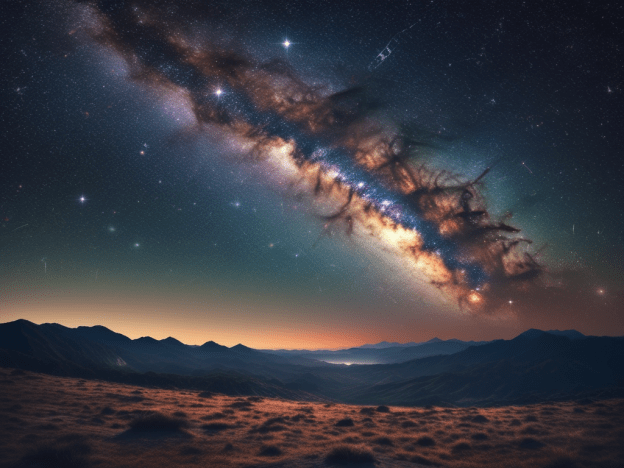
For centuries the understanding of the first day of creation has caused mass confusion. In my first post in this series, I demonstrated that the “light,” created by God that first day was the electromagnetic field – not the sun. As we follow along chronologically, the second day the waters were divided and the firmament installed, the third day the seas and land were separated and vegetation appeared. And here is where day-age theorists run into trouble.
If the plants were created on the third day – how did they photosynthesize for 1,000 years or more until the sun was created on the fourth “day?”
“And God said, Let there be lights in the firmament of the heaven to divide the day from the night; and let them be for signs, and for seasons, and for days, and years; And let them be for lights in the firmament of the heaven to give light upon the earth; and it was so. And God made two great lights; the greater light to rule the day, and the lesser light to rule the night; He made the stars also.
And God set them in the firmament of the heaven to give light upon the earth, And to rule over the day and over the night, and to divide the light from the darkness; And God saw that it was good. And the evening and the morning were the first day. Genesis 1:13-19
Just some quick facts for evolutionists to ponder. If the planets and their 72 known moons evolved from the same materials – should they not share similar characteristics?
- All planets should spin in the same direction, but Venus, Uranus, and Pluto spin backwards.
- All 72 moons in our solar system should orbit their planets in the same fashion, but 8 are known to orbit backwards.
- The orbits of these 72 moons should lie in the equatorial plane of the planet they are orbiting, but there are many that have inclined orbits, including our own moon.
- Our sun is about 98% hydrogen or helium. If Big Bang and planetary evolution are true – the closest planets to the Sun, Earth, Mars, Venus, and Mercury should share the same composition, but they don’t. The four closest planets to the Sun are less than 1% helium or hydrogen.
More from the Bible – “As the host of heaven cannot be numbered, neither the sand of the sea measured: so will I multiply the seed of David My servant, and the Levites that minister unto Me.” Jeremiah 33:22 This was written at a time when only 5,000 stars were visible to the human eye. Since the invention of the telescope in the 17th century, today astronomers estimate there are at least ten thousand billion trillion stars.
God knows how many stars there are – “He telleth the number of the stars; He calleth them all by their names.” Psalm 147:4
Until the 16th century, geocentricity was the widely held belief, but 3,000 years ago it was written in the Word that. . .
4 Their line is gone out through all the earth, and their words to the end of the world. In them hath he set a tabernacle for the sun, 5 Which is as a bridegroom coming out of his chamber, and rejoiceth as a strong man to run a race. 6 His (the sun’s) going forth is from the end of the heaven, and his circuit ( the sun’s) unto the ends of it: and there is nothing hid from the heat thereof. Psalm 19:4-6
Each star is unique –
 The Vine Vigil


