Tag Archives: JESUS SAVES

Friday Proverb – What Do You Trust In?

 The rich man’s wealth is his strong city:


destruction of city

This image applies to both aspects of the Proverb – because within a city or any metropolitan area like that – both the wealthy and the poor live within yards of each other.  Artificial insulation deceives the dwellers into thinking that all is well.  The wealthy thinks his high tower protects him, and the poor thinks the system will protect him.  And it doesn’t only apply to cities – think of the wealthy plantations in the South before the Civil War.  They were micro-complexes of supra-independence.  But many of them were razed and burned to the ground – lock, stock, and barrel.

the destruction of the poor is their poverty.


Do people trust in poverty?  Absolutely!  It is the same assumption that the wealthy make – trusting in the world.  Content to let others care for them – the poor will end in destruction says the Proverb.

Please look at verse 8 above – putting confidence in man – includes yourself!  V. 9 – putting confidence in princes is the same as putting confidence in politicians.
For the Lord’s Day – No One Understands Like Jesus


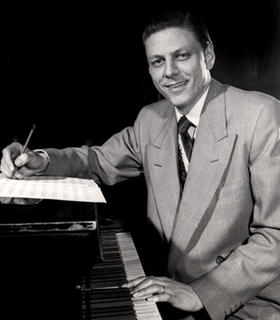
John W. Peterson (November 1, 1921 – September 20, 2006) was a songwriter who had a major influence on evangelical Christian music in the 1950s through the 1970s. He wrote over 1000 songs, and 35 cantatas.

Born in Lindsborg, Kansas, he served as an Army Air Force pilot flying the China Hump during World War II. Later, he attended Moody Bible Institute and served on the radio staff there for a number of years.

In 1953, he graduated from the American Conservatory of Music in Chicago and shortly thereafter settled in Pennsylvania to continue his songwriting career. He then moved to Grand Rapids, Michigan, where for over ten years he was President and Editor-in-Chief of Singspiration, a sacred music publishing company. While there, he compiled and edited a hymnal called “Great Hymns of the Faith”, (c) 1961. He also served on the board of Gospel Films, Inc. of Muskegon, Michigan.

He also had direct contact with popular Christian musicians of the day such as Bill Pearce and Dick Anthony. He resided in Scottsdale, Arizona, where he continued to write music. Peterson died September 20, 2006, aged 84, following a bout with prostate cancer.

Some of his more popular song titles include “It Took a Miracle”, “Over the Sunset Mountains”, “Heaven Came Down”, “So Send I You”, “Springs of Living Water”, “Jesus is Coming Again”, “Surely Goodness and Mercy” and “This is the day that the Lord hath made”. His cantatas include Night of Miracles and Down From His Glory.

In 1986, he was inducted into the Gospel Music Hall of Fame.

–www.wikipedia.org


Hebrews 4:14-16

14 Seeing then that we have a great high priest, that is passed into the heavens, Jesus the Son of God, let us hold fast our profession.

15 For we have not an high priest which cannot be touched with the feeling of our infirmities; but was in all points tempted like as we are, yet without sin.

16 Let us therefore come boldly unto the throne of grace, that we may obtain mercy, and find grace to help in time of need.


For the Lord’s Day – Great Peace Have They

ComposerRogers, James Hotchkiss
First Publication1908
LibrettistThe Bible (Psalm 119: 165,166, 175, 176)
LanguageEnglish
Piece StyleRomantic
InstrumentationSolo voice and Organ

For the Lord’s Day – O For a Thousand Tongues


Charles Wesley 1739

Wesley wrote this hymn to com­mem­o­rate the first an­ni­ver­sa­ry of his con­ver­sion to Christ. This or­i­gin is re­flect­ed in the lyr­ics, “On this glad day the glor­i­ous Sun of Right­eous­ness arose.” The stanza that be­gins “O for a thou­sand tongues to sing” is verse seven of Wes­ley’s orig­in­al po­em. This work first ap­peared in Hymns and Sac­red Po­ems in 1740.

http://cyberhymnal.org/htm/o/f/o/ofor1000.htm

The majestic music for this breathtaking hymn was composed by Carl Glaser, 1828.


Psalm 35:27-28

27 Let them shout for joy, and be glad, that favour my righteous cause: yea, let them say continually, Let the Lord be magnified, which hath pleasure in the prosperity of his servant.

28 And my tongue shall speak of thy righteousness and of thy praise all the day long.

Psalm 119:171-173

171 My lips shall utter praise, when thou hast taught me thy statutes.

172 My tongue shall speak of thy word: for all thy commandments are righteousness.

173 Let thine hand help me; for I have chosen thy precepts.

For the Lord’s Day – Arise, My Soul, Arise


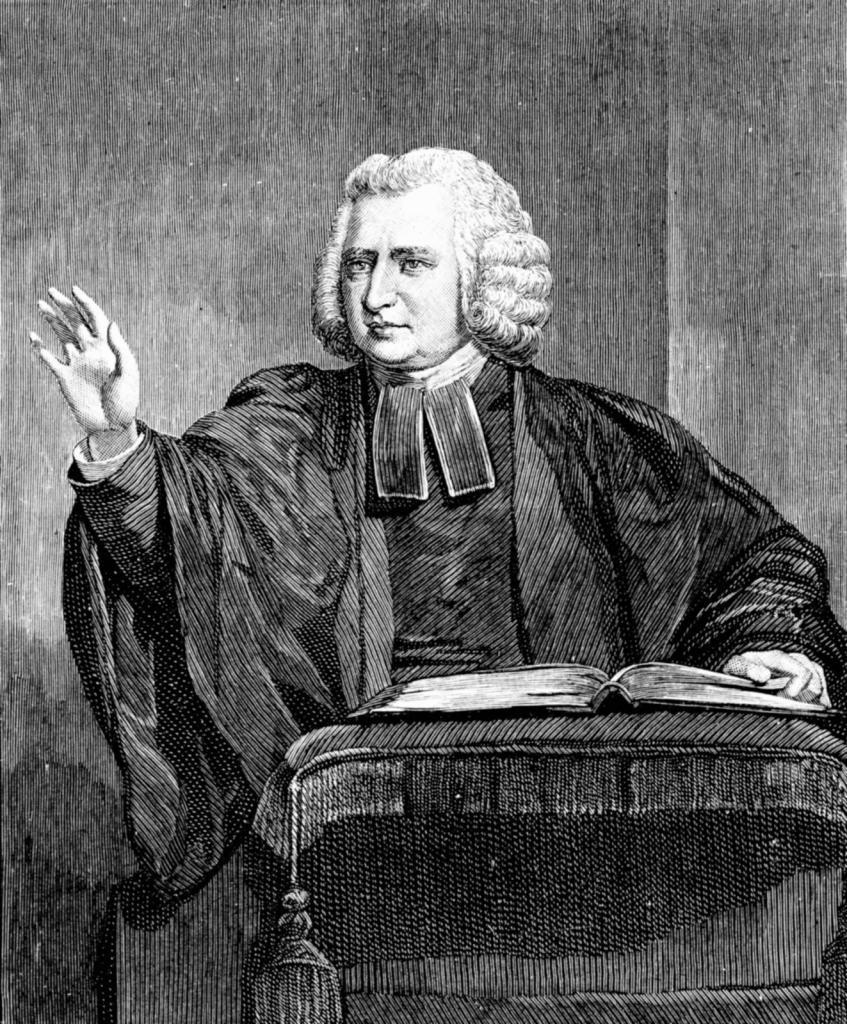
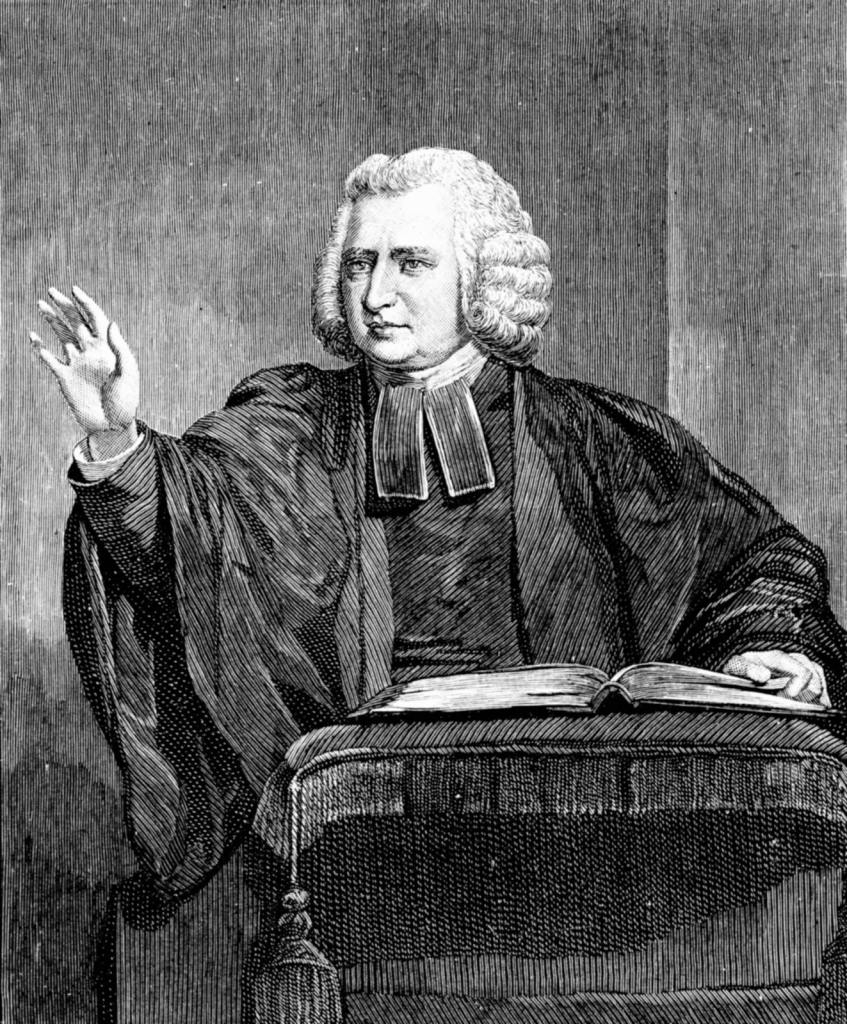
Charles Wesley  1707-1788

Charles Wesley, the son of Samuel Wesley, was born at Epworth, Dec. 18, 1707. He was educated at Westminster School and afterwards at Christ Church, Oxford, where he graduated M.A. In 1735, he took Orders and immediately proceeded with his brother John to Georgia, both being employed as missionaries of the S.P.G. He returned to England in 1736. For many years he engaged with his brother in preaching the Gospel. He died March 29, 1788. To Charles Wesley has been justly assigned the appellation of the “Bard of Methodism.” His prominence in hymn writing may be judged from the fact that in the “Wesleyan Hymn Book,” 623 of the 770 hymns were written by him; and he published more than thirty poetical works, written either by himself alone, or in conjunction with his brother. The number of his separate hymns is at least five thousand.  http://www.hymnary.org/person/Wesley_Charles


Sankey, p. 115

http://cyberhymnal.org/htm/a/r/arisemys.htm


Hebrews 7:24-25

24 But this man, because he continueth ever, hath an unchangeable priesthood.

25 Wherefore he is able also to save them to the uttermost that come unto God by him, seeing he ever liveth to make intercession for them.

For the Lord’s Day – Though Your Sins Be As Scarlet


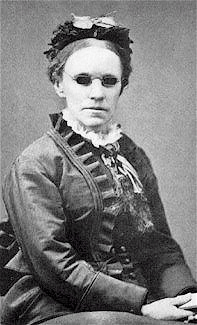
Fanny Crosby 1820-1915

She could compose at any time and did not need to wait for any special inspiration, and her best hymns have come on the spur of the moment. She always composed with an open book in her hand, generally a copy of Golden Hymns, held closely over her eyes, bottom side up. She learned to play on the guitar and piano while at the institution, and has a clear soprano voice. She also received a technical training in music, and for this reason she could, and did, compose airs for some of her hymns. One of these is,
“Jesus, dear, I come to Thee,
Thou hast said I may,”
both words and music of which are wonderfully sweet. “Safe in the arms of Jesus”, probably one of her best known hymns, was her own favorite. Fanny loved her work, and was happy in it. She was always ready either to sympathize or join in a mirthful conversation, as the case may be. The secret of this contentment dates from her first composition at the age of eight years. “It has been the motto of my life,” she says. It is:
“O what a happy soul am I!
Although I cannot see,
I am resolved that in this world
Contented I will be;”

This has continued to be her philosophy. She says that had it not been for her affliction she might not have so good an education, nor so great an influence, and certainly not so fine a memory. She knows a great many portions of the Bible by heart, and had committed to memory the first four books of the Old Testament, and also the four Gospels before she was ten years of age.

http://www.hymnary.org/person/Crosby_Fanny


Isaiah 1:17-19

17 Learn to do well; seek judgment, relieve the oppressed, judge the fatherless, plead for the widow.

18 Come now, and let us reason together, saith the Lord: though your sins be as scarlet, they shall be as white as snow; though they be red like crimson, they shall be as wool.

19 If ye be willing and obedient, ye shall eat the good of the land

church, flag and bible

For the Lord’s Day – Wonderful Peace

Due to the stressfulness of this past week, the Lord put it on my heart to choose this hymn, and post it this evening instead of waiting for tomorrow morning.  Please let this wonderful hymn be a balm to your spirit.


Lyrics – Warren D. Cornell – Alas – no picture is available of brother Warren Cornell.

Born: Ap­ril 25, 1858, White­ford, Mi­chi­gan.

Died: Feb­ru­a­ry 4, 1901, Fond du Lac, Wis­con­sin.

 Cornell & Cooper wrote this song at a camp meeting near West Bend, Wisconsin:

One day while seated in the tent, Mr. Cornell, following a period of deep introspection, wrote down the thoughts with which his mind had been busied. They later proved to be parts of this hymn, Wonderful Peace. Sinking again into introspective rumination, he arose, unwittingly dropped the written verses on the tent floor and went out. When Mr. Cooper entered the tent an hour or two later he discovered the paper. He was fascinated by the theme and the accompanying verses. It so fitted his own thinking that he filled in and completed the poem. Then sitting down at the organ he composed the melody as it has since been sung.

Sanville, p. 58

Music – William Gustin Cooper

Born: July 15, 1861, Evansville, Wisconsin.

Died: October 17, 1938, Canton, Maine.

Buried: Silverbrook Cemetery, Wilmington, Delaware.

Cooper was living in Fond du Lac, Wisconsin (1870); Buchanan, Michigan (1880); and Hortonville Village, Wisconsin (1900). He pastored at the Hortonville Community Baptist Church from September 1, 1897 to April 1, 1901. In May 1922, he became pastor of the Baptist church in Ira, Vermont. His works include:

  • History of the Baptist Church of Ira, Vermont, with Simon Lewis Peck (Rutland, Vermont: Tuttle Company, 1925)
  • Sacred Songs (Canton,  Maine: The Pinewood Press, 1936)

A Biblical understanding of peace begins with the Hebrew expression שָׁלוֹם (shalom), a word as rich in meaning as it is lovely in sound. In English we generally think of “peace” in terms of what it is not–as an absence of conflict, or confusion, or struggle. But shalom is defined positively, as the presence of certain qualities, such as “completeness,” “soundness,” and “wellness” (Brown, 1022). In this sense it was (and still is) used in Hebrew as an all-purpose greeting and farewell (Jewish Encyclopedia). With this in view, it becomes apparent that even when shalom is used in our sense of “peace”–the opposite of war–it is more a state of mind than of situation. One might have shalom even in the midst of all sorts of external stresses and conflicts; it is not dependent on the actions of others.

http://drhamrick.blogspot.com/2013/10/far-away-in-depths-wonderful-peace.html


2 Thessalonians 3:16

 Now the Lord of peace Himself give you peace always by all means. The Lord be with you all.

‘Tis So Sweet to Trust in Jesus


Text: Louisa M. R. Stead, c. 1850-1917
Music: William J. Kirkpatrick, 1838-1921

Trust is one of those marvelous words that can be used in many different ways. As a noun, it refers to the confidence that we have in someone or something. It can also be an account that is entitled to special treatment and special protection. As a verb, it is the act of placing confidence in someone else. Whether it is a thing or an action, though, we often speak of “levels” or “degrees” of trust. Between the best of friends there is great trust. How much do we trust others? How much do they trust us?

This week’s featured hymn was written by Louisa Stead. The story is told that she and her husband were watching their young daughter by the beach. Someone cried out for help. There was a boy in the water. Mr. Stead went to the rescue, but the frightened boy pulled him under the water in a panic. Mrs. Stead and her daughter could only watch from the beach as the boy and her husband drowned.

Stead was a poor woman and she was hardly able to provide for her daughter. One day when it seemed that all of their resources were gone, she found a gift of food and money left on her doorstep. It was on that day that she sat and wrote these words.

http://www.hymnsite.com/lection/ape05.htm


Hebrews 2:9-13

But we see Jesus, who was made a little lower than the angels for the suffering of death, crowned with glory and honour; that he by the grace of God should taste death for every man.

10 For it became him, for whom are all things, and by whom are all things, in bringing many sons unto glory, to make the captain of their salvation perfect through sufferings.

11 For both he that sanctifieth and they who are sanctified are all of one: for which cause he is not ashamed to call them brethren,

12 Saying, I will declare thy name unto my brethren, in the midst of the church will I sing praise unto thee.

13 And again, I will put my trust in him. And again, Behold I and the children which God hath given me.

For the Lord’s Day – Love Divine, All Loves Excelling


Charles Wesley (1707-1788)

In 1961, during the Manchester, England, crusade…just as the meetings were about to start, Billy Graham became quite seriously ill…Billy had been scheduled to speak to the ministers of London just before the crusade opened. You can imagine my feelings when he sent word that I should represent him and speak at that meeting. The British pastors are themselves thorough scholars and often brilliant preachers. And they were expecting to hear Billy Graham, not me!

At the beginning of that meeting in Westminster’s Central Hall, the ministers joined in singing this great hymn of Charles Wesley. Most of these British clergymen were also well acquainted with hymn texts and hymn tunes, and they sang gloriously. Accompanied by the grand piano and the great pipe organ and using the Welsh tune “Blaenwern,” these familiar words lifted our hearts in praise and prayer to God. I felt God’s strength evident through the singing; He blessed our meeting together despite my fears and their disappointment.

Barrows, p. 21

http://www.hymntime.com/tch/htm/l/d/a/ldalexcl.htm


1 John 4:7-9

Beloved, let us love one another: for love is of God; and every one that loveth is born of God, and knoweth God.

He that loveth not knoweth not God; for God is love.

In this was manifested the love of God toward us, because that God sent His only begotten Son into the world, that we might live through Him.

For the Lord’s Day – Open My Eyes, That I May See


Clara H. Scott (December 3, 1841 – June 21, 1897) was an American composerhymnwriter and publisher.[1] She was the first woman to publish a volume of anthems, the Royal Anthem Book, in 1882.[2] Scott was also well known for her hymn, Open My Eyes, That I May See, written in 1895.[3] The hymn was inspired by Psalm 119, verse 18.[4] She died in 1897 after being thrown from her carriage by a spooked horse.    http://en.wikipedia.org/wiki/Clara_H._Scott


Psalm 119:18

For the Lord’s Day – Like a River Glorious


Frances Ridley Havergal

Frances Ridley Havergal was an English religious poet and hymn writer. Take My Life and Let it Be and Thy Life for Me are two of her best known hymns. She also wrote hymn melodies, religious tracts, and works for children. Wikipedia

Born: December 14, 1836, Astley, United Kingdom

Died: June 3, 1879, Caswell Bay, Bishopston, United Kingdom

When Frances Havergal was vacationing in the south of Wales, 1876, she caught a severe cold, accompanied by inflammation of the lungs. Hearing how ill she was, and that she might die, she replied, “If I am really going, it is too good to be true.” Her friends were amazed at how peacefully she received this information. She did survive that illness, and later that year she wrote the hymn “Like a River Glorious” in which she pointed to the source of her perfect peace: “Stayed upon Jehovah, hearts are fully blessed, finding, as He promised, perfect peace and rest.”

Miss Havergal, a devout Bible scholar, echoed Isaiah in “Like a River Glorious” in which God promises “peace like a river.” She also incorporated Isaiah 26:3, which states “You will keep him in perfect peace, whose mind is stayed on You, because he trusts in You.” “Like a River Glorious” paints the picture of this peace.

Miss Havergal wrote to another hymn writer who had also written about peace. In her letter, Miss Havergal quoted Romans 5:1 “We have peace with God,” adding “It is yours already, purchased for you, made for you, sealed for you, pledged to you – by the word of the Father and the precious blood of Jesus.”

The hymn was first published in its present form with the name “Perfect Peace,” in Hymns of Consecration and Faith, 1876.”  https://songsandhymns.org/hymns/detail/like-a-river-glorious


Philippians 4:6-8

Be careful for nothing; but in every thing by prayer and supplication with thanksgiving let your requests be made known unto God.

And the peace of God, which passeth all understanding, shall keep your hearts and minds through Christ Jesus.

Finally, brethren, whatsoever things are true, whatsoever things are honest, whatsoever things are just, whatsoever things are pure, whatsoever things are lovely, whatsoever things are of good report; if there be any virtue, and if there be any praise, think on these things.

For the Lord’s Day – Jesus, The Very Thought of Thee


“Down through the ages many great hymns have been written. Many of them have survived the centuries and decades and still minister to people today. This week’s choice comes from the height of the Middle Ages, the period of history often called “The Dark Ages.” The spiritual and moral darkness of the church had reached a new blackness. The institution founded by Christ some 1,000 years prior was mainly degenerate and corrupt. The moral standards of many of its prominent leaders were characterized by disgrace and shame. Yet within this system of religious confusion, God laid it upon the heart of a dedicated monk, Bernard of Clairvaux (1091- 1153) to write a devotional poem about his Lord. At an early age Bernard was known for his piety and scholarship. With his natural charms and talents, he had many opportunities open to him for a successful secular life. While still in his early 20s, however, he chose the life of a monk at the monastery of Citeaux, France. Within three years Bernard’s forceful personality, talents, and leadership qualities were recognized, and he was asked to form other branches of this order throughout Europe. Within Bernard’s lifetime, 162 other such orders were founded. One of these new monasteries was at Clairvaux, France, where Bernard was made its abbot. He remained there until his death in 1153. The English Translation of this hymn is attributed to Edward Caswall, (1814–1876). Meditate upon these great words this week which call us to love and worship Jesus, our hope and our only joy. Does the very thought of Him fill you with sweetness?”

http://barryshymns.blogspot.com/2010/09/jesus-very-thought-of-thee.html


Revelation 22:15-17

15 For without are dogs, and sorcerers, and whoremongers, and murderers, and idolaters, and whosoever loveth and maketh a lie.

16 I Jesus have sent mine angel to testify unto you these things in the churches. I am the root and the offspring of David, and the bright and morning star.

17 And the Spirit and the bride say, Come. And let him that heareth say, Come. And let him that is athirst come. And whosoever will, let him take the water of life freely.

For the Lord’s Day – Tell Me The Story Of Jesus


crosby_fj_1872

SONG WRITER: Fanny Crosby
MUSIC WRITER: John R. Sweney
WHEN WRITTEN: 1880

Blindness never produced self-pity in Fanny and she did not look on her blindness as a terrible thing. At eight years old she composed this little verse:

Oh, what a happy child I am, although I cannot see!
I am resolved that in this world contented I will be!
How many blessings I enjoy that other people don’t!
So weep or sigh because I’m blind, I cannot – nor I won’t.

http://www.eaec.org/faithhallfame/fanny_crosby.htm


Acts 8:35

 Then Philip opened his mouth, and began at the same Scripture, and preached unto him Jesus.

For the Lord’s Day – All For Jesus


Short Name:Mary D. James
Full Name:James, Mary D. (Mary Dagworthy), 1810-1883
Birth Year:1810
Death Year:1883

Born: August 10, 1810, Trenton, New Jersey.
Died: October 4, 1883, New York City.
Buried: Mercer Cemetery, Trenton, New Jersey.

When she was 13 years old, James began teaching Sunday school in the Methodist Episcopal church. She became a prominent figure in the Wesleyan Holiness movement, assisting Phoebe Palmer, and often leading meetings at Ocean Grove, New Jersey, and elsewhere. She wrote about 50 hymns, and articles by her appeared in the Guide to Holiness, the New York Christian AdvocateThe ContributorThe Christian WitnessThe Christian WomanThe Christian Standard, and the Ocean Grove Record. Her works include:

The Soul Winner: A Sketch of Life and Fact and Incidents in the Life and Labors of Edmund J. Yard, 1883

http://www.hymnary.org/person/James_MD


For the Lord’s Day – There is a Balm in Gilead


Question: “What is the balm of Gilead?”

Answer: A balm is an aromatic, medicinal substance derived from plants. Gilead was an area east of the Jordan River, well known for its spices and ointments. The “balm of Gilead” was, therefore, a high-quality ointment with healing properties. The balm was made from resin taken from a flowering plant in the Middle East, although the exact species is unknown. It was also called the “balsam of Mecca.” Myrrh is taken from a similar plant—Commiphora myrrha.The Bible uses the term “balm of Gilead” metaphorically as an example of something with healing or soothing powers.

“Balm of Gilead” has three references in the Bible. In Genesis 37:25, as Joseph’s brothers contemplated how to kill him, a caravan of Ishmaelites passed by on their way to Egypt from Gilead. In their cargo were “spices, balm, and myrrh.” Jeremiah 8 records God’s warning to Judah of what Babylon would do to them. Upon hearing the news, Jeremiah laments, “Is there no balm in Gilead?” (verse 22). His question is a poetic search for hope—a plea for healing. Then, in Jeremiah 46:11, as God describes an impending judgment on Egypt, He taunts them: “Go up to Gilead and obtain balm, O virgin daughter of Egypt! In vain have you multiplied remedies; there is no healing for you!”

These scriptural references to the balm of Gilead have inspired many literary and cultural allusions, including references in “The Raven” by Edgar Allen Poe and movies such as The Spitfire Grill. Notably, “There Is a Balm in Gilead” is an African-American spiritual that compares the healing balm to the saving power of Jesus—the one true treatment that never fails to heal our spiritual wounds.

Read more: http://www.gotquestions.org/balm-of-Gilead.html#ixzz3PmXqTrst


Galatians 3:27-29

27 For as many of you as have been baptized into Christ have put on Christ.

28 There is neither Jew nor Greek, there is neither bond nor free, there is neither male nor female: for ye are all one in Christ Jesus.

29 And if ye be Christ’s, then are ye Abraham’s seed, and heirs according to the promise.

For the Lord’s Day – Precious Lord, Take My Hand

Words: Thomas A. Dorsey, 1932. Dorsey wrote this song in Chicago, Illinois, after his wife Nettie died while giving birth to a child (who also died shortly thereafter). Dorsey sang the song for his friend, Gospel singer Theodore Frye, and Frye’s choir sang it the next Sunday at the Ebenezer Baptist Church.

http://www.hymntime.com/tch/htm/p/l/t/pltmhand.htm


2 Corinthians 1:3-7

Blessed be God, even the Father of our Lord Jesus Christ, the Father of mercies, and the God of all comfort;

Who comforteth us in all our tribulation, that we may be able to comfort them which are in any trouble, by the comfort wherewith we ourselves are comforted of God.

For as the sufferings of Christ abound in us, so our consolation also aboundeth by Christ.

And whether we be afflicted, it is for your consolation and salvation, which is effectual in the enduring of the same sufferings which we also suffer: or whether we be comforted, it is for your consolation and salvation.

And our hope of you is stedfast, knowing, that as ye are partakers of the sufferings, so shall ye be also of the consolation.

For the Lord’s Day – Our Great Savior


John Wilbur Chapman (June 17, 1859, Richmond, Indiana – December 25, 1918, New York, New York) was a Presbyterian evangelist in the late 19th Century, generally traveling with gospel singer Charles Alexander. His parents were Alexander H. and Lorinda (McWhinney) Chapman.

Chapman grew up attending Quaker Day School and Methodist Sunday School. At age 17, he made a public declaration of his Christian faith and joined the Richmond Presbyterian Church. He received his Bachelor of Arts degree from Lake Forest College and his seminary degree from Lane Theological Seminary in Cincinnati, Ohio. He completed his ordination into the ministry 13 April 1881, while still attending Lane. He was later awarded a Doctorate in Divinity from the College of Wooster and an LL.D. from Heidelberg University.

In May 1882, Chapman married Irene Steddon. In April 1886, she bore him a daughter, Bertha Irene Chapman. Irene Steddon Chapman died in May 1886. Chapman remarried on November 4, 1888 to Agnes Pruyn Strain; they had four children: Robert (who died in infancy), John Wilbur, Jr., Alexander Hamilton, and Agnes Pruyn. His second wife died on June 25, 1907 and Chapman married a third and final time on August 30, 1910 to Mabel Cornelia Moulton.

Chapman took on several pastorates before shifting to the evangelistic circuit. He began preaching with the legendary D. L. Moody in 1893, as well as leading many evangelistic events of his own. Among Chapman’s disciples on the evangelistic circuit was Billy Sunday.

In 1905, John H. Converse, a wealthy Presbyterian philanthropist, offered to underwrite Chapman’s expenses if he would re-enter the evangelistic field full-time. Converse also set up a trust fund so as to finance Chapman’s crusades posthumously. Chapman accepted the offer and in 1907, joined forces with popular gospel singer Charles McCallon Alexander to launch the “Chapman-Alexander Simultaneous Campaign.”

The duo assembled an impressive team of evangelists and song leaders and took to the streets. The first joint campaign was held in Philadelphia from March 12 to April 19, 1908. They partitioned the city into 42 sections covered by 21 evangelist-musicians teams. They spent three weeks on each half of the city, resulting in approximately 8000 conversions. It was at a similar Chapman-Alexander event in North Carolina that the legendary King James Only proponent, David Otis Fuller, committed to the Christian faith.

In 1909, Chapman demanded that any field evangelist who doubted the inerrancy of Scripture be removed from ministry. Chapman’s biography reports, “The first Chapman-Alexander worldwide campaign left Vancouver, British Columbia on March 26, 1909, and returned on November 26, 1909.

Read more about John Wilbur Chapman here:

http://www.hymnary.org/person/Chapman_JW


Titus 2:13-14

13 Looking for that blessed hope, and the glorious appearing of the great God and our Saviour Jesus Christ;

14  Who gave Himself for us, that He might redeem us from all iniquity, and purify unto Himself a peculiar people, zealous of good works.

For the Lord’s Day – My Faith Looks Up to Thee


Words: Ray Pal­mer, 1830.

Ray Palmer wrote these lyr­ics up­on re­ceiv­ing a vi­sion of Christ short­ly af­ter his grad­u­a­tion from Yale Un­i­ver­si­ty, while work­ing as a tu­tor at a New York school. How­ev­er, he kept them to him­self un­til meet­ing Low­ell Ma­son on a street in Bos­ton, Mas­sac­hu­setts. When Ma­son asked him to write some­thing for a new hymn­al, Palm­er dug out his old notes and pro­duced these lyr­ics, writ­ten two years ear­li­er. Af­ter tak­ing the lyr­ics home and read­ing them, Ma­son com­posed this tune. Sev­er­al days lat­er he saw Palm­er again and said:

An interesting story con­nect­ed with this hymn:

Mrs. Lay­yah Bar­a­kat, a na­tive of Syr­ia, was ed­u­cat­ed in Bei­rut and then taught for a time in Egypt. Driv­en out in 1882 by the in­sur­rect­ion of Ara­bi Pa­sha, she, with her hus­band and child, came to Amer­i­ca by way of Mal­ta and Mar­seilles. Her his­to­ry is a strange il­lus­tra­tion of God’s pro­vi­den­tial care, as they were with­out any di­rect­ion or friends in Phil­a­del­phia when they land­ed. But the Lord took them into His own keep­ing, and brought them to those who had known of her in Syr­ia. While in this coun­try she fre­quent­ly ad­dressed large au­di­enc­es, to whom her deep ear­nest­ness and brok­en but pi­quant Eng­lish proved un­u­su­al­ly at­tract­ive. Among other in­ci­dents she re­lat­ed that she had been per­mit­ted to see the con­ver­sion of her whole fam­i­ly, who were Mar­o­nites of Mount Le­ba­non. Her mother, six­ty-two years of age, had been taught ‘My Faith Looks Up to Thee’ in Ar­a­bic. They would sit on the house roof and re­peat it to­ge­ther; and when the news came back to Syr­ia that the daugh­ter was safe in Amer­i­ca, the mo­ther could send her no bet­ter proof of her faith and love than in the beau­ti­ful words of this hymn, as­sur­ing her that her faith still looked up to Christ.

Sutherland, pp. 77-9

http://cyberhymnal.org/htm/m/y/myfluptt.htm


Ephesians 3:12

In Whom we have boldness and access with confidence by the faith of Him.

“The words for these stanzas were born out of my own soul with very little effort. I recall that 1 wrote the verses with tender emotion. . . . When writing the last line, “O bear me safe above, a ransomed soul!” the thought that the whole work of redemption and salvation was involved in those words. . . brought me to a degree of emotion that brought abundant tears.”

Ray Palmer

For the Lord’s Day – Of the Father’s Love Begotten

This beautiful song of praise, is characterized as “plain-song,” which was developed during the earliest centuries of the church age.  It shows influence from both the ancient singing of the Jewish synagogue, and the Greek modal style.  The heartfelt worship of the only begotten Son of God is the theme. 


“Of the Father’s Love Begotten”
by Aurelius C. Prudentius, 413, cento
Translated by John. M. Neale, 1818-1866
and Henry W. Baker, 1821-1977


Revelation 1:7-8

He cometh with clouds

For the Lord’s Day – In Times Like These


Author: Ruth Caye Jones    

Born: 1902, Wilmerding, Pennsylvania. Died: August 18, 1972, Erie, Pennsylvania. A self taught pianist and organist, Ruth married Bert Jones, and together they worked in the evangelism field. In 1948, they founded a radio ministry in Erie, Pennsylvania, broadcasting a weekly family devotional program from their home called “A Visit with the Jones.”   http://www.hymnary.org/text/in_times_like_these_you_need_a_savior


Psalm 95:1-3

95 O come, let us sing unto the Lord: let us make a joyful noise to the rock of our salvation.

Let us come before His presence with thanksgiving, and make a joyful noise unto Him with psalms.

For the Lord is a great God, and a great King above all gods.

For the Lord’s Day – All Your Anxiety


Born: No­vem­ber 16, 1871, Can­ter­bu­ry, Kent, Eng­land.

Died: Feb­ru­a­ry 16, 1949, Cheam, Sur­rey, Eng­land.

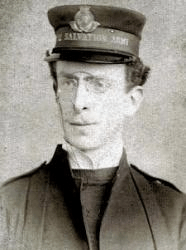
Words & Music: Ed­ward H. Joy, 1920, alt. (MI­DIscore). Joy, a Sal­va­tion Ar­my mu­si­cian, in­tro­duced the song to the Thorn­ton Heath Corps, and lat­er used it through­out Can­a­da. It was pub­lished in The Mu­sic­al Sal­va­tion­ist in 1929.

Joy joined the Sal­va­tion Ar­my (SA) in Can­ter­bu­ry, then played in the band at Folke­stone, and be­came an SA of­fi­cer in 1894. He went on serve the SA Corps at Tun­stall, then the SA In­ter­na­tion­al head­quar­ters in 1917, where he was Un­der Se­cre­ta­ry in the For­eign Of­fice. Af­ter 1919, he served as Im­mi­gra­tion Se­cre­ta­ry in west­ern Ca­na­da, and in 1932 be­came ed­i­tor-in-chief of The War Cry in South Af­ri­ca. He rose to the rank of SA col­o­nel, and re­tired in 1938.

http://cyberhymnal.org/htm/i/s/istherah.htm


1 Peter 5:6-8

Humble yourselves therefore under the mighty hand of God, that He may exalt you in due time:

Casting all your care upon Him; for He careth for you.

Be sober, be vigilant; because your adversary the devil, as a roaring lion, walketh about, seeking whom he may devour. . .

For the Lord’s Day – Beneath the Cross of Jesus

Elizabeth C. Clephane
http://www.hymntime.com/tch

Short Name:Elizabeth C. Clephane
Full Name:Clephane, Elizabeth Cecelia, 1830-1869
Birth Year:1830
Death Year:1869

Clephane, Elizabeth Cecilia, third daughter of Andrew Clephane, Sheriff of Fife, was born at Edinburgh, June 18, 1830, and died at Bridgend House, near Melrose, Feb. 19, 1869. Her hymns appeared, almost all for the first time, in the Family Treasury, under the general title of Breathings on the Border. In publishing the first of these in the Treasury, the late Rev. W. Arnot, of Edinburgh, then editor, thus introduced them:—

“These lines express the experiences, the hopes, and the longings of a young Christian lately released. Written on the very edge of this life, with the better land fully, in the view of faith, they seem to us footsteps printed on the sands of Time, where these sands touch the ocean of Eternity. These footprints of one whom the Good Shepherd led through the wilderness into rest, may, with God’s blessing, contribute to comfort and direct succeeding pilgrims.”

http://www.hymnary.org/person/Clephane_EC

1 Corinthians 2:2

For I determined not to know any thing among you, save Jesus Christ, and Him crucified.

For the Lord’s Day – Nearer, Still Nearer

Source: The Cyber Hymnal #4511

Lelia N. Morris. Usage Mrs. C. H. Morris. Born: Ap­ril 15, 1862, Penns­ville, Ohio. Died: Ju­ly 23, 1929, Au­burn, New York (at her daugh­ter’s home). Buried: Mc­Con­nels­ville, Ohio. Leila Naylor Morris(1862-1929) As a child, Leila lived in Mal­ta and McCon­nels­ville, Ohio. In 1881, she mar­ried Charles H. Morris. Leila was ac­tive in the Meth­od­ist church, camp meet­ings, and song writ­ing, au­thor­ing more than 1,000 Gospel songs. When her eyes be­gan to fail in 1913, her son built a 28-foot black­board with over­sized staff lines, so she could con­tin­ue com­pos­ing. –hymntime.com/tch

http://www.hymnary.org/text/nearer_still_nearer_close_to_thy_heart


Hebrews 7:19

 For the law made nothing perfect, but the bringing in of a better hope did; by the which we draw nigh unto God.

For the Lord’s Day – Pass Me Not


crosby_fj_1872

Words: Fan­ny Cros­by, 1868; first ap­peared in Songs of De­vo­tion, by How­ard Doane (New York: 1870).

Music: W. How­ard Doane, 1870

As ear­nest Christ­ian pas­tor told of a young man about whom he had long felt much an­xi­e­ty, as he had seemed so un­con­cerned about his soul, and was, in re­al­i­ty, a real cause of dis­turb­ance and in­ter­rupt­ion in class­es for other young men. Meet­ing him one day, the lov­ing pas­tor sought once more to in­flu­ence him, urg­ing, “We want you for Christ and his ser­vice.” There was a cer­tain change in his man­ner which did not es­cape the eye of the pray­er­ful watch­er for souls, and—lack­ing time to do more—he seized the op­por­tun­i­ty to se­cure the pre­sence of his young friend at a Christ­ian En­dea­vor meet­ing soon to be held. True to his prom­ise he was there. When an op­por­tun­i­ty was giv­en for some of the young men to choose a song, it was seen that he was urg­ing his com­pan­ion to se­lect some par­tic­u­lar hymn. The other, yield­ing to his re­quest, asked if the hymn, “Pass me not, O gentle Sav­iour,” might be sung; and both young men joined in the sing­ing with ev­i­dent in­ter­est and heart­i­ness. Lat­er in the ev­en­ing it was re­quest­ed that all who were def­in­ite­ly on the Lord’s side would con­fess their al­le­giance by stand­ing. Where­up­on the one over whom the heart of the pas­tor was spe­cial­ly yearn­ing rose at once, and with de­ci­sion.

“Tell me about your con­ver­sion,” the thank­ful pas­tor re­quest­ed at the close of the meet­ing, when hands were clasped in glad, bro­ther­ly wel­come and re­cog­ni­tion.

“Oh, yes,” as­sent­ed the other. “It was all through that hymn we have just sung. I was work­ing on the canal at G–, and there was a meet­ing be­ing held at the Mar­in­er’s Cha­pel, near­by. The words float­ed out over the wa­ter, and from the tug where I was work­ing I could hear them plain­ly enough. When they were just go­ing to sing those lines—‘While on others Thou are call­ing, Do not pass me by!’ a great fear came over me, and I thought, ‘Oh, if the Lord were to pass me by, how ter­ri­ble it would be!’ Then and there, on the tug, I cried out, ‘O Lord, do not pass me by.’ And”—with a bright smile—“he didn’t pass me by. I am saved.’”

Sankey, pp. 218-20

http://cyberhymnal.org/htm/p/a/passment.htm

2 Peter 3:9

 The Lord is not slack concerning His promise, as some men count slackness; but is longsuffering to us-ward, not willing that any should perish, but that all should come to repentance.

Friday Proverb – A Well of Life or a Cesspool of Violence?

The mouth of a righteous man is a well of life:


water in a weary land

With our words we can encourage, comfort, teach, edify, and otherwise do great things through the Righteousness of Christ.  We can ask Him to speak through us – to use us to glorify Him.  The only righteousness the believer can possess is the Righteousness of Jesus Christ – it is His Holy Spirit working through us that allows our words to be a well of life.  And done in His Spirit – our words can do the work we are here for.    We can worship Him – and we can witness about Him.  All with words.  And at the Judgment Seat of Christ we will be rewarded for what we have done with words.

The second half of this Proverb must be fairly important, because it is repeated twice in Proverbs 10.

but violence covereth the mouth of the wicked.

great white throne judgment 2

Once again we see that the wicked will not be able to speak to defend themselves.  Right now – it seems that the wicked are in great power, and have control of the air waves, and all media.  Scripture assures us that this will not last much longer.  And these scorners and mockers of Jesus Christ will not be allowed to speak at the Great White Throne Judgment when the charges are made against them.  No lawyers to speak for them, or juries to empathize with them.    Jesus Christ is the Judge, and Jury.

vinevigil@gmail.com

Friday Proverb – Staying Out of Harm’s Way

 He that walketh uprightly walketh surely:

Merriam Webster: upright – marked by strong moral rectitude <an upright citizen>

narrow path

but he that perverteth his ways shall be known.

Merriam Webster: pervert

a :  to cause to turn aside or away from what is good or true or morally right :  corrupt

b :  to cause to turn aside or away from what is generally done or accepted :  misdirect

dorian gray

a4cee-gods-love1

John 8:36 

If the Son therefore shall make you free, ye shall be free indeed.

Friday Proverb – How Do You Want To Be Remembered?

The memory of the just is blessed:


Think about that – if you repent and trust in the Lord Jesus Christ as your Savior He has promised that He will not remember your sins, because God will only see His righteousness – and we achieve justification through Him.


but the name of the wicked shall rot.


No matter how famous, no matter how much charity, no matter how many good works – the promise for the wicked unrepentant is that every idle deed and word is remembered – none of the record of their world famous deeds will stand – none of their riches – not even a bowling trophy!  The only thing, the only thing that matters is that you trust in Him today without delay!

sheepgoats

Friday Proverb – The Wicked Will Not Always Prosper

As wickedness grows apace in this world, believers sometimes wonder longingly when the LORD will call them home.  The Word of God is implicitly clear – He is keeping track – and He will hold all accountable.

Jesus healing blind

 Blessings are upon the head of the just: but violence covereth the mouth of the wicked.


It is extremely important to understand the meaning of the word “just” in the first section of this Proverb.  Who are the just?  Those who seek after righteousness through saving faith in God’s Christ!  No one can be just on their own – because no one can obtain their own righteousness.  And Who is our Head?  Jesus Christ of course!

The second part of this Proverb is sad indeed.  We see the wicked prospering in the world, and it “vexes our souls,” as it should!  But look closely at that verse – and you will see it says something far more than most think it does.  “Violence covereth the mouth of the wicked.”  Picture this, because this is what the Word is saying – the unrepentant will NOT be able to answer when the charges are brought against them at the Great White Throne Judgment!  Their mouths will be “covered with violence.”  There will be no pleading or bargaining involved, such as the courts of law hold today.  No negotiating – no reduced sentences – no parole. . .no purgatory!

Do not think this is some cruel fate – you have had ample time to repent, and the Lord is not willing that any should perish.  Now is the time – not next year, or in a couple of years after you get done “living your life.”  The time is never going to get better than right this minute.  Turn to Jesus Christ, your Creator and Savior, please do it now because you may not get the chance later.

Friday Proverb – The Position of Souls

peace and comfort

 The Lord will not suffer the soul of the righteous to famish:

Lazarus and the rich man

but he casteth away the substance of the wicked.

outline of Lazarus and rich man

31 And he said unto him,  If they hear not Moses and the prophets, neither will they be persuaded, though One rose from the dead.