Spirit of the living God, fall afresh on me; Spirit of the living God, fall afresh on me. Melt me, mold me, fill me, use me. Spirit of the living God, fall afresh on me.
Daniel Iverson
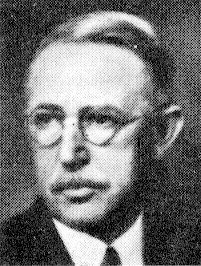
Daniel Iverson (b. Brunswick, GA, 1890; d. Asheville, NC, 1977) wrote the first stanza and tune of this hymn after hearing a sermon on the Holy Spirit during an evangelism crusade by the George Stephans Evangelistic Team in Orlando, Florida, 1926. The hymn was sung at the crusade and then printed in leaflets for use at other services. Published anonymously in Robert H. Coleman’s Revival Songs (1929) with alterations in the tune, this short hymn gained much popularity by the middle of the century. Since the 1960s it has again been properly credited to Iverson. Iverson studied at the University of Georgia, Moody Bible Institute, Columbia Theological Seminary, and the University of South Carolina. Ordained in the Presbyterian Church in 1914
1. O come, O come, Immanuel, and ransom captive Israel that mourns in lonely exile here until the Son of God appear.
Refrain: Rejoice! Rejoice! Immanuel shall come to you, O Israel.
2. O come, O Wisdom from on high, who ordered all things mightily; to us the path of knowledge show and teach us in its ways to go.
Refrain: Rejoice! Rejoice! Immanuel shall come to you, O Israel.
3. O come, O come, great Lord of might, who to your tribes on Sinai’s height in ancient times did give the law in cloud and majesty and awe.
Refrain: Rejoice! Rejoice! Immanuel shall come to you, O Israel.
The Birth of Christ
As we continue our descent into the month of December, we remember the birth of Christ, and we will be posting a selection of some of our favorite Christmas hymns so that you can celebrate this momentous and beloved time with us. This hymn, “O Come, O Come, Emmanuel,” is one of my very favorite Christmas hymns.
As a child, my parents always made Christmas very special. I remember on Christmas morning, waking up to the smell of my mother’s homemade cinnamon rolls with her secret lemon, cream-cheese icing. Of which, I – reminiscent of the prophet Elisha (in my own mind) – did not hesitate to ask for and proudly acquire, my own double portioning. As I sat at the table, bedecked by a Christmas-cheery tablecloth, this would be one of the hymns my mother would play on her record player. Perhaps it is the somber humility with which the verses beckon the coming of Christ, or perhaps it is the overwhelming reverence with which the refrain exclaims, “Rejoice! Rejoice!” this hymn, “O Come, O Come, Emmanuel,” stirs our hearts into movement and attention in recollection of the birth of Christ.
Isaiah 9:6-7
6 For unto us a child is born, unto us a son is given: and the government shall be upon his shoulder: and his name shall be called Wonderful, Counsellor, The mighty God, The everlasting Father, The Prince of Peace.
7 Of the increase of his government and peace there shall be no end, upon the throne of David, and upon his kingdom, to order it, and to establish it with judgment and with justice from henceforth even for ever. The zeal of the Lord of hosts will perform this.
In keeping with the theme of service and stewardship from the Friday Proverb and Bible Study, this hymn is dedicated to surrendering our wills to the service and glory of our Savior.
It may not be on the mountain’s height, or over the stormy sea; It may not be at the battle’s front my Lord will have need of me; But if by a still, small voice He calls to paths I do not know, I’ll answer, dear Lord, with my hand in Yours, I’ll go where You want me to go.
Refrain
I’ll go where You want me to go, dear Lord, O’er mountain, or plain, or sea; I’ll say what You want me to say, dear Lord, I’ll be what You want me to be.
Perhaps today there are loving words which Jesus would have me speak; There may be now, in the paths of sin, some wand’rer whom I should seek. O Savior, if You will be my Guide, though dark and rugged the way, My voice shall echo the message sweet, I’ll say what You want me to say.
Refrain
There’s surely somewhere a lowly place in earth’s harvest fields so wide, Where I may labor through life’s short day for Jesus, the Crucified. So, trusting my all unto Your care, I know You always love me! I’ll do Your will with a heart sincere, I’ll be what You want me to be.
Refrain
Words: Mary Brown, in Our Best Endeavor (Silver Burdett & Company: 1892) (verse 1), and Charles E. Prior (verses 2-3). The original title was “Go Stand and Speak,” with music by Prior.
This well-known missionary and consecration hymn was adopted by a class of over a hundred missionary nurses at the Battle Creek (Michigan) Sanitarium as their class hymn. Every Sunday afternoon they would gather for a social meeting and always sing [it]…In this class were students from nearly every State of the Union, from Australia, South Africa, South America, Bulgaria, Armenia, and nearly all the European countries. At the close of the course they agreed that after they had parted and gone to their different fields, they would sing this hymn every Sunday as they had done during their happy class-days.
I would venture to guess, that most of you have never heard this lovely hymn as it was intended by Civilla Martin in 1905. Today, it is often presented as a soft-rock ballad. I hope this authentic rendering by a Mennonite choir will minister to your spirit.
“HIS EYE IS ON THE SPARROW”
Why should I feel discouraged, why should the shadows come, Why should my heart be lonely, and long for heav’n and home, When Jesus is my portion? My constant Friend is He: His eye is on the sparrow, and I know He watches me; His eye is on the sparrow, and I know He watches me.“Let not your heart be troubled,” His tender word I hear,
Refrain: I sing because I’m happy, I sing because I’m free, For His eye is on the sparrow, and I know He watches me.
And resting on His goodness, I lose my doubts and fears; Though by the path He leadeth, but one step I may see; His eye is on the sparrow, and I know He watches me; His eye is on the sparrow, and I know He watches me.
Whenever I am tempted, whenever clouds arise, When songs give place to sighing, when hope within me dies, I draw the closer to Him, from care He sets me free; His eye is on the sparrow, and I know He watches me; His eye is on the sparrow, and I know He watches me.
+++++++++++++++++++++++++++++++++++++++++++
Civilla Martin, who wrote the lyrics, said this about her inspiration to write the song based in the scriptures outlined above,
Early in the spring of 1905, my husband and I were sojourning in Elmira, New York. We contracted a deep friendship for a couple by the name of Mr. and Mrs. Doolittle—true saints of God. Mrs. Doolittle had been bedridden for nigh twenty years. Her husband was an incurable cripple who had to propel himself to and from his business in a wheel chair. Despite their afflictions, they lived happy Christian lives, bringing inspiration and comfort to all who knew them. One day while we were visiting with the Doolittles, my husband commented on their bright hopefulness and asked them for the secret of it. Mrs. Doolittle’s reply was simple: “His eye is on the sparrow, and I know He watches me.” The beauty of this simple expression of boundless faith gripped the hearts and fired the imagination of Dr. Martin and me. The hymn “His Eye Is on the Sparrow” was the outcome of that experience. [wikipidea.org]
+++++++++++++++++++++++++++++++++++++++++++++
4 Rejoice in the Lord alway: and again I say, Rejoice. 5 Let your moderation be known unto all men. The Lord is at hand. 6 Be careful for nothing; but in every thing by prayer and supplication with thanksgiving let your requests be made known unto God. 7 And the peace of God, which passeth all understanding, shall keep your hearts and minds through Christ Jesus. Philippians 4: 4-7
C. Austin Miles (1868-1946) was a pharmacist turned hymn writer and church music director. He was also an amateur photographer. One day in March, 1912, while in his dark room waiting for film to develop, Miles had a profound spiritual experience in which he saw an incredible vision of Mary Magdalene visiting the empty tomb. He saw her leave the tomb and walk into a garden where she met the Master and heard Him speak her name.
When Miles came to himself his nerves were vibrating and his muscles tense; the words to a new song were filling his mind and heart. He quickly wrote out the lyrics to In The Garden and later that evening composed the musical score. The song was published that same year and became a theme song of the Billy Sunday evangelistic crusades. (faithclipart.com)
In The Garden
I come to the garden alone, While the dew is still on the roses, And the voice I hear falling on my ear, The Son of God discloses . . .
And He walks with me, and He talks with me, And He tells me I am His own, And the joy we share as we tarry there, None other, has ever, known!
He speaks and the sound of His voice, Is so sweet the birds hush their singing, And the melody that he gave to me, Within my heart is ringing . . .
And He walks with me, and He talks with me, And He tells me I am His own, And the joy we share as we tarry there, None other, has ever, known!
And the joy we share as we tarry there, None other, has ever, known!
11 But Mary stood without at the sepulchre weeping: and as she wept, she stooped down, and looked into the sepulchre,
12 And seeth two angels in white sitting, the one at the head, and the other at the feet, where the body of Jesus had lain.
13 And they say unto her, Woman, why weepest thou? She saith unto them, Because they have taken away my Lord, and I know not where they have laid Him.
14 And when she had thus said, she turned herself back, and saw Jesus standing, and knew not that it was Jesus.
15 Jesus saith unto her, Woman, why weepest thou? Whom seekest thou? She, supposing him to be the gardener, saith unto Him, Sir, if thou have borne Him hence, tell me where thou hast laid Him, and I will take Him away.
16 Jesus saith unto her, Mary. She turned herself, and saith unto Him, Rabboni; which is to say, Master.
17 Jesus saith unto her, Touch Me not; for I am not yet ascended to My Father: but go to My brethren, and say unto them, I ascend unto My Father, and your Father; and to My God, and your God.
18 Mary Magdalene came and told the disciples that she had seen the Lord, and that He had spoken these things unto her.



 The Vine Vigil