Tag Archives: Great hymns of the faith

For the Lord’s Day – All For Jesus


Short Name:Mary D. James
Full Name:James, Mary D. (Mary Dagworthy), 1810-1883
Birth Year:1810
Death Year:1883

Born: August 10, 1810, Trenton, New Jersey.
Died: October 4, 1883, New York City.
Buried: Mercer Cemetery, Trenton, New Jersey.

When she was 13 years old, James began teaching Sunday school in the Methodist Episcopal church. She became a prominent figure in the Wesleyan Holiness movement, assisting Phoebe Palmer, and often leading meetings at Ocean Grove, New Jersey, and elsewhere. She wrote about 50 hymns, and articles by her appeared in the Guide to Holiness, the New York Christian AdvocateThe ContributorThe Christian WitnessThe Christian WomanThe Christian Standard, and the Ocean Grove Record. Her works include:

The Soul Winner: A Sketch of Life and Fact and Incidents in the Life and Labors of Edmund J. Yard, 1883

http://www.hymnary.org/person/James_MD


For the Lord’s Day – There is a Balm in Gilead


Question: “What is the balm of Gilead?”

Answer: A balm is an aromatic, medicinal substance derived from plants. Gilead was an area east of the Jordan River, well known for its spices and ointments. The “balm of Gilead” was, therefore, a high-quality ointment with healing properties. The balm was made from resin taken from a flowering plant in the Middle East, although the exact species is unknown. It was also called the “balsam of Mecca.” Myrrh is taken from a similar plant—Commiphora myrrha.The Bible uses the term “balm of Gilead” metaphorically as an example of something with healing or soothing powers.

“Balm of Gilead” has three references in the Bible. In Genesis 37:25, as Joseph’s brothers contemplated how to kill him, a caravan of Ishmaelites passed by on their way to Egypt from Gilead. In their cargo were “spices, balm, and myrrh.” Jeremiah 8 records God’s warning to Judah of what Babylon would do to them. Upon hearing the news, Jeremiah laments, “Is there no balm in Gilead?” (verse 22). His question is a poetic search for hope—a plea for healing. Then, in Jeremiah 46:11, as God describes an impending judgment on Egypt, He taunts them: “Go up to Gilead and obtain balm, O virgin daughter of Egypt! In vain have you multiplied remedies; there is no healing for you!”

These scriptural references to the balm of Gilead have inspired many literary and cultural allusions, including references in “The Raven” by Edgar Allen Poe and movies such as The Spitfire Grill. Notably, “There Is a Balm in Gilead” is an African-American spiritual that compares the healing balm to the saving power of Jesus—the one true treatment that never fails to heal our spiritual wounds.

Read more: http://www.gotquestions.org/balm-of-Gilead.html#ixzz3PmXqTrst


Galatians 3:27-29

27 For as many of you as have been baptized into Christ have put on Christ.

28 There is neither Jew nor Greek, there is neither bond nor free, there is neither male nor female: for ye are all one in Christ Jesus.

29 And if ye be Christ’s, then are ye Abraham’s seed, and heirs according to the promise.

For the Lord’s Day – Precious Lord, Take My Hand

Words: Thomas A. Dorsey, 1932. Dorsey wrote this song in Chicago, Illinois, after his wife Nettie died while giving birth to a child (who also died shortly thereafter). Dorsey sang the song for his friend, Gospel singer Theodore Frye, and Frye’s choir sang it the next Sunday at the Ebenezer Baptist Church.

http://www.hymntime.com/tch/htm/p/l/t/pltmhand.htm


2 Corinthians 1:3-7

Blessed be God, even the Father of our Lord Jesus Christ, the Father of mercies, and the God of all comfort;

Who comforteth us in all our tribulation, that we may be able to comfort them which are in any trouble, by the comfort wherewith we ourselves are comforted of God.

For as the sufferings of Christ abound in us, so our consolation also aboundeth by Christ.

And whether we be afflicted, it is for your consolation and salvation, which is effectual in the enduring of the same sufferings which we also suffer: or whether we be comforted, it is for your consolation and salvation.

And our hope of you is stedfast, knowing, that as ye are partakers of the sufferings, so shall ye be also of the consolation.

For the Lord’s Day – Our Great Savior


John Wilbur Chapman (June 17, 1859, Richmond, Indiana – December 25, 1918, New York, New York) was a Presbyterian evangelist in the late 19th Century, generally traveling with gospel singer Charles Alexander. His parents were Alexander H. and Lorinda (McWhinney) Chapman.

Chapman grew up attending Quaker Day School and Methodist Sunday School. At age 17, he made a public declaration of his Christian faith and joined the Richmond Presbyterian Church. He received his Bachelor of Arts degree from Lake Forest College and his seminary degree from Lane Theological Seminary in Cincinnati, Ohio. He completed his ordination into the ministry 13 April 1881, while still attending Lane. He was later awarded a Doctorate in Divinity from the College of Wooster and an LL.D. from Heidelberg University.

In May 1882, Chapman married Irene Steddon. In April 1886, she bore him a daughter, Bertha Irene Chapman. Irene Steddon Chapman died in May 1886. Chapman remarried on November 4, 1888 to Agnes Pruyn Strain; they had four children: Robert (who died in infancy), John Wilbur, Jr., Alexander Hamilton, and Agnes Pruyn. His second wife died on June 25, 1907 and Chapman married a third and final time on August 30, 1910 to Mabel Cornelia Moulton.

Chapman took on several pastorates before shifting to the evangelistic circuit. He began preaching with the legendary D. L. Moody in 1893, as well as leading many evangelistic events of his own. Among Chapman’s disciples on the evangelistic circuit was Billy Sunday.

In 1905, John H. Converse, a wealthy Presbyterian philanthropist, offered to underwrite Chapman’s expenses if he would re-enter the evangelistic field full-time. Converse also set up a trust fund so as to finance Chapman’s crusades posthumously. Chapman accepted the offer and in 1907, joined forces with popular gospel singer Charles McCallon Alexander to launch the “Chapman-Alexander Simultaneous Campaign.”

The duo assembled an impressive team of evangelists and song leaders and took to the streets. The first joint campaign was held in Philadelphia from March 12 to April 19, 1908. They partitioned the city into 42 sections covered by 21 evangelist-musicians teams. They spent three weeks on each half of the city, resulting in approximately 8000 conversions. It was at a similar Chapman-Alexander event in North Carolina that the legendary King James Only proponent, David Otis Fuller, committed to the Christian faith.

In 1909, Chapman demanded that any field evangelist who doubted the inerrancy of Scripture be removed from ministry. Chapman’s biography reports, “The first Chapman-Alexander worldwide campaign left Vancouver, British Columbia on March 26, 1909, and returned on November 26, 1909.

Read more about John Wilbur Chapman here:

http://www.hymnary.org/person/Chapman_JW


Titus 2:13-14

13 Looking for that blessed hope, and the glorious appearing of the great God and our Saviour Jesus Christ;

14  Who gave Himself for us, that He might redeem us from all iniquity, and purify unto Himself a peculiar people, zealous of good works.

For the Lord’s Day – My Faith Looks Up to Thee


Words: Ray Pal­mer, 1830.

Ray Palmer wrote these lyr­ics up­on re­ceiv­ing a vi­sion of Christ short­ly af­ter his grad­u­a­tion from Yale Un­i­ver­si­ty, while work­ing as a tu­tor at a New York school. How­ev­er, he kept them to him­self un­til meet­ing Low­ell Ma­son on a street in Bos­ton, Mas­sac­hu­setts. When Ma­son asked him to write some­thing for a new hymn­al, Palm­er dug out his old notes and pro­duced these lyr­ics, writ­ten two years ear­li­er. Af­ter tak­ing the lyr­ics home and read­ing them, Ma­son com­posed this tune. Sev­er­al days lat­er he saw Palm­er again and said:

An interesting story con­nect­ed with this hymn:

Mrs. Lay­yah Bar­a­kat, a na­tive of Syr­ia, was ed­u­cat­ed in Bei­rut and then taught for a time in Egypt. Driv­en out in 1882 by the in­sur­rect­ion of Ara­bi Pa­sha, she, with her hus­band and child, came to Amer­i­ca by way of Mal­ta and Mar­seilles. Her his­to­ry is a strange il­lus­tra­tion of God’s pro­vi­den­tial care, as they were with­out any di­rect­ion or friends in Phil­a­del­phia when they land­ed. But the Lord took them into His own keep­ing, and brought them to those who had known of her in Syr­ia. While in this coun­try she fre­quent­ly ad­dressed large au­di­enc­es, to whom her deep ear­nest­ness and brok­en but pi­quant Eng­lish proved un­u­su­al­ly at­tract­ive. Among other in­ci­dents she re­lat­ed that she had been per­mit­ted to see the con­ver­sion of her whole fam­i­ly, who were Mar­o­nites of Mount Le­ba­non. Her mother, six­ty-two years of age, had been taught ‘My Faith Looks Up to Thee’ in Ar­a­bic. They would sit on the house roof and re­peat it to­ge­ther; and when the news came back to Syr­ia that the daugh­ter was safe in Amer­i­ca, the mo­ther could send her no bet­ter proof of her faith and love than in the beau­ti­ful words of this hymn, as­sur­ing her that her faith still looked up to Christ.

Sutherland, pp. 77-9

http://cyberhymnal.org/htm/m/y/myfluptt.htm


Ephesians 3:12

In Whom we have boldness and access with confidence by the faith of Him.

“The words for these stanzas were born out of my own soul with very little effort. I recall that 1 wrote the verses with tender emotion. . . . When writing the last line, “O bear me safe above, a ransomed soul!” the thought that the whole work of redemption and salvation was involved in those words. . . brought me to a degree of emotion that brought abundant tears.”

Ray Palmer

For the Lord’s Day – Of the Father’s Love Begotten

This beautiful song of praise, is characterized as “plain-song,” which was developed during the earliest centuries of the church age.  It shows influence from both the ancient singing of the Jewish synagogue, and the Greek modal style.  The heartfelt worship of the only begotten Son of God is the theme. 


“Of the Father’s Love Begotten”
by Aurelius C. Prudentius, 413, cento
Translated by John. M. Neale, 1818-1866
and Henry W. Baker, 1821-1977


Revelation 1:7-8

He cometh with clouds

For the Lord’s Day – In Times Like These


Author: Ruth Caye Jones    

Born: 1902, Wilmerding, Pennsylvania. Died: August 18, 1972, Erie, Pennsylvania. A self taught pianist and organist, Ruth married Bert Jones, and together they worked in the evangelism field. In 1948, they founded a radio ministry in Erie, Pennsylvania, broadcasting a weekly family devotional program from their home called “A Visit with the Jones.”   http://www.hymnary.org/text/in_times_like_these_you_need_a_savior


Psalm 95:1-3

95 O come, let us sing unto the Lord: let us make a joyful noise to the rock of our salvation.

Let us come before His presence with thanksgiving, and make a joyful noise unto Him with psalms.

For the Lord is a great God, and a great King above all gods.

For the Lord’s Day – All Your Anxiety


Born: No­vem­ber 16, 1871, Can­ter­bu­ry, Kent, Eng­land.

Died: Feb­ru­a­ry 16, 1949, Cheam, Sur­rey, Eng­land.

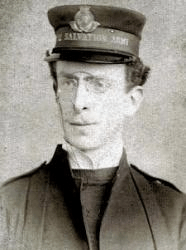
Words & Music: Ed­ward H. Joy, 1920, alt. (MI­DIscore). Joy, a Sal­va­tion Ar­my mu­si­cian, in­tro­duced the song to the Thorn­ton Heath Corps, and lat­er used it through­out Can­a­da. It was pub­lished in The Mu­sic­al Sal­va­tion­ist in 1929.

Joy joined the Sal­va­tion Ar­my (SA) in Can­ter­bu­ry, then played in the band at Folke­stone, and be­came an SA of­fi­cer in 1894. He went on serve the SA Corps at Tun­stall, then the SA In­ter­na­tion­al head­quar­ters in 1917, where he was Un­der Se­cre­ta­ry in the For­eign Of­fice. Af­ter 1919, he served as Im­mi­gra­tion Se­cre­ta­ry in west­ern Ca­na­da, and in 1932 be­came ed­i­tor-in-chief of The War Cry in South Af­ri­ca. He rose to the rank of SA col­o­nel, and re­tired in 1938.

http://cyberhymnal.org/htm/i/s/istherah.htm


1 Peter 5:6-8

Humble yourselves therefore under the mighty hand of God, that He may exalt you in due time:

Casting all your care upon Him; for He careth for you.

Be sober, be vigilant; because your adversary the devil, as a roaring lion, walketh about, seeking whom he may devour. . .

For the Lord’s Day – The Love of God


Words: Fred­er­ick M. Leh­man; he wrote this song in 1917 in Pas­a­de­na, Cal­i­fornia, and it was pub­lished in Songs That Are Dif­fer­ent, Vol­ume 2, 1919. The lyr­ics are based on the Jew­ish poem Had­da­mut, writ­ten in Ara­ma­ic in 1050 by Meir Ben Isaac Ne­hor­ai, a can­tor in Worms, Ger­ma­ny; they have been trans­lat­ed in­to at least 18 lang­uages.

One day, dur­ing short in­ter­vals of in­at­ten­tion to our work, we picked up a scrap of pa­per and, seat­ed up­on an emp­ty le­mon box pushed against the wall, with a stub pen­cil, add­ed the (first) two stan­zas and chor­us of the song…Since the lines (3rd stan­za from the Jew­ish po­em) had been found pen­ciled on the wall of a pa­tient’s room in an in­sane asy­lum af­ter he had been car­ried to his grave, the gen­er­al opin­ion was that this in­mate had writ­ten the epic in mo­ments of san­ity.

Frederick M. Lehman, “History of the Song, The Love of God,” 1948

Music: Fred­er­ick Leh­man; ar­ranged by his daugh­ter, Clau­dia L. Mays

http://cyberhymnal.org/htm/l/o/loveofgo.htm


1 John 4:16-19

16 And we have known and believed the love that God hath to us. God is love; and he that dwelleth in love dwelleth in God, and God in him.

17 Herein is our love made perfect, that we may have boldness in the day of judgment: because as He is, so are we in this world.

18 There is no fear in love; but perfect love casteth out fear: because fear hath torment. He that feareth is not made perfect in love.

19 We love Him, because He first loved us.

For the Lord’s Day – Beneath the Cross of Jesus

Elizabeth C. Clephane
http://www.hymntime.com/tch

Short Name:Elizabeth C. Clephane
Full Name:Clephane, Elizabeth Cecelia, 1830-1869
Birth Year:1830
Death Year:1869

Clephane, Elizabeth Cecilia, third daughter of Andrew Clephane, Sheriff of Fife, was born at Edinburgh, June 18, 1830, and died at Bridgend House, near Melrose, Feb. 19, 1869. Her hymns appeared, almost all for the first time, in the Family Treasury, under the general title of Breathings on the Border. In publishing the first of these in the Treasury, the late Rev. W. Arnot, of Edinburgh, then editor, thus introduced them:—

“These lines express the experiences, the hopes, and the longings of a young Christian lately released. Written on the very edge of this life, with the better land fully, in the view of faith, they seem to us footsteps printed on the sands of Time, where these sands touch the ocean of Eternity. These footprints of one whom the Good Shepherd led through the wilderness into rest, may, with God’s blessing, contribute to comfort and direct succeeding pilgrims.”

http://www.hymnary.org/person/Clephane_EC

1 Corinthians 2:2

For I determined not to know any thing among you, save Jesus Christ, and Him crucified.

For the Lord’s Day – Nearer, Still Nearer

Source: The Cyber Hymnal #4511

Lelia N. Morris. Usage Mrs. C. H. Morris. Born: Ap­ril 15, 1862, Penns­ville, Ohio. Died: Ju­ly 23, 1929, Au­burn, New York (at her daugh­ter’s home). Buried: Mc­Con­nels­ville, Ohio. Leila Naylor Morris(1862-1929) As a child, Leila lived in Mal­ta and McCon­nels­ville, Ohio. In 1881, she mar­ried Charles H. Morris. Leila was ac­tive in the Meth­od­ist church, camp meet­ings, and song writ­ing, au­thor­ing more than 1,000 Gospel songs. When her eyes be­gan to fail in 1913, her son built a 28-foot black­board with over­sized staff lines, so she could con­tin­ue com­pos­ing. –hymntime.com/tch

http://www.hymnary.org/text/nearer_still_nearer_close_to_thy_heart


Hebrews 7:19

 For the law made nothing perfect, but the bringing in of a better hope did; by the which we draw nigh unto God.

For the Lord’s Day – I Heard the Voice of Jesus Say


bonar_h3

Words: Horatius Bonar, Hymns Original and Selected 1846.

Music: Vox Dilecti John B. Dykes, 1868  The key change halfway through accents the positive message of the last two lines, I came to Jesus…

The last time that Henry Ward Beecher was in his pulpit—6th March, 1887—he remained for some time at the close of the evening service listening to the choir practising, and was evidently moved by their rendering of this hymn. While sitting and listening he noticed two street arabs coming into the church to enjoy the music also. He came down, and speaking to them tenderly he drew them to his heart and kissed them. Whether this touch of humanity was due to the hymn or simply the response of his deeply emotional nature in seeing two unfortunates before him, with all their undeveloped possibilities, we cannot say, but of this we are sure, that the last grand utterance that he heard in his church was this hymn: I Heard the Voice, etc., for, a few hours afterwards the shadows of the long night fell upon his ethereal spirit; the silver cord that bound him with the outer world was loosed, and though the soul still lingered over the mortal frame which she had filled with abundant life for seventy-four years, as if loath to depart, the eyes, the senses were all but sealed, and the lips on which listening thousands had hung for half a century were silent. It was fitting that he who took such an active part in the emancipation of the slave should close his life under the inspiration of this tender hymn, and take those two street arabs to his heart as representing the humanity he loved so well!

Morrison, pp. 221-2

http://www.hymntime.com/tch/htm/i/h/e/iheardvj.htm

Matthew 11:28-30

28 Come unto Me, all ye that labour and are heavy laden, and I will give you rest.

peace and comfort

29 Take My yoke upon you, and learn of Me; for I am meek and lowly in heart: and ye shall find rest unto your souls.

30 For My yoke is easy, and My burden is light.

For the Lord’s Day – Alas! And Did My Savior Bleed?

issac Watts

Words: Isaac Watts, Hymns and Spir­it­u­al Songs, 1707;

Music: Martyrdom Hugh Wilson, 1800

[***Note from sage – you may not be familiar with this rendition – but it was the one that Fanny Crosby was referring to in 1880.   The music sung in churches today was not written until 1885 when the well known refrain was added]

  • Hudson, Ralph E. Hudson, Songs of Peace, Love and Joy (Alliance, Ohio: 1885)  It is with this tune that the hymn is known as At the Cross.

Fanny Crosby wrote of this hymn:

[In] the autumn of 1850…re­viv­al meet­ings were be­ing held in the Thir­ti­eth Street Meth­od­ist Church [, New York Ci­ty]. Some of us went down ev­ery ev­en­ing; and, on two oc­ca­sions, I sought peace at the at­lar [sic], but did not find the joy I craved, un­til one ev­en­ing, No­vem­ber 20, 1850, it seemed to me that the light must in­deed come then or ne­ver; and so I arose and went to the al­tar alone. A­fter a prayer was of­fered, they be­gan to sing the grand old con­se­cra­tion hymn, “Alas, and did my Sav­iour bleed, And did my Sov­er­eign die?” And when they reached the third line of the fourth [sic] stan­za, “Here Lord, I give my­self away,” my very soul was flood­ed with a ce­les­ti­al light. I sprang to my feet, shout­ing “hal­le­lu­jah,” and then for the first time I real­ized that I had been try­ing to hold the world in one hand and the Lord in the other.

Crosby, p. 24

http://cyberhymnal.org/htm/a/l/a/alasand.htm


1 Corinthians 1:18

 For the preaching of the cross is to them that perish foolishness; but unto us which are saved it is the power of God.

For the Lord’s Day – Pass Me Not


crosby_fj_1872

Words: Fan­ny Cros­by, 1868; first ap­peared in Songs of De­vo­tion, by How­ard Doane (New York: 1870).

Music: W. How­ard Doane, 1870

As ear­nest Christ­ian pas­tor told of a young man about whom he had long felt much an­xi­e­ty, as he had seemed so un­con­cerned about his soul, and was, in re­al­i­ty, a real cause of dis­turb­ance and in­ter­rupt­ion in class­es for other young men. Meet­ing him one day, the lov­ing pas­tor sought once more to in­flu­ence him, urg­ing, “We want you for Christ and his ser­vice.” There was a cer­tain change in his man­ner which did not es­cape the eye of the pray­er­ful watch­er for souls, and—lack­ing time to do more—he seized the op­por­tun­i­ty to se­cure the pre­sence of his young friend at a Christ­ian En­dea­vor meet­ing soon to be held. True to his prom­ise he was there. When an op­por­tun­i­ty was giv­en for some of the young men to choose a song, it was seen that he was urg­ing his com­pan­ion to se­lect some par­tic­u­lar hymn. The other, yield­ing to his re­quest, asked if the hymn, “Pass me not, O gentle Sav­iour,” might be sung; and both young men joined in the sing­ing with ev­i­dent in­ter­est and heart­i­ness. Lat­er in the ev­en­ing it was re­quest­ed that all who were def­in­ite­ly on the Lord’s side would con­fess their al­le­giance by stand­ing. Where­up­on the one over whom the heart of the pas­tor was spe­cial­ly yearn­ing rose at once, and with de­ci­sion.

“Tell me about your con­ver­sion,” the thank­ful pas­tor re­quest­ed at the close of the meet­ing, when hands were clasped in glad, bro­ther­ly wel­come and re­cog­ni­tion.

“Oh, yes,” as­sent­ed the other. “It was all through that hymn we have just sung. I was work­ing on the canal at G–, and there was a meet­ing be­ing held at the Mar­in­er’s Cha­pel, near­by. The words float­ed out over the wa­ter, and from the tug where I was work­ing I could hear them plain­ly enough. When they were just go­ing to sing those lines—‘While on others Thou are call­ing, Do not pass me by!’ a great fear came over me, and I thought, ‘Oh, if the Lord were to pass me by, how ter­ri­ble it would be!’ Then and there, on the tug, I cried out, ‘O Lord, do not pass me by.’ And”—with a bright smile—“he didn’t pass me by. I am saved.’”

Sankey, pp. 218-20

http://cyberhymnal.org/htm/p/a/passment.htm

2 Peter 3:9

 The Lord is not slack concerning His promise, as some men count slackness; but is longsuffering to us-ward, not willing that any should perish, but that all should come to repentance.

For the Lord’s Day – Thy Way, Not Mine


bonar_h3

Horatius Bonar

Born: De­cem­ber 19, 1808, Old Brough­ton, Ed­in­burgh, Scot­land.

Died: Ju­ly 31, 1889, Ed­in­burgh, Scot­land.

Buried: Can­on­gate church­yard.

Bonar has been called “the prince of Scot­tish hymn write­rs.” After grad­u­at­ing from the Un­i­ver­si­ty of Ed­in­burgh, he was or­dained in 1838, and be­came pas­tor of the North Par­ish, Kelso. He joined the Free Church of Scot­land af­ter the “Dis­rupt­ion” of 1843, and for a while edit­ed the church’s The Border Watch. Bonar re­mained in Kel­so for 28 years, af­ter which he moved to the Chal­mers Me­mor­i­al church in Edin­burgh, where he served the rest of his life. Bonar wrote more than 600 hymns. At a me­mor­i­al service fol­low­ing his death, his friend, Rev. E. H. Lundie, said:

His hymns were writ­ten in very var­ied cir­cum­stances, some­times timed by the tink­ling brook that bab­bled near him; some­times at­tuned to the or­dered tramp of the ocean, whose crest­ed waves broke on the beach by which he wan­dered; some­times set to the rude mu­sic of the rail­way train that hur­ried him to the scene of du­ty; some­times mea­sured by the si­lent rhy­thm of the mid­night stars that shone above him.

Luke 16:10

He that is faithful in that which is least is faithful also in much: and he that is unjust in the least is unjust also in much.

For the Lord’s Day – At the Cross

Click “Watch on YouTube” to hear this classic hymn!


issac Watts

burden-fell-off-tn

1 Corinthians 1:18

 For the preaching of the cross is to them that perish foolishness; but unto us which are saved it is the power of God.

For the Lord’s Day – Under His Wings


If $100,000 was your whole life savings, would you give every penny of it to someone in need? William O. Cushing did something like that. In the nineteenth century, when $1,000 was a lot of money, he gave his entire life savings to pay for the education of a blind girl.

That is not what he is remembered for, however. His fame is as a hymnwriter. One of his earliest hymns was the song, “When He Cometh,” which compared Christians to jewels whom Christ would gather when he came. Other notable hymns were written after he had experienced great grief and loss. But that is getting ahead of the story.

William Orcutt Cushing was born in Hingham, Massachusetts on this date, December 31, 1823. His parents raised him as a Universalist, but by reading the Bible for himself as a teenager, he became an orthodox believer. At eighteen he was convinced the Lord wanted him to become a minister and he trained for it.

His first pastorate was at Searsburg, New York. There he met and married Rena Proper in 1854 (which was also the year he wrote “When He Cometh”). After that he served in Auburn, Brooklyn, Buffalo and Sparta, New York. With the decline of his wife’s health, William returned with her to Searsburg where she died in 1870.

After that, “creeping paralysis” stole his voice and prevented him from preaching any longer. He pleaded with the Lord to allow him to continue to serve in some capacity.

His prayer was granted. He wrote over 300 hymns. Some of these are still beloved by the church. “Follow on” was written in 1878 to a tune by Robert Lowry. “Follow, follow, I will follow Jesus; anywhere, everywhere…” it promises. “Under His Wings,” printed and sung by Ira Sankey, sprang out of Cushing’s personal suffering and was suggested by Psalm 17:8, “Hide me under the shadow of your wings.” Another of his famous hymns “Ring the Bells of Heaven” was written before his deep troubles had descended upon him. Composer George F. Root had sent him the tune. Cushing felt it needed joyful words and mused on it all day before the words came to him.

Cushing died in 1902 but his songs live on.

http://www.christianity.com/church/church-history/timeline/1801-1900/william-o-cushing-sought-to-follow-christ-11630395.html

Psalm 91:4

 He shall cover thee with His feathers, and under His wings shalt thou trust:

His truth shall be thy shield and buckler.

For the Lord’s Day – Leaning on the Everlasting Arms


Anthony Showalter was leading a singing school in an Alabama church in 1887. When he returned to his boardinghouse room one night, two letters awaited him. Both were from former students, and both men told of the recent loss of their wives. Mr. Showalter wrote back, seeking to comfort the young men in the midst of their grief.But what to write? When he came to the end of each letter, he wanted to include a Bible verse. He picked Deuteronomy 33:27, “The eternal God is thy refuge, and underneath are the everlasting arms ….”

He pondered the words of that verse as he penned them into the letters, and the lyrics of the chorus of Leaning on the Everlasting Arms came to his mind. He wrote to his friend, Elisha Hoffman, explaining that he had a chorus, but no verses. Mr. Hoffman wrote back with the rest of the words of this famous hymn.

Sam Duncan, a student and nephew of Mr. Showalter, was given the class assignment to write the tune for this poem. The piece was published under his uncle’s name in the book Glad Evangel for Revival, Camp and Evangelistic Meeting Hymnal.

http://hymnswelove.blogspot.com/2012/05/story-behind-leaning-on-everlasting.html


Deuteronomy 33:27

The eternal God is thy refuge, and underneath are the everlasting arms: and He shall thrust out the enemy from before thee; and shall say, Destroy them.

Revelation 19:11-16

11 And I saw heaven opened, and behold a white horse; and He that sat upon him was called Faithful and True, and in righteousness He doth judge and make war.

12 His eyes were as a flame of fire, and on His head were many crowns; and He had a name written, that no man knew, but He Himself.

13 And He was clothed with a vesture dipped in blood: and His name is called The Word of God.

14 And the armies which were in heaven followed Him upon white horses, clothed in fine linen, white and clean.

15 And out of His mouth goeth a sharp sword, that with it He should smite the nations: and He shall rule them with a rod of iron: and He treadeth the winepress of the fierceness and wrath of Almighty God.

16 And He hath on his vesture and on His thigh a name written, King Of Kings, And Lord Of Lords.

Isn’t He AWESOME?

For the Lord’s Day – Beyond the Sunset


Virgil Prentiss Brock – Lyrics  1887-1978

Born: January 6, 1887, Mercer County, Ohio.
Buried: Warsaw, Indiana.

Blanche Kerr Brock – Composer  1888-1958


Born: February 3, 1888, Greens Fork, Indiana.
Died: January 3, 1958, Winona Lake, Indiana.
Buried: Warsaw, Indiana.


One of the best-known and widely-used songs in the entire field of gospel hymnody is “Beyond the Sunset.” Mr. Brock has left the following account of its writing:

This song was born during a conversation at the dinner table, one evening in 1936, after watching a very unusual sunset at Winona Lake Indiana, with a blind guest—my cousin Horace Burr—and his wife Grace. A large area of the water appeared ablaze with the glory of God, yet there were threatening storm clouds gathering overhead. Returning to our home, we went to the dinner table still talking about the impressive spectacle we had witnessed. Our blind guest excitedly remarked the he had never seen a more beautiful sunset.

“People are always amazed when you talk about seeing,” I told him, “I can see,” Horace replied. “I see through other peoples eyes, and think I often see more; I see beyond the sunset.”

The phrase “beyond the sunset” and the striking inflection of his voice struck me so forcibly, I began singing the first few measures. “That’s beautiful!” his wife interrupted, “Please go to the piano and sing it.

We went to the piano nearby and completed the first verse. “You should have a verse about the storm clouds,” our guest urged, and the words for this verse came quickly as well. Recalling how closely our guest had walked hand in hand together for so many years due to his blindness, the third verse was soon added. Before the evening meal was finished, all four stanzas had been written and we sang the entire song together.

http://www.hymnalaccompanist.com/Story/story-c865.html


Revelation 21:4


 And God shall wipe away all tears from their eyes; and there shall be no more death, neither sorrow, nor crying, neither shall there be any more pain: for the former things are passed away.

p.s.  This post is dedicated to my husband for our 33rd anniversary.

For the Lord’s Day – Near the Cross


crosby_fj_1872

Text: Fanny J. Crosby, 1820-1915
Music: William H. Doane, 1832-1915

Galatians 6:14

 But God forbid that I should glory, save in the cross of our Lord Jesus Christ, by Whom the world is crucified unto me, and I unto the world.

For the Lord’s Day – When We All Get to Heaven

1.	Sing the wondrous love of Jesus; 
	sing his mercy and his grace. 
	In the mansions bright and blessed 
	he'll prepare for us a place. 
Refrain:
	When we all get to heaven, 
	what a day of rejoicing that will be! 
	When we all see Jesus, 
	we'll sing and shout the victory! 

2.	While we walk the pilgrim pathway, 
	clouds will overspread the sky; 
	but when traveling days are over, 
	not a shadow, not a sigh.
	(Refrain)

3.	Let us then be true and faithful, 
	trusting, serving every day; 
	just one glimpse of him in glory 
	will the toils of life repay. 
	(Refrain)

4.	Onward to the prize before us! 
	Soon his beauty we'll behold; 
	soon the pearly gates will open; 
	we shall tread the streets of gold. 
	(Refrain) 
Eliza_E_Hewitt

1 THESSALONIANS 4:17

 Then we which are alive and remain shall be caught up together with them in the clouds, to meet the Lord in the air: and so shall we ever be with the Lord.

For the Lord’s Day – Great is Thy Faithfulness


Great is Thy Faithfulness, The Song and the Story

I will sing of the mercies of the Lord for ever: with my mouth will I make known Thy faithfulness to all generations.” (Psalm 89:1)

For the Lord’s Day – Sweet Hour of Prayer

Click “Watch on Youtube” to hear this lovely hymn!

EPHESIANS 6:17-19

17 And take the helmet of salvation, and the sword of the Spirit, which is the Word of God:

18 Praying always with all prayer and supplication in the Spirit, and watching thereunto with all perseverance and supplication for all saints;

19 And for me, that utterance may be given unto me, that I may open my mouth boldly, to make known the mystery of the Gospel. . .

For the Lord’s Day – I Know Whom I Have Believed

Click “Watch on Youtube” to hear this beautiful hymn!
whittle_dw

2 Timothy 1:7-14

For God hath not given us the spirit of fear; but of power, and of love, and of a sound mind.

Be not thou therefore ashamed of the testimony of our Lord, nor of me His prisoner: but be thou partaker of the afflictions of the gospel according to the power of God;

Who hath saved us, and called us with an holy calling, not according to our works, but according to His own purpose and grace, which was given us in Christ Jesus before the world began,

10 But is now made manifest by the appearing of our Saviour Jesus Christ, Who hath abolished death, and hath brought life and immortality to light through the gospel:

11 Whereunto I am appointed a preacher, and an apostle, and a teacher of the Gentiles.

12 For the which cause I also suffer these things: nevertheless I am not ashamed: for I know Whom I have believed, and am persuaded that He is able to keep that which I have committed unto Him against that day.

13 Hold fast the form of sound words, which thou hast heard of me, in faith and love which is in Christ Jesus.

14 That good thing which was committed unto thee keep by the Holy Ghost which dwelleth in us.

For the Lord’s Day – Rescue the Perishing

crosby_fj_1872
new heaven and new earth

Isaiah 52:7

 How beautiful upon the mountains are the feet of him that bringeth good tidings, that publisheth peace; that bringeth good tidings of good, that publisheth salvation; that saith unto Zion, Thy God reigneth!

For the Lord’s Day – One Day

John Wilbur Chapman

J. Wilbur ChapmanJ. Wilbur Chapman (1859-1918) was an American evangelist, revivalist and pastor. He wrote the words to the hymns One Day, Jesus! What A Friend for Sinners (Our Great Saviour) and ‘Tis Jesus. 

Romans 5:6

For when we were yet without strength, in due time Christ died for the ungodly. 

For the Lord’s Day – How Great Thou Art

Click “Watch on Youtube” to hear this emotionally robust hymn!
eye of god

PSALM 92:5

O Lord, how great are Thy works! and Thy thoughts are very deep.

For the Lord’s Day – Cleanse Me (Search Me, O God)

Dr. Orr recalls that he wrote the Cleanse Me text, in 1936, during an intense movement of the Holy Spirit at the Easter, revival convention in Ngaruawahia, New Zealand—

PSALM 139:23-24

23 Search me, O God, and know my heart: try me, and know my thoughts:

24 And see if there be any wicked way in me, and lead me in the way everlasting.

For the Lord’s Day – God Will Take Care of You

water in a weary land

Nahum 1:7 

The Lord is good, a strong hold in the day of trouble; and He knoweth them that trust in Him.