Joyful, joyful, we adore Thee, God of glory, Lord of love; Hearts unfold like flowers before Thee, opening to the sun above. Melt the clouds of sin and sadness; drive the dark of doubt away; Giver of immortal gladness, fill us with the light of day!
All Thy works with joy surround Thee, earth and heaven reflect Thy rays, Stars and angels sing around Thee, center of unbroken praise. Field and forest, vale and mountain, flowery meadow, flashing sea, Singing bird and flowing fountain call us to rejoice in Thee.
Thou art giving and forgiving, ever blessing, ever blessed, Wellspring of the joy of living, ocean depth of happy rest! Thou our Father, Christ our Brother, all who live in love are Thine; Teach us how to love each other, lift us to the joy divine.
Mortals, join the happy chorus, which the morning stars began; Father love is reigning o’er us, brother love binds man to man. Ever singing, march we onward, victors in the midst of strife, Joyful music leads us Sunward in the triumph song of life.
Henry Van Dyke 1852-1933
“The Hymn of Joy“[1] (often called “Joyful, Joyful We Adore Thee” after the first line) is a poem written by Henry van Dyke in 1907 with the intention of musically setting it to the famous “Ode to Joy” melody of the final movement of Ludwig van Beethoven‘s final symphony, Symphony No. 9.[2]
Van Dyke wrote this poem in 1907 while staying at the home of Williams College president Harry Augustus Garfield. He was serving as a guest preacher at Williams at the time. He told his host that the local Berkshire Mountains had been his inspiration.[3] The lyrics were first published in 1911 in Van Dyke’s Book of Poems, Third Edition.[3]
Van Dyke wrote of this hymn:
These verses are simple expressions of common Christian feelings and desires in this present time—hymns of today that may be sung together by people who know the thought of the age, and are not afraid that any truth of science will destroy religion, or any revolution on earth overthrow the kingdom of heaven. Therefore this is a hymn of trust and joy and hope.
“This hymn is generally considered by hymnologists to be one of the most joyous expressions of hymn lyrics in the English language.”
I will praise Thee; for I am fearfully and wonderfully made: marvellous are Thy works; and that my soul knoweth right well.
Revelation 15:3-4
And they sing the song of Moses the servant of God, and the song of the Lamb, saying, Great and marvellous are Thy works, Lord God Almighty; just and true are Thy ways, Thou King of saints.
Who shall not fear Thee, O Lord, and glorify Thy name? for Thou only art holy: for all nations shall come and worship before Thee; for Thy judgments are made manifest.
1 “Though your sins be as scarlet, they shall be as white as snow; though your sins be as scarlet, they shall be as white as snow. Though they be red like crimson, They shall be as wool. Though your sins be as scarlet, though your sins be as scarlet, they shall be as white as snow, they shall be as white as snow.”
2 Hear the voice that entreats you, O return ye unto God! Hear the voice that entreats you, O return ye unto God! He is great compassion, and of wondrous love. Hear the voice that entreats you, hear the voice that entreats you, O return ye unto God! O return ye unto God!
3 He’ll forgive your transgressions, and remember them no more: he’ll forgive your transgressions, and remember them no more. “Look unto me, ye people,” saith the Lord your God. He’ll forgive your transgressions, he’ll forgive your transgression, and remember them no more, and remember them no more.
Fanny Crosby 1820-1915
She could compose at any time and did not need to wait for any special inspiration, and her best hymns have come on the spur of the moment. She always composed with an open book in her hand, generally a copy of Golden Hymns, held closely over her eyes, bottom side up. She learned to play on the guitar and piano while at the institution, and has a clear soprano voice. She also received a technical training in music, and for this reason she could, and did, compose airs for some of her hymns. One of these is, “Jesus, dear, I come to Thee, Thou hast said I may,” both words and music of which are wonderfully sweet. “Safe in the arms of Jesus”, probably one of her best known hymns, was her own favorite. Fanny loved her work, and was happy in it. She was always ready either to sympathize or join in a mirthful conversation, as the case may be. The secret of this contentment dates from her first composition at the age of eight years. “It has been the motto of my life,” she says. It is: “O what a happy soul am I! Although I cannot see, I am resolved that in this world Contented I will be;”
This has continued to be her philosophy. She says that had it not been for her affliction she might not have so good an education, nor so great an influence, and certainly not so fine a memory. She knows a great many portions of the Bible by heart, and had committed to memory the first four books of the Old Testament, and also the four Gospels before she was ten years of age.
17 Learn to do well; seek judgment, relieve the oppressed, judge the fatherless, plead for the widow.
18 Come now, and let us reason together, saith the Lord: though your sins be as scarlet, they shall be as white as snow; though they be red like crimson, they shall be as wool.
19 If ye be willing and obedient, ye shall eat the good of the land
1. I’m pressing on the upward way, New heights I’m gaining every day; Still praying as I’m onward bound, “Lord, plant my feet on higher ground.”
Refrain: Lord, lift me up and let me stand, By faith, on Heaven’s tableland, A higher plane than I have found; Lord, plant my feet on higher ground.
2. My heart has no desire to stay Where doubts arise and fears dismay; Though some may dwell where those abound, My prayer, my aim, is higher ground.
3. I want to live above the world, Though Satan’s darts at me are hurled; For faith has caught the joyful sound, The song of saints on higher ground.
4. I want to scale the utmost height And catch a gleam of glory bright; But still I’ll pray till heav’n I’ve found, “Lord, plant my feet on higher ground.”
Born: April 21, 1856, near Medford, New Jersey.
Died: September 25, 1922, Norman, Oklahoma.
Buried: Mt. Holly, New Jersey.
Johnson Oatman, Jr., son of Johnson and Rachel Ann Oatman, was born near Medford, N. J., April 21, 1856. His father was an excellent singer, and it always delighted the son to sit by his side and hear him sing the songs of the church.
Outside of the usual time spent in the public schools, Mr. Oatman received his education at Herbert’s Academy, Princetown, N. J., and the New Jersey Collegiate Institute, Bordentown, N. J. At the age of nineteen he joined the M.E. Church, and a few years later he was granted a license to preach the Gospel, and still later he was regularly ordained by Bishop Merrill. However, Mr. Oatman only serves as a local preacher.
For many years he was engaged with his father in the mercantile business at Lumberton, N. J., under the firm name of Johnson Oatman & Son. Since the death of his father, he has for the past fifteen years been in the life insurance business, having charge of the business of one of the great companies in Mt. Holly, N. J., where he resides.
He has written over three thousand hymns, and no gospel song book is considered as being complete unless it contains some of his hymns.
In 1878 he married Wilhelmina Reid, of Lumberton, N.J. and had three children, Rachel, Miriam, and Percy.
Excerpted from Biography of Gospel Song and Hymn Writers by Jacob Henry Hall; Fleming H. Revell, Co. 1914
12 Wherefore seeing we also are compassed about with so great a cloud of witnesses, let us lay aside every weight, and the sin which doth so easily beset us, and let us run with patience the race that is set before us,
2 Looking unto Jesus the author and finisher of our faith; who for the joy that was set before him endured the cross, despising the shame, and is set down at the right hand of the throne of God.
Due to the stressfulness of this past week, the Lord put it on my heart to choose this hymn, and post it this evening instead of waiting for tomorrow morning. Please let this wonderful hymn be a balm to your spirit.
Far away in the depths of my spirit tonight Rolls a melody sweeter than psalm; In celestial strains it unceasingly falls O’er my soul like an infinite calm.
Refrain
Peace, peace, wonderful peace, Coming down from the Father above! Sweep over my spirit forever, I pray In fathomless billows of love!
What a treasure I have in this wonderful peace, Buried deep in the heart of my soul, So secure that no power can mine it away, While the years of eternity roll!
Refrain
I am resting tonight in this wonderful peace, Resting sweetly in Jesus’ control; For I’m kept from all danger by night and by day, And His glory is flooding my soul!
Refrain
And I think when I rise to that city of peace, Where the Anchor of peace I shall see, That one strain of the song which the ransomed will sing In that heavenly kingdom will be:
Refrain
Ah, soul! are you here without comfort and rest, Marching down the rough pathway of time? Make Jesus your Friend ere the shadows grow dark; O accept of this peace so sublime!
Refrain
Lyrics – Warren D. Cornell – Alas – no picture is available of brother Warren Cornell.
Born: April 25, 1858, Whiteford, Michigan.
Died: February 4, 1901, Fond du Lac, Wisconsin.
Cornell & Cooper wrote this song at a camp meeting near West Bend, Wisconsin:
One day while seated in the tent, Mr. Cornell, following a period of deep introspection, wrote down the thoughts with which his mind had been busied. They later proved to be parts of this hymn, Wonderful Peace. Sinking again into introspective rumination, he arose, unwittingly dropped the written verses on the tent floor and went out. When Mr. Cooper entered the tent an hour or two later he discovered the paper. He was fascinated by the theme and the accompanying verses. It so fitted his own thinking that he filled in and completed the poem. Then sitting down at the organ he composed the melody as it has since been sung.
Cooper was living in Fond du Lac, Wisconsin (1870); Buchanan, Michigan (1880); and Hortonville Village, Wisconsin (1900). He pastored at the Hortonville Community Baptist Church from September 1, 1897 to April 1, 1901. In May 1922, he became pastor of the Baptist church in Ira, Vermont. His works include:
History of the Baptist Church of Ira, Vermont, with Simon Lewis Peck (Rutland, Vermont: Tuttle Company, 1925)
Sacred Songs (Canton, Maine: The Pinewood Press, 1936)
A Biblical understanding of peace begins with the Hebrew expression שָׁלוֹם (shalom), a word as rich in meaning as it is lovely in sound. In English we generally think of “peace” in terms of what it is not–as an absence of conflict, or confusion, or struggle. But shalom is defined positively, as the presence of certain qualities, such as “completeness,” “soundness,” and “wellness” (Brown, 1022). In this sense it was (and still is) used in Hebrew as an all-purpose greeting and farewell (Jewish Encyclopedia). With this in view, it becomes apparent that even when shalom is used in our sense of “peace”–the opposite of war–it is more a state of mind than of situation. One might have shalom even in the midst of all sorts of external stresses and conflicts; it is not dependent on the actions of others.
Tis So Sweet to Trust in JesusRefrain: Jesus, Jesus, how I trust Him! How I’ve proved Him o’er and o’er Jesus, Jesus, precious Jesus! O for grace to trust Him more!‘Tis so sweet to trust in Jesus, And to take Him at His Word; Just to rest upon His promise, And to know, ‘Thus says the Lord!’RefrainO how sweet to trust in Jesus, Just to trust His cleansing blood; And in simple faith to plunge me ‘Neath the healing, cleansing flood!RefrainYes, ’tis sweet to trust in Jesus, Just from sin and self to cease; Just from Jesus simply taking Life and rest, and joy and peace.RefrainI’m so glad I learned to trust Thee, Precious Jesus, Savior, Friend; And I know that Thou art with me, Wilt be with me to the end.Refrain
Text: Louisa M. R. Stead, c. 1850-1917 Music: William J. Kirkpatrick, 1838-1921
Trust is one of those marvelous words that can be used in many different ways. As a noun, it refers to the confidence that we have in someone or something. It can also be an account that is entitled to special treatment and special protection. As a verb, it is the act of placing confidence in someone else. Whether it is a thing or an action, though, we often speak of “levels” or “degrees” of trust. Between the best of friends there is great trust. How much do we trust others? How much do they trust us?
This week’s featured hymn was written by Louisa Stead. The story is told that she and her husband were watching their young daughter by the beach. Someone cried out for help. There was a boy in the water. Mr. Stead went to the rescue, but the frightened boy pulled him under the water in a panic. Mrs. Stead and her daughter could only watch from the beach as the boy and her husband drowned.
Stead was a poor woman and she was hardly able to provide for her daughter. One day when it seemed that all of their resources were gone, she found a gift of food and money left on her doorstep. It was on that day that she sat and wrote these words.
9 But we see Jesus, who was made a little lower than the angels for the suffering of death, crowned with glory and honour; that he by the grace of God should taste death for every man.
10 For it became him, for whom are all things, and by whom are all things, in bringing many sons unto glory, to make the captain of their salvation perfect through sufferings.
11 For both he that sanctifieth and they who are sanctified are all of one: for which cause he is not ashamed to call them brethren,
12 Saying, I will declare thy name unto my brethren, in the midst of the church will I sing praise unto thee.
13 And again, I will put my trust in him. And again, Behold I and the children which God hath given me.
Love divine, all loves excelling, Joy of Heav’n to earth come down; Fix in us thy humble dwelling; All thy faithful mercies crown! Jesus, Thou art all compassion, Pure unbounded love Thou art; Visit us with Thy salvation; Enter every trembling heart.
Breathe, O breathe Thy loving Spirit, Into every troubled breast! Let us all in Thee inherit; Let us find that second rest. Take away our bent to sinning; Alpha and Omega be; End of faith, as its beginning, Set our hearts at liberty.
Come, Almighty to deliver, Let us all Thy life receive; Suddenly return and never, Never more Thy temples leave. Thee we would be always blessing, Serve Thee as Thy hosts above, Pray and praise Thee without ceasing, Glory in Thy perfect love.
Finish, then, Thy new creation; Pure and spotless let us be. Let us see Thy great salvation Perfectly restored in Thee; Changed from glory into glory, Till in Heav’n we take our place, Till we cast our crowns before Thee, Lost in wonder, love, and praise.
Charles Wesley (1707-1788)
In 1961, during the Manchester, England, crusade…just as the meetings were about to start, Billy Graham became quite seriously ill…Billy had been scheduled to speak to the ministers of London just before the crusade opened. You can imagine my feelings when he sent word that I should represent him and speak at that meeting. The British pastors are themselves thorough scholars and often brilliant preachers. And they were expecting to hear Billy Graham, not me!
At the beginning of that meeting in Westminster’s Central Hall, the ministers joined in singing this great hymn of Charles Wesley. Most of these British clergymen were also well acquainted with hymn texts and hymn tunes, and they sang gloriously. Accompanied by the grand piano and the great pipe organ and using the Welsh tune “Blaenwern,” these familiar words lifted our hearts in praise and prayer to God. I felt God’s strength evident through the singing; He blessed our meeting together despite my fears and their disappointment.
1 Once to ev’ry man and nation Comes the moment to decide, In the strife of truth and falsehood, For the good or evil side; Some great cause, some great decision, Off’ring each the bloom or blight, And the choice goes by forever ‘Twixt that darkness and that light.
2 Then to side with truth is noble, When we share her wretched crust, Ere her cause bring fame and profit, And ’tis prosperous to be just; Then it is the brave man chooses While the coward stands aside. Till the multitude make virtue Of the faith they had denied.
3 By the light of burning martyrs, Christ, Thy bleeding feet we track, Toiling up new Calv’ries ever With the cross that turns not back; New occasions teach new duties, Ancient values test our youth; They must upward still and onward, Who would keep abreast of truth.
4 Tho’ the cause of evil prosper, Yet the truth alone is strong; Tho’ her portion be the scaffold, And upon the throne be wrong; Yet that scaffold sways the future, And, behind the dim unknown, Standeth God within the shadow, Keeping watch above His own.
Short Name:
James Russell Lowell
Full Name:
Lowell, James Russell, 1819-1891
Birth Year:
1819
Death Year:
1891
Lowell, James Russell, LL.D., was born at Cambridge, Massachusetts, February 22, 1819; graduated at Harvard College, 1838, and was called to the Bar in 1840. Professor of Modern Languages and Literature (succeeding the Poet Longfellow) in Harvard, 1855; American Minister to Spain, also to England in 1881. He was editor of the Atlantic Monthly, from 1857 to 1862; and of the North American Review from 1863 to 1872. Professor Lowell is the most intellectual of American poets, and first of her art critics and humorists. He has written much admirable moral and sacred poetry, but no hymns. One piece, “Men, whose boast it is that ye” (Against Slavery), is part of an Anti-Slavery poem, and in its present form is found in Hymns of the Spirit, 1864. Part of this is given in Songs for the Sanctuary, N.Y., 1865, as “They are slaves who will not choose.” [Rev. F. M. Bird, M.A.] –John Julian, Dictionary of Hymnology (1907) http://www.hymnary.org/person/Lowell_JR
1 Kings 18:21
And Elijah came unto all the people, and said, How long halt ye between two opinions? if the Lord be God, follow Him: but if Baal, then follow him. And the people answered him not a word.
1 Open my eyes, that I may see glimpses of truth thou hast for me. Place in my hands the wonderful key that shall unclasp and set me free. Silently now I wait for thee, ready, my God, thy will to see. Open my eyes; illumine me, Spirit divine!
2 Open my ears, that I may hear voices of truth thou sendest clear. And while the wave notes fall on my ear, everything false will disappear. Silently now I wait for thee, ready, my God, thy will to see. Open my ears; illumine me, Spirit divine!
3 Open my mouth, and let me bear gladly the warm truth everywhere. Open my heart, and let me prepare love with thy children thus to share. Silently now I wait for thee, ready, my God, thy will to see. Open my heart; illumine me, Spirit divine!
Clara H. Scott (December 3, 1841 – June 21, 1897) was an American composer, hymnwriter and publisher.[1] She was the first woman to publish a volume of anthems, the Royal Anthem Book, in 1882.[2] Scott was also well known for her hymn, Open My Eyes, That I May See, written in 1895.[3] The hymn was inspired by Psalm 119, verse 18.[4] She died in 1897 after being thrown from her carriage by a spooked horse. http://en.wikipedia.org/wiki/Clara_H._Scott
Psalm 119:18
Open thou mine eyes, that I may behold wondrous things out of Thy law.
Like a river glorious, is God’s perfect peace, Over all victorious, in its bright increase; Perfect, yet it floweth, fuller every day, Perfect, yet it groweth, deeper all the way.
Refrain
Stayed upon Jehovah, hearts are fully blest Finding, as He promised, perfect peace and rest.
Hidden in the hollow of His blessed hand, Never foe can follow, never traitor stand; Not a surge of worry, not a shade of care, Not a blast of hurry touch the spirit there.
Refrain
Every joy or trial falleth from above, Traced upon our dial by the Sun of Love; We may trust Him fully all for us to do. They who trust Him wholly find Him wholly true.
Refrain
Frances Ridley Havergal
Frances Ridley Havergal was an English religious poet and hymn writer. Take My Life and Let it Be and Thy Life for Me are two of her best known hymns. She also wrote hymn melodies, religious tracts, and works for children. Wikipedia
When Frances Havergal was vacationing in the south of Wales, 1876, she caught a severe cold, accompanied by inflammation of the lungs. Hearing how ill she was, and that she might die, she replied, “If I am really going, it is too good to be true.” Her friends were amazed at how peacefully she received this information. She did survive that illness, and later that year she wrote the hymn “Like a River Glorious” in which she pointed to the source of her perfect peace: “Stayed upon Jehovah, hearts are fully blessed, finding, as He promised, perfect peace and rest.”
Miss Havergal, a devout Bible scholar, echoed Isaiah in “Like a River Glorious” in which God promises “peace like a river.” She also incorporated Isaiah 26:3, which states “You will keep him in perfect peace, whose mind is stayed on You, because he trusts in You.” “Like a River Glorious” paints the picture of this peace.
Miss Havergal wrote to another hymn writer who had also written about peace. In her letter, Miss Havergal quoted Romans 5:1 “We have peace with God,” adding “It is yours already, purchased for you, made for you, sealed for you, pledged to you – by the word of the Father and the precious blood of Jesus.”
6 Be careful for nothing; but in every thing by prayer and supplication with thanksgiving let your requests be made known unto God.
7 And the peace of God, which passeth all understanding, shall keep your hearts and minds through Christ Jesus.
8 Finally, brethren, whatsoever things are true, whatsoever things are honest, whatsoever things are just, whatsoever things are pure, whatsoever things are lovely, whatsoever things are of good report; if there be any virtue, and if there be any praise, think on these things.
This post was dedicated to our gracious and merciful lord and savior, Jesus Christ, and to a cyber friend and follower who had gone through terrible loss, and had shared her grief and glowing testimony.
1 Jesus, the very thought of thee with sweetness fills the breast; but sweeter far thy face to see, and in thy presence rest.
2 O hope of every contrite heart, O joy of all the meek, to those who fall, how kind thou art! How good to those who seek!
3 But what to those who find? Ah, this nor tongue nor pen can show; the love of Jesus, what it is, none but his loved ones know.
4 Jesus, our only joy be thou, as thou our prize wilt be; Jesus, be thou our glory now, and through eternity.
“Down through the ages many great hymns have been written. Many of them have survived the centuries and decades and still minister to people today. This week’s choice comes from the height of the Middle Ages, the period of history often called “The Dark Ages.” The spiritual and moral darkness of the church had reached a new blackness. The institution founded by Christ some 1,000 years prior was mainly degenerate and corrupt. The moral standards of many of its prominent leaders were characterized by disgrace and shame. Yet within this system of religious confusion, God laid it upon the heart of a dedicated monk, Bernard of Clairvaux (1091- 1153) to write a devotional poem about his Lord. At an early age Bernard was known for his piety and scholarship. With his natural charms and talents, he had many opportunities open to him for a successful secular life. While still in his early 20s, however, he chose the life of a monk at the monastery of Citeaux, France. Within three years Bernard’s forceful personality, talents, and leadership qualities were recognized, and he was asked to form other branches of this order throughout Europe. Within Bernard’s lifetime, 162 other such orders were founded. One of these new monasteries was at Clairvaux, France, where Bernard was made its abbot. He remained there until his death in 1153. The English Translation of this hymn is attributed to Edward Caswall, (1814–1876). Meditate upon these great words this week which call us to love and worship Jesus, our hope and our only joy. Does the very thought of Him fill you with sweetness?”
15 For without are dogs, and sorcerers, and whoremongers, and murderers, and idolaters, and whosoever loveth and maketh a lie.
16 I Jesus have sent mine angel to testify unto you these things in the churches. I am the root and the offspring of David, and the bright and morning star.
17 And the Spirit and the bride say, Come. And let him that heareth say, Come. And let him that is athirst come. And whosoever will, let him take the water of life freely.
God never moves without purpose or plan
When trying His servant or molding a man.
Give thanks to the Lord though your testing seems long
In darkness He giveth a song.
Oh, rejoice in the Lord
He makes no mistakes
He knoweth the end of each path that I take
For when I am tried and purified
I shall come forth as gold.
I could not see through the shadows ahead
So I looked at the cross of my Savior instead.
I bowed to the will of the Master that day
Then peace came and tears fled away.
Oh, rejoice in the Lord
He makes no mistakes
He knoweth the end of each path that I take
For when I am tried and purified
I shall come forth as gold.
Now, I can see testing comes from above
God strengthens His children and purges in love.
My Father knows best and I trust in His care
Through purging, more fruit I will bear.
Oh, rejoice in the Lord
He makes no mistakes
He knoweth the end of each path that I take
For when I am tried and purified
I shall come forth as gold.
Ron Hamilton never planned to become a pirate; it just happened, in a divine way. In 1975, the discovery of cancer in Ron’s left eye resulted in the loss of his eye. The surgeon removed the bandages a week later and presented Hamilton with a black eye patch—the real-life prop that thrust him into his role as a pirate evangelist. Everywhere he went, children pointed and exclaimed, “Look! A pirate!” “Hearing a doctor say I had cancer and may die was a very sobering experience,” he says. “Many people would see the loss of my eye and the need for wearing a patch as a great trial. But I see it as one of the greatest blessings of my life. It reminds me that God teaches us the greatest lessons in the deepest valleys.” Immediately following the loss of his eye due to cancer, Ron Hamilton penned a song based on Philippians 4:4. Its message has encouraged many folks while journeying through a dark valley. https://www.majestymusic.com/about-majesty-music
Philippians 4:4-5
4 Rejoice in the Lord always: and again I say, Rejoice.
5 Let your moderation be known unto all men. The Lord is at hand.
p.s. Many decades ago, we received Patch the Pirate through A Beka Home School and it was a blessing to me and my little ones for many years, as it was considered a treat during our long hours of study. However – there is some question as to the newer Pirate music, as it is trending towards CCM. As always – use Biblical discretion with music, especially music for little ones. It is better always – to err on the side of caution. Solid Christian music can be found on this blog, as well as some radio stations. I recommend http://www.familyradio.com/bible-readings/streaming-audio/ with a strong caution against the regularly aired teaching of Harold Camping. Excellent music, thrilling KJV Bible reading, and very dicey teachings.
Tell me the story of Jesus, Write on my heart every word; Tell me the story most precious, Sweetest that ever was heard. Tell how the angels in chorus, Sang as they welcomed His birth, “Glory to God in the highest! Peace and good tidings to earth.”
Refrain: Tell me the story of Jesus, Write on my heart every word; Tell me the story most precious, Sweetest that ever was heard.
Fasting alone in the desert, Tell of the days that are past, How for our sins He was tempted, Yet was triumphant at last. Tell of the years of His labor, Tell of the sorrow He bore; He was despised and afflicted, Homeless, rejected and poor.
Tell of the cross where they nailed Him, Writhing in anguish and pain; Tell of the grave where they laid Him, Tell how He liveth again. Love in that story so tender, Clearer than ever I see; Stay, let me weep while you whisper, “Love paid the ransom for me.”
Tell how He’s gone back to heaven, Up to the right hand of God: How He is there interceding While on this earth we must trod. Tell of the sweet Holy Spirit He has poured out from above; Tell how He’s coming in glory For all the saints of His love.
SONG WRITER: Fanny Crosby MUSIC WRITER: John R. Sweney WHEN WRITTEN: 1880
Blindness never produced self-pity in Fanny and she did not look on her blindness as a terrible thing. At eight years old she composed this little verse:
Oh, what a happy child I am, although I cannot see! I am resolved that in this world contented I will be! How many blessings I enjoy that other people don’t! So weep or sigh because I’m blind, I cannot – nor I won’t.
All for Jesus, all for Jesus! All my being’s ransomed pow’rs: All my thoughts and words and doings, All my days and all my hours.
Refrain 1: All for Jesus! All for Jesus! All my days and all my hours; All for Jesus! All for Jesus! All my days and all my hours.
Let my hands perform His bidding, Let my feet run in His ways; Let my eyes see Jesus only, Let my lips speak forth His praise.
Refrain 2: All for Jesus! All for Jesus! Let my lips speak forth His praise; All for Jesus! All for Jesus! Let my lips speak forth His praise.
Since my eyes were fixed on Jesus, I’ve lost sight of all beside; So enchained my spirit’s vision, Looking at the Crucified.
Refrain 3: All for Jesus! All for Jesus! Looking at the Crucified; All for Jesus! All for Jesus! Looking at the Crucified.
Oh, what wonder! How amazing! Jesus, glorious King of kings, Deigns to call me His beloved, Lets me rest beneath His wings.
Refrain 4: All for Jesus! All for Jesus! Resting now beneath His wings; All for Jesus! All for Jesus! Resting now beneath His wings.
Short Name:
Mary D. James
Full Name:
James, Mary D. (Mary Dagworthy), 1810-1883
Birth Year:
1810
Death Year:
1883
Born: August 10, 1810, Trenton, New Jersey. Died: October 4, 1883, New York City. Buried: Mercer Cemetery, Trenton, New Jersey.
When she was 13 years old, James began teaching Sunday school in the Methodist Episcopal church. She became a prominent figure in the Wesleyan Holiness movement, assisting Phoebe Palmer, and often leading meetings at Ocean Grove, New Jersey, and elsewhere. She wrote about 50 hymns, and articles by her appeared in the Guide to Holiness, the New York Christian Advocate, The Contributor, The Christian Witness, The Christian Woman, The Christian Standard, and the Ocean Grove Record. Her works include:
The Soul Winner: A Sketch of Life and Fact and Incidents in the Life and Labors of Edmund J. Yard, 1883
I beseech you therefore, brethren, by the mercies of God, that ye present your bodies a living sacrifice, holy, acceptable unto God, which is your reasonable service.
Please enjoy the wonderfully complex choir work, of this beloved hymn. The many layers are indicative of the depth of the Savior’s eternal love and mercy for mankind.
Refrain
There is a balm in Gilead To make the wounded whole; There is a balm in Gilead To heal the sin sick soul.
Some times I feel discouraged, And think my work’s in vain, But then the Holy Spirit Revives my soul again.
Refrain
If you can’t preach like Peter, If you can’t pray like Paul, Just tell the love of Jesus, And say He died for all.
Refrain
Question: “What is the balm of Gilead?”
Answer: A balm is an aromatic, medicinal substance derived from plants. Gilead was an area east of the Jordan River, well known for its spices and ointments. The “balm of Gilead” was, therefore, a high-quality ointment with healing properties. The balm was made from resin taken from a flowering plant in the Middle East, although the exact species is unknown. It was also called the “balsam of Mecca.” Myrrh is taken from a similar plant—Commiphora myrrha.The Bible uses the term “balm of Gilead” metaphorically as an example of something with healing or soothing powers.
“Balm of Gilead” has three references in the Bible. In Genesis 37:25, as Joseph’s brothers contemplated how to kill him, a caravan of Ishmaelites passed by on their way to Egypt from Gilead. In their cargo were “spices, balm, and myrrh.” Jeremiah 8 records God’s warning to Judah of what Babylon would do to them. Upon hearing the news, Jeremiah laments, “Is there no balm in Gilead?” (verse 22). His question is a poetic search for hope—a plea for healing. Then, in Jeremiah 46:11, as God describes an impending judgment on Egypt, He taunts them: “Go up to Gilead and obtain balm, O virgin daughter of Egypt! In vain have you multiplied remedies; there is no healing for you!”
These scriptural references to the balm of Gilead have inspired many literary and cultural allusions, including references in “The Raven” by Edgar Allen Poe and movies such as The Spitfire Grill. Notably, “There Is a Balm in Gilead” is an African-American spiritual that compares the healing balm to the saving power of Jesus—the one true treatment that never fails to heal our spiritual wounds.
Precious Lord, take my hand, Lead me on, let me stand, I am tired, I am weak, I am worn; Through the storm, through the night, Lead me on to the light:
Refrain
Take my hand, precious Lord, Lead me home.
When my way grows drear, Precious Lord, linger near, When my life is almost gone, Hear my cry, hear my call, Hold my hand lest I fall:
Refrain
When the darkness appears And the night draws near, And the day is past and gone, At the river I stand, Guide my feet, hold my hand:
Refrain
Words: Thomas A. Dorsey, 1932. Dorsey wrote this song in Chicago, Illinois, after his wife Nettie died while giving birth to a child (who also died shortly thereafter). Dorsey sang the song for his friend, Gospel singer Theodore Frye, and Frye’s choir sang it the next Sunday at the Ebenezer Baptist Church.
3 Blessed be God, even the Father of our Lord Jesus Christ, the Father of mercies, and the God of all comfort;
4 Who comforteth us in all our tribulation, that we may be able to comfort them which are in any trouble, by the comfort wherewith we ourselves are comforted of God.
5 For as the sufferings of Christ abound in us, so our consolation also aboundeth by Christ.
6 And whether we be afflicted, it is for your consolation and salvation, which is effectual in the enduring of the same sufferings which we also suffer: or whether we be comforted, it is for your consolation and salvation.
7 And our hope of you is stedfast, knowing, that as ye are partakers of the sufferings, so shall ye be also of the consolation.
This hymn is also known under the title “Jesus! What A Friend For Sinners!
Jesus! what a Friend for sinners! Jesus! Lover of my soul; Friends may fail me, foes assail me, He, my Savior, makes me whole.
Refrain
Hallelujah! what a Savior! Hallelujah! what a Friend! Saving, helping, keeping, loving, He is with me to the end.
Jesus! what a Strength in weakness! Let me hide myself in Him. Tempted, tried, and sometimes failing, He, my Strength, my victory wins.
Refrain
Jesus! what a Help in sorrow! While the billows over me roll, Even when my heart is breaking, He, my Comfort, helps my soul.
Refrain
Jesus! what a Guide and Keeper! While the tempest still is high, Storms about me, night overtakes me, He, my Pilot, hears my cry.
Refrain
Jesus! I do now receive Him, [or Jesus! I do now adore Him,] More than all in Him I find. He hath granted me forgiveness, I am His, and He is mine.
Refrain
John Wilbur Chapman (June 17, 1859, Richmond, Indiana – December 25, 1918, New York, New York) was a Presbyterian evangelist in the late 19th Century, generally traveling with gospel singer Charles Alexander. His parents were Alexander H. and Lorinda (McWhinney) Chapman.
Chapman grew up attending Quaker Day School and Methodist Sunday School. At age 17, he made a public declaration of his Christian faith and joined the Richmond Presbyterian Church. He received his Bachelor of Arts degree from Lake Forest College and his seminary degree from Lane Theological Seminary in Cincinnati, Ohio. He completed his ordination into the ministry 13 April 1881, while still attending Lane. He was later awarded a Doctorate in Divinity from the College of Wooster and an LL.D. from Heidelberg University.
In May 1882, Chapman married Irene Steddon. In April 1886, she bore him a daughter, Bertha Irene Chapman. Irene Steddon Chapman died in May 1886. Chapman remarried on November 4, 1888 to Agnes Pruyn Strain; they had four children: Robert (who died in infancy), John Wilbur, Jr., Alexander Hamilton, and Agnes Pruyn. His second wife died on June 25, 1907 and Chapman married a third and final time on August 30, 1910 to Mabel Cornelia Moulton.
Chapman took on several pastorates before shifting to the evangelistic circuit. He began preaching with the legendary D. L. Moody in 1893, as well as leading many evangelistic events of his own. Among Chapman’s disciples on the evangelistic circuit was Billy Sunday.
In 1905, John H. Converse, a wealthy Presbyterian philanthropist, offered to underwrite Chapman’s expenses if he would re-enter the evangelistic field full-time. Converse also set up a trust fund so as to finance Chapman’s crusades posthumously. Chapman accepted the offer and in 1907, joined forces with popular gospel singer Charles McCallon Alexander to launch the “Chapman-Alexander Simultaneous Campaign.”
The duo assembled an impressive team of evangelists and song leaders and took to the streets. The first joint campaign was held in Philadelphia from March 12 to April 19, 1908. They partitioned the city into 42 sections covered by 21 evangelist-musicians teams. They spent three weeks on each half of the city, resulting in approximately 8000 conversions. It was at a similar Chapman-Alexander event in North Carolina that the legendary King James Only proponent, David Otis Fuller, committed to the Christian faith.
In 1909, Chapman demanded that any field evangelist who doubted the inerrancy of Scripture be removed from ministry. Chapman’s biography reports, “The first Chapman-Alexander worldwide campaign left Vancouver, British Columbia on March 26, 1909, and returned on November 26, 1909.
My faith looks up to Thee, Thou Lamb of Calvary, Savior divine! Now hear me while I pray, take all my guilt away, O let me from this day be wholly Thine!
May Thy rich grace impart Strength to my fainting heart, my zeal inspire! As Thou hast died for me, O may my love to Thee, Pure warm, and changeless be, a living fire!
While life’s dark maze I tread, And griefs around me spread, be Thou my Guide; Bid darkness turn to day, wipe sorrow’s tears away, Nor let me ever stray from Thee aside.
When ends life’s transient dream, When death’s cold sullen stream over me roll; Blest Savior, then in love, fear and distrust remove; O bear me safe above, a ransomed soul!
Ray Palmer wrote these lyrics upon receiving a vision of Christ shortly after his graduation from Yale University, while working as a tutor at a New York school. However, he kept them to himself until meeting Lowell Mason on a street in Boston, Massachusetts. When Mason asked him to write something for a new hymnal, Palmer dug out his old notes and produced these lyrics, written two years earlier. After taking the lyrics home and reading them, Mason composed this tune. Several days later he saw Palmer again and said:
You may live many years and do many good things, but I think you will be best known to posterity as the author of My Faith Looks Up to Thee.
An interesting story connected with this hymn:
Mrs. Layyah Barakat, a native of Syria, was educated in Beirut and then taught for a time in Egypt. Driven out in 1882 by the insurrection of Arabi Pasha, she, with her husband and child, came to America by way of Malta and Marseilles. Her history is a strange illustration of God’s providential care, as they were without any direction or friends in Philadelphia when they landed. But the Lord took them into His own keeping, and brought them to those who had known of her in Syria. While in this country she frequently addressed large audiences, to whom her deep earnestness and broken but piquant English proved unusually attractive. Among other incidents she related that she had been permitted to see the conversion of her whole family, who were Maronites of Mount Lebanon. Her mother, sixty-two years of age, had been taught ‘My Faith Looks Up to Thee’ in Arabic. They would sit on the house roof and repeat it together; and when the news came back to Syria that the daughter was safe in America, the mother could send her no better proof of her faith and love than in the beautiful words of this hymn, assuring her that her faith still looked up to Christ.
In Whom we have boldness and access with confidence by the faith of Him.
“The words for these stanzas were born out of my own soul with very little effort. I recall that 1 wrote the verses with tender emotion. . . . When writing the last line, “O bear me safe above, a ransomed soul!” the thought that the whole work of redemption and salvation was involved in those words. . . brought me to a degree of emotion that brought abundant tears.”
This beautiful song of praise, is characterized as “plain-song,” which was developed during the earliest centuries of the church age. It shows influence from both the ancient singing of the Jewish synagogue, and the Greek modal style. The heartfelt worship of the only begotten Son of God is the theme.
1. Of the Father’s love begotten Ere the worlds began to be, He is Alpha and Omega, He the Source, the Ending He, Of the things that are, that have been, And that future years shall see Evermore and evermore.
2. Oh, that birth forever blessed When the Virgin, full of grace, By the Holy Ghost conceiving, Bare the Savior of our race, And the Babe, the world’s Redeemer, First revealed His sacred face Evermore and evermore.
3. O ye heights of heaven, adore Him; Angel hosts, His praises sing; Powers, dominions, bow before Him And extol our God and King. Let no tongue on earth be silent, Every voice in concert ring Evermore and evermore.
4. This is He whom Heaven-taught singers Sang of old with one accord; Whom the Scriptures of the prophets Promised in their faithful word. Now He shines, the Long-expected; Let creation praise its Lord Evermore and evermore.
5. Christ, to Thee, with God the Father, And, O Holy Ghost, to Thee Hymn and chant and high thanksgiving And unending praises be, Honor, glory, and dominion, And eternal victory Evermore and evermore.
“Of the Father’s Love Begotten” by Aurelius C. Prudentius, 413, cento Translated by John. M. Neale, 1818-1866 and Henry W. Baker, 1821-1977
Revelation 1:7-8
7 Behold, He cometh with clouds; and every eye shall see Him, and they also which pierced Him: and all kindreds of the earth shall wail because of Him. Even so, Amen.
8 I am Alpha and Omega, the beginning and the ending, saith the Lord, which is, and which was, and which is to come, the Almighty.
In times like these, we need a Savior In times like these, we need an anchor Be very sure, be very sure Your anchor holds and grips the Solid Rock
This Rock is Jesus, Yes, He’s the one This Rock is Jesus, The only One Be very sure, be very sure Your anchor holds and grips the Solid Rock
In times like these oh be not idle In times like these we need the bible Be very sure, be very sure Your anchor holds and grips the Solid Rock
That Rock is Jesus, Yes, He’s the one That Rock is Jesus, The only One Be very sure, oh you’ve gotta be sure That your anchor holds, and it grips the Solid Rock Your anchor it holds, and it grips the Solid Rock
In times like these, I have a Savior In times like these, I have an anchor I’m very sure, I’m very sure My anchor holds and grips the Solid Rock
That Rock is Jesus, Yes, He’s the one That Rock is Jesus, The only One Be very sure, oh you’ve gotta be sure That your anchor it holds, and it grips the Solid Rock
Author: Ruth Caye Jones
Born: 1902, Wilmerding, Pennsylvania. Died: August 18, 1972, Erie, Pennsylvania. A self taught pianist and organist, Ruth married Bert Jones, and together they worked in the evangelism field. In 1948, they founded a radio ministry in Erie, Pennsylvania, broadcasting a weekly family devotional program from their home called “A Visit with the Jones.” http://www.hymnary.org/text/in_times_like_these_you_need_a_savior
Psalm 95:1-3
95 O come, let us sing unto the Lord: let us make a joyful noise to the rock of our salvation.
2 Let us come before His presence with thanksgiving, and make a joyful noise unto Him with psalms.
3 For the Lord is a great God, and a great King above all gods.
The love of God is greater far Than tongue or pen can ever tell; It goes beyond the highest star, And reaches to the lowest hell; The guilty pair, bowed down with care, God gave His Son to win; His erring child He reconciled, And pardoned from his sin.
Refrain
O love of God, how rich and pure! How measureless and strong! It shall forevermore endure The saints’ and angels’ song.
When years of time shall pass away, And earthly thrones and kingdoms fall, When men, who here refuse to pray, On rocks and hills and mountains call, God’s love so sure, shall still endure, All measureless and strong; Redeeming grace to Adam’s race— The saints’ and angels’ song.
Refrain
Could we with ink the ocean fill, And were the skies of parchment made, Were every stalk on earth a quill, And every man a scribe by trade, To write the love of God above, Would drain the ocean dry. Nor could the scroll contain the whole, Though stretched from sky to sky.
Refrain
Words: Frederick M. Lehman; he wrote this song in 1917 in Pasadena, California, and it was published in Songs That Are Different, Volume 2, 1919. The lyrics are based on the Jewish poem Haddamut, written in Aramaic in 1050 by Meir Ben Isaac Nehorai, a cantor in Worms, Germany; they have been translated into at least 18 languages.
One day, during short intervals of inattention to our work, we picked up a scrap of paper and, seated upon an empty lemon box pushed against the wall, with a stub pencil, added the (first) two stanzas and chorus of the song…Since the lines (3rd stanza from the Jewish poem) had been found penciled on the wall of a patient’s room in an insane asylum after he had been carried to his grave, the general opinion was that this inmate had written the epic in moments of sanity.
Frederick M. Lehman, “History of the Song, The Love of God,” 1948
Music: Frederick Lehman; arranged by his daughter, Claudia L. Mays
Beneath the cross of Jesus I fain would take my stand, The shadow of a mighty rock within a weary land; A home within the wilderness, a rest upon the way, From the burning of the noontide heat, and the burden of the day.
O safe and happy shelter, O refuge tried and sweet, O trysting place where Heaven’s love and Heaven’s justice meet! As to the holy patriarch that wondrous dream was given, So seems my Savior’s cross to me, a ladder up to heaven.
There lies beneath its shadow but on the further side The darkness of an awful grave that gapes both deep and wide And there between us stands the cross two arms outstretched to save A watchman set to guard the way from that eternal grave.
Upon that cross of Jesus mine eye at times can see The very dying form of One Who suffered there for me; And from my stricken heart with tears two wonders I confess; The wonders of redeeming love and my unworthiness.
I take, O cross, thy shadow for my abiding place; I ask no other sunshine than the sunshine of His face; Content to let the world go by to know no gain or loss, My sinful self my only shame, my glory all the cross.
Clephane, Elizabeth Cecilia, third daughter of Andrew Clephane, Sheriff of Fife, was born at Edinburgh, June 18, 1830, and died at Bridgend House, near Melrose, Feb. 19, 1869. Her hymns appeared, almost all for the first time, in the Family Treasury, under the general title of Breathings on the Border. In publishing the first of these in the Treasury, the late Rev. W. Arnot, of Edinburgh, then editor, thus introduced them:—
“These lines express the experiences, the hopes, and the longings of a young Christian lately released. Written on the very edge of this life, with the better land fully, in the view of faith, they seem to us footsteps printed on the sands of Time, where these sands touch the ocean of Eternity. These footprints of one whom the Good Shepherd led through the wilderness into rest, may, with God’s blessing, contribute to comfort and direct succeeding pilgrims.”
1. Nearer, still nearer, close to Thy heart, Draw me, my Savior—so precious Thou art! Fold me, oh, fold me close to Thy breast. Shelter me safe in that Haven of Rest; Shelter me safe in that Haven of Rest.
2. Nearer, still nearer, nothing I bring, Naught as an offering to Jesus, my king; Only my sinful, now contrite heart. Grant me the cleansing Thy blood doth impart. Grant me the cleansing Thy blood doth impart.
3. Nearer, still nearer, Lord, to be Thine! Sin, with its follies, I gladly resign, All of its pleasures, pomp and its pride, Give me but Jesus, my Lord, crucified. Give me but Jesus, my Lord, crucified.
4. Nearer, still nearer, while life shall last. Till safe in glory my anchor is cast; Through endless ages ever to be Nearer, my Savior, still nearer to Thee; Nearer, my Savior, still nearer to Thee!
Lelia N. Morris. Usage Mrs. C. H. Morris. Born: April 15, 1862, Pennsville, Ohio. Died: July 23, 1929, Auburn, New York (at her daughter’s home). Buried: McConnelsville, Ohio. Leila Naylor Morris(1862-1929) As a child, Leila lived in Malta and McConnelsville, Ohio. In 1881, she married Charles H. Morris. Leila was active in the Methodist church, camp meetings, and song writing, authoring more than 1,000 Gospel songs. When her eyes began to fail in 1913, her son built a 28-foot blackboard with oversized staff lines, so she could continue composing. –hymntime.com/tch
“I Heard the Voice of Jesus Say” by Horatius Bonar, 1808-1899
1. I heard the voice of Jesus say, “Come unto Me and rest; Lay down, thou weary one, lay down, Thy head upon My breast.” I came to Jesus as I was, Weary and worn and sad; I found in Him a resting-place, And He has made me glad.
2. I heard the voice of Jesus say, “Behold, I freely give The living water; thirsty one, Stoop down and drink and live.” I came to Jesus, and I drank Of that life-giving stream. My thirst was quenched, my soul revived, And now I live in Him.
3. I heard the voice of Jesus say, “I am this dark world’s Light. Look unto Me; thy morn shall rise And all thy day be bright.” I looked to Jesus, and I found In Him my Star, my Sun; And in that Light of Life I’ll walk Till traveling days are done.
Words: Horatius Bonar, Hymns Original and Selected 1846.
Music: Vox Dilecti John B. Dykes, 1868 The key change halfway through accents the positive message of the last two lines, I came to Jesus…
The last time that Henry Ward Beecher was in his pulpit—6th March, 1887—he remained for some time at the close of the evening service listening to the choir practising, and was evidently moved by their rendering of this hymn. While sitting and listening he noticed two street arabs coming into the church to enjoy the music also. He came down, and speaking to them tenderly he drew them to his heart and kissed them. Whether this touch of humanity was due to the hymn or simply the response of his deeply emotional nature in seeing two unfortunates before him, with all their undeveloped possibilities, we cannot say, but of this we are sure, that the last grand utterance that he heard in his church was this hymn: I Heard the Voice, etc., for, a few hours afterwards the shadows of the long night fell upon his ethereal spirit; the silver cord that bound him with the outer world was loosed, and though the soul still lingered over the mortal frame which she had filled with abundant life for seventy-four years, as if loath to depart, the eyes, the senses were all but sealed, and the lips on which listening thousands had hung for half a century were silent. It was fitting that he who took such an active part in the emancipation of the slave should close his life under the inspiration of this tender hymn, and take those two street arabs to his heart as representing the humanity he loved so well!
Alas! and did my Savior bleed And did my Sovereign die? Would He devote that sacred head For sinners such as I? [originally, For such a worm as I?]
Refrain
At the cross, at the cross where I first saw the light, And the burden of my heart rolled away, It was there by faith I received my sight, And now I am happy all the day!
Thy body slain, sweet Jesus, Thine— And bathed in its own blood— While the firm mark of wrath divine, His Soul in anguish stood.
Was it for crimes that I had done He groaned upon the tree? Amazing pity! grace unknown! And love beyond degree!
Well might the sun in darkness hide And shut his glories in, When Christ, the mighty Maker died, For man the creature’s sin.
Thus might I hide my blushing face While His dear cross appears, Dissolve my heart in thankfulness, And melt my eyes to tears.
But drops of grief can ne’er repay The debt of love I owe: Here, Lord, I give my self away ’Tis all that I can do.
Words: Isaac Watts, Hymns and Spiritual Songs, 1707;
[***Note from sage – you may not be familiar with this rendition – but it was the one that Fanny Crosby was referring to in 1880. The music sung in churches today was not written until 1885 when the well known refrain was added]
Hudson, Ralph E. Hudson, Songs of Peace, Love and Joy (Alliance, Ohio: 1885) It is with this tune that the hymn is known as At the Cross.
Fanny Crosby wrote of this hymn:
[In] the autumn of 1850…revival meetings were being held in the Thirtieth Street Methodist Church [, New York City]. Some of us went down every evening; and, on two occasions, I sought peace at the atlar [sic], but did not find the joy I craved, until one evening, November 20, 1850, it seemed to me that the light must indeed come then or never; and so I arose and went to the altar alone. After a prayer was offered, they began to sing the grand old consecration hymn, “Alas, and did my Saviour bleed, And did my Sovereign die?” And when they reached the third line of the fourth [sic] stanza, “Here Lord, I give myself away,” my very soul was flooded with a celestial light. I sprang to my feet, shouting “hallelujah,” and then for the first time I realized that I had been trying to hold the world in one hand and the Lord in the other.
As earnest Christian pastor told of a young man about whom he had long felt much anxiety, as he had seemed so unconcerned about his soul, and was, in reality, a real cause of disturbance and interruption in classes for other young men. Meeting him one day, the loving pastor sought once more to influence him, urging, “We want you for Christ and his service.” There was a certain change in his manner which did not escape the eye of the prayerful watcher for souls, and—lacking time to do more—he seized the opportunity to secure the presence of his young friend at a Christian Endeavor meeting soon to be held. True to his promise he was there. When an opportunity was given for some of the young men to choose a song, it was seen that he was urging his companion to select some particular hymn. The other, yielding to his request, asked if the hymn, “Pass me not, O gentle Saviour,” might be sung; and both young men joined in the singing with evident interest and heartiness. Later in the evening it was requested that all who were definitely on the Lord’s side would confess their allegiance by standing. Whereupon the one over whom the heart of the pastor was specially yearning rose at once, and with decision.
“Tell me about your conversion,” the thankful pastor requested at the close of the meeting, when hands were clasped in glad, brotherly welcome and recognition.
“Oh, yes,” assented the other. “It was all through that hymn we have just sung. I was working on the canal at G–, and there was a meeting being held at the Mariner’s Chapel, nearby. The words floated out over the water, and from the tug where I was working I could hear them plainly enough. When they were just going to sing those lines—‘While on others Thou are calling, Do not pass me by!’ a great fear came over me, and I thought, ‘Oh, if the Lord were to pass me by, how terrible it would be!’ Then and there, on the tug, I cried out, ‘O Lord, do not pass me by.’ And”—with a bright smile—“he didn’t pass me by. I am saved.’”
The Lord is not slack concerning His promise, as some men count slackness; but is longsuffering to us-ward, not willing that any should perish, but that all should come to repentance.
Is that a tired and trite old saying – “Hate the sin, love the sinner?” The ecumenical church movement has hijacked the Biblical definition of love, and morphed it into a mushy, weak-willed tolerance. Tolerance is not love! Oh you who say that God is Love, must also recognize that God is Truth – and His Truth can not lie. And His Truth will not allow us to lie to ourselves. We can dig into this even deeper. . .
Proverbs 10:12
Hatred stirreth up strifes:
The infamous Westboro Baptist Church perfectly typifies this Proverb. Their hatred has consumed them, and causes people outside the faith to make assumptions about others who carry the name of Baptist. Hatred blinds us to the Truth – the Truth of the Gospel, which includes the truth of our own sin. Hatred causes families to fall apart, and continuous strife between people for every reason under the sun. If there is no forgiveness – there is hatred, resentment, bitterness, and misery. Often lasting a lifetime.
Do you have someone you hate? Perhaps you were abused or neglected, and have good reason. But the hatred and bitterness you hold for that person or people, will eat away inside you, causing internal strife – and stealing your inner peace.
but love covereth all sins.
Wow. Take a good long look at the above picture. That is an aged parent and adult child clasping hands. It isn’t always a parent that has hurt us – sometimes it’s a sibling, neighbor, employer, teacher, friend, spouse, religious leader, peers, coworker, some corrupt entity or other . . . no matter what the source – the resentment and hatred is the same. It could be something like a visceral hatred of the government – to the girl who made fun of you in 7th grade. Only when you let that go – and allow yourself to forgive (we’re not saying you will forget) and stop holding so tightly to the hatred that is sustaining you – can you experience the Perfect Love that covereth all sins.
You can’t do it on your own, pray to Him for help, and He will relieve you of that burden. Once you are relieved of that terrible canker eating away at you, you will feel the covering of that sin like a soothing blanket, and the terror and anguish and hatred of whoever or whatever was the recipient of that hatred (deserving or not) will fade away like yesterdays clouds on a sunny day.
It is His love, and His love alone, that makes this possible.
1 John 4:17-19
17 Herein is our love made perfect, that we may have boldness in the day of judgment: because as He is, so are we in this world.
18 There is no fear in love; but perfect love casteth out fear: because fear hath torment. He that feareth is not made perfect in love.
19 We love Him, because He first loved us.
1 Corinthians 13:7
Beareth all things, believeth all things, hopeth all things, endureth all things.
If you do not forgive – your unforgiveness will grow and fester into hate.
Let His perfect love cast out that resentment, and feel the freedom of His perfect love. Love does not require you to become someone’s doormat – love frees you from hatred. Your view will change – and you will see the the person you hated – as a miserable sinner who needs salvation. Suddenly, things that seemed really important will diminish, and the Gospel and the sharing of it, will become what is most important to you.
Bible translations – it’s a mess. If you are anything like me (logical, analytical, likes to read peer-reviewed research for *fun* on the weekends), the confusion surrounding Biblical translations seems to almost invalidate the Bible as a whole. To an external observer with a penchant towards experimental and evidence-based analysis, contradicting results invalidates the authority of the results. Due to the conflicting views on translations of Scripture, I am working to assemble my research to validate the authority of the Scripture in terms of the Authorized King James Version.
When Emperor Constantine took over the Roman Empire thanks to strong connections that were enabled by his father Caesar Constantius of the First Tetrarchy (AD 293 – 305), he sought to unify paganism and Christianity. By unifying them, he would be able to manipulate himself into a position of absolute divine authority and unanimous approval from all classes through an imperial cult, a state religion wherein an emperor or group of emperors are worshipped as demigods or deities. When Emperor Constantine did this, he:
Increased tolerance of Christianity while limiting regulations against Roman polytheism.
Mingled pagan holidays with Christian beliefs.
Called for the Council of Nicaea, establishing the Nicene Creed and deity of Christ.
All of the unified religions established as the official religion of the Roman Empire were called, as a unit, Roman Catholicism. In an effort to unify Christianity and people who had pantheistic views for peace under his “divine leadership,” Constantine played his role carefully after analyzing that the Christians would not be so easily eliminated with simple persecution and massacre as was attempted during the reign of prior Emperor Diocletian and his Tetrarchy. Roman Catholicism embellished Christianity with ritualistic ceremonies, focusing on the value and authority of paganist rituals and ceremony as opposed to the authority of Scripture. Thus, any Scripture which was derived from the influence of that intermingling of Gnosticism, paganism and Arianism that was the result of Constantine’s efforts for a unified religion (Roman Catholicism) andany translation of Scripture which stemmed from that unification and desperate attempt to unite the pagans of the world with Christians uses a translation that:
1.) is anti-Trinitarian
2.) denies the authority of Scripture.
Most English Translations of Scripture come from copies of Greek codices of questionable translational authenticity kept in “the holy city of Catholics” – Vatican City.
Please note the following illustration:
I will be providing more information on this topic as time permits.
Matthew 5:18
18 For verily I say unto you, Till heaven and earth pass, one jot or one tittle shall in no wise pass from the law, till all be fulfilled.
This research, recently published (July 2024), entitled “Real-Time Self-Assembly of Stereo microscopically Visible Artificial Constructions in Incubated Specimens of mRNA Products Mainly from Pfizer and Moderna: A Comprehensive Longitudinal Study,” indicates that everyone who was coerced into taking that Pfizer or Moderna vaccine could very well be infected with some strange unidentifiable nanotech.
Just Read the Highlighted Text:
As we reported here, we have isolated numerous and various unidentified materials — a few μm in size — beyond the nanoparticles described in FDA reports for the mRNA injectables, in the Pfizer and even more so in the Moderna products.
Having concluded various experiments and careful observational studies, we infer that the materials and their observed stages of development are not natural. They are synthetic, and elemental seeming to govern a well-programmed process of structural self-assembly. That their provisional final production could be described as artificial has already been suggested in the numerous articles referenced so far…
…Sasha Latypova, an executive and researcher for the pharmaceutical industry, discovered an extreme deviation in side effects among the batch-to-batch vials of mRNA COVID-19 injectables. In a normal world, this sort of wildly uneven deviation would be intolerable in ordinary pharmaceutical products receiving routine oversight by regulatory bodies adhering strictly to established protocols and safety guidelines. Nevertheless, as the public has been reminded continually, we are living in a “new normal”. How, therefore, might we understand more generally this obvious deviation from the old normal? One way is to consider intentionality. These products were meant to serve foremost as experimental injections for the whole of humanity — including all ethnicities, sexes, and age groups.
This depiction squares with the FDA approval letter of the Comirnaty (Pfizer product; FDA, 2021), the post-marketing requirement, in infants under 6 months of age, the study completion of July 31, 2024, and the final report which is to be submitted by October 31, 2024. Worth nothing is that in the accompanying documents for the injectable products all details referring to the factories where they were manufactured were conspicuously redacted, which begs larger questions about secrecy undermining informed consent.
Broudy, Daniel & Lee, Young. (2024). Real-Time Self-Assembly of Stereomicroscopically Visible Artificial Constructions in Incubated Specimens of mRNA Products Mainly from Pfizer and Moderna: A Comprehensive Longitudinal Study. International Journal of Vaccine Theory, Practice, and Research. 3. 1180-1244. 10.56098/586k0043.
…
2 Timothy 3:1-9
3 This know also, that in the last days perilous times shall come.
2 For men shall be lovers of their own selves, covetous, boasters, proud, blasphemers, disobedient to parents, unthankful, unholy,3 Without natural affection, trucebreakers, false accusers, incontinent, fierce, despisers of those that are good,4 Traitors, heady, highminded, lovers of pleasures more than lovers of God;5 Having a form of godliness, but denying the power thereof: from such turn away.6 For of this sort are they which creep into houses, and lead captive silly women laden with sins, led away with divers lusts,7 Ever learning, and never able to come to the knowledge of the truth.8 Now as Jannes and Jambres withstood Moses, so do these also resist the truth: men of corrupt minds, reprobate concerning the faith.9 But they shall proceed no further: for their folly shall be manifest unto all men, as their’s also was.
In this article by Al Mohler [president of The Southern Baptist Theological Seminary] he covers how the Hegelian Dialectic [though not identifying it as such] has effectively been used to disarm and deflate the Christians and Conservatives in America [and throughout the world] so that a battle was won without a shot ever being fired.
Thursday • June 3, 2004
After the Ball–Why the Homosexual Movement Has Won
The spectacular success of the homosexual movement stands as one of the most fascinating phenomena of our time. In less than two decades, homosexuality has moved from “the love that dares not speak its name,” to the center of America’s public life. The homosexual agenda has advanced even more quickly than its most ardent proponents had expected, and social change of this magnitude demands some explanation.
A partial explanation of the homosexual movement’s success can be traced to the 1989 publication of After the Ball: How America Will Conquer Its Fear and Hatred of Gays in the 90s. Published with little fanfare, this book became the authoritative public relations manual for the homosexual agenda, and its authors presented the book as a distillation of public relations advice for the homosexual community. A look back at its pages is an occasion for understanding just how successful their plan was.
Authors Marshall Kirk and Hunter Madsen combined psychiatric and public relations expertise in devising their strategy. Kirk, a researcher in neuropsychiatry, and Madsen, a public relations consultant, argued that homosexuals must change their presentation to the heterosexual community if real success was to be made.
Conceiving their book as a “gay manifesto for the 1990s,” the authors called for homosexuals to repackage themselves as mainstream citizens demanding equal treatment, rather than as a promiscuous sexual minority seeking greater opportunity and influence.
Writing just as the AIDS crisis hit its greatest momentum, the authors saw the disease as an opportunity to change the public mind. “As cynical as it may seem, AIDS gives us a chance, however brief, to establish ourselves as a victimized minority legitimately deserving of America’s special protection and care,” they wrote.
Give them credit: they really did understand the operation of the public mind. Kirk and Madsen called for homosexuals to talk incessantly about homosexuality in public. “Open, frank talk makes gayness seem less furtive, alien, and sinful; more above board,” they asserted. “Constant talk builds the impression that public opinion is at least divided on the subject, and that a sizeable bloc–the most modern, up-to-date citizens–accept or even practice homosexuality.”
Nevertheless, not all talk about homosexuality is helpful. “And when we say talk about homosexuality, we mean just that. In the early stages of the campaign, the public should not be shocked and repelled by premature exposure to homosexual behavior itself. Instead, the imagery of sex per se should be downplayed, and the issue of gay rights reduced, as far as possible, to an abstract social question.”
Portraying homosexuals as victims was essential to their strategy. Offering several principles for tactical advance in their cause, the authors called upon homosexuals to “portray gays as victims of circumstance and depression, not as aggressive challengers.” This would be necessary, they argued, because “gays must be portrayed as victims in need of protection so that straights will be inclined by reflex to adopt the role of protector.”
Such a strategy could, they asserted, lead to something like a “conversion” of the public mind on the question of homosexuality. “The purpose of victim imagery is to make straights feel very uncomfortable; that is, to jam with shame the self-righteous pride that would ordinarily accompany and reward their antigay belligerence, and to lay groundwork for the process of conversion by helping straights identify with gays and sympathize with their underdog status.”
Obviously, this would mean marginalizing some members of the homosexual community. Kirk and Madsen were bold to advise a mainstreaming of the homosexual image. “In practical terms, this means that cocky mustachioed leather-men, drag queens, and bull dykes would not appear in gay commercials and other public presentations. Conventional young people, middle-age women, and older folks of all races would be featured, not to mention the parents and straight friends of gays.” Furthermore, “It cannot go without saying, incidentally, that groups on the farthest margins of acceptability, such as NAMBLA [North American Man-Boy Love Association], must play no part at all in such a campaign. Suspected child molesters will never look like victims.”
What about the origin of sexual orientation? The success of the homosexual movement can be largely traced to the very idea of “orientation” itself. More precisely, homosexuals advanced their cause by arguing that they were born that way. Madsen and Kirk offer this as candid public relations advice. “We argue that, for all practical purposes, gays should be considered to have been born gay–even though sexual orientation, for most humans, seems to be the product of a complex interaction between innate predispositions and environmental factors during childhood and early adolescence.” Alas, “To suggest in public that homosexuality might be chosen is to open the can of worms labeled ‘moral choices and sin’ and give the religious intransigents a stick to beat us with. Straights must be taught that it is as natural for some persons to be homosexual as it is for others to be heterosexual: wickedness and seduction have nothing to do with it.”
There can be no doubt that Christianity represents the greatest obstacle to the normalization of homosexual behavior. It cannot be otherwise, because of the clear biblical teachings concerning the inherent sinfulness of homosexuality in all forms, and the normativity of heterosexual marriage. In order to counter this obstacle, Kirk and Madsen advised gays to “use talk to muddy the moral waters, that is, to undercut the rationalizations that ‘justify’ religious bigotry and to jam some of its psychic rewards.” How can this be done? “This entails publicizing support by moderate churches and raising serious theological objections to conservative biblical teachings. It also means exposing the inconsistency and hatred underlying antigay doctrines.”
Conservative churches, defined by the authors as “homohating” are portrayed as “antiquated backwaters, badly out of step with the times and with the latest findings of psychology.”
A quick review of the last 15 years demonstrates the incredible effectiveness of this public relations advice. The agenda set out by Kirk and Madsen led to nothing less than social transformation. By portraying themselves as mainstream Americans seeking nothing but liberty and self-fulfillment, homosexuals redefined the moral equation. Issues of right and wrong were isolated as outdated, repressive, and culturally embarrassing. Instead, the assertion of “rights” became the hallmark of the public relations strategy.
Other principles offered by the authors included making gays look good by identifying strategic historical figures as being hidden homosexuals, and, on the other hand, making “victimizers” look bad in the public eye. Kirk and Madsen suggested isolating conservative Christians by presenting them as “hysterical backwoods preachers, drooling with hate to a degree that looks both comical and deranged.” They offered a concrete example of how this strategy could be used on television and in print. “For example, for several seconds an unctuous beady-eyed Southern preacher is shown pounding the pulpit in rage against ‘those perverted, abominable creatures.’” While his tirade continues over the soundtrack, the picture switches to heart-rending photos of badly beaten persons, or of gays who look decent, harmless, and likeable; and then we cut back to the poisonous face of the preacher. The contrast speaks for itself. The effect is devastating.”
Public relations is now a major part of the American economy, with hundreds of millions of dollars poured into advertising strategies and image enhancement programs. Observers of the public relations world must look back with slack-jawed amazement at the phenomenal success of the approach undertaken by homosexuals over the last two decades. The advice offered by Marshall Kirk and Hunter Madsen is nothing less than a manifesto for moral revolution. A look back at this strategy indicates just how self-consciously the homosexual movement advanced its cause by following this plan.
Those who oppose the normalization of homosexuality have indeed been presented as backwoods, antiquated, and dangerous people, while those advancing the cause are presented as forces for light, progress, and acceptance. Conservative Christians have indeed been presented as proponents of hatred rather than as individuals driven by biblical conviction. The unprecedented success of this public relations strategy helps to explain why America has accepted everything from homosexual characters and plotlines in prime-time entertainment to the lack of outrage in response to same-sex marriage in Massachusetts.
At least we know what we are up against. Biblical Christians must continue to talk about right and wrong even when the larger world dismisses morality as an outdated concept. We must maintain marriage as a non-negotiable norm–a union of a man and a woman–even when the courts redefine marriage by fiat. At the same time, we must take into account the transformation of the American mind that is now so devastatingly evident to all who have eyes to see.
The real tragedy of After the Ball is that the great result of this is not a party, but the complete rejection of the very moral foundations which made this society possible. In order to address the most fundamental problems, we must understand the shape of the American mind. Looking back at After the Ball after fifteen years, it all comes into frightening focus.
Dr. R. Albert Mohler Jr. serves as president of The Southern Baptist Theological Seminary – the flagship school of the Southern Baptist Convention and one of the largest seminaries in the world.
If you own and watch television, you have been subjected to the Dialectic. If you read a newspaper, internet, listen to radio, or have attended government grade schools and institutes of higher learning, [sarc] you have been subjected to the Dialectic. In most large corporations, hirelings are indoctrinated with the Dialectic. In “seeker-friendly” churches and “Purpose Driven” churches, the Dialectic takes precedence over the Gospel of Jesus Christ.
The Hegelian dialectic is the framework for guiding our thoughts and actions into conflicts that lead us to a predetermined solution. If we do not understand how the Hegelian dialectic shapes our perceptions of the world, then we do not know how we are helping to implement the vision. When we remain locked into dialectical thinking, we cannot see out of the box.
Make no mistake about it – the Dialectic is diabolical. And so is its instigator. His methods have NEVER changed, and the progression of sin is always the same.
Belief in a lie
Pride
Rebellion
The evil one still lies today, and people listen to him and turn from the truth.
2 Corinthians 11:3
But I fear, lest by any means, as the serpent beguiled Eve through his subtilty, so your minds should be corrupted from the simplicity that is in Christ.
We never rebel against God unless we first believe a lie. And it is usually a lie about ourselves. Once we believe a lie about ourselves, pride takes over, and rebellion against God and His authority ensue.
“Everybody’s doing it!”
“It feels good to do it!”
“Life is so unfair!”
“I know more than my {parents, boss, teacher, pastor…}!”
“Those values/music/Bibles are so old fashioned!”
“I am more beautiful/attractive than _____!”
“I am more talented than ______!”
The doctrine of Satan is ridiculed by the world. He is portrayed as wearing a red suit, smelling of brimstone, and even holding a pitchfork! That is not how the Word of God describes him. In 2 Corinthians 11:14, he is called an”angel of light.” And in 4:4, he is called the “god of this world.” Ephesians 2:2 he is the “prince of the power of the air.” Well – this new FOX television series is proof enough of that! And the following linked article should quell any doubts about the true purpose of the FOX networks – including the news branch.
(NaturalNews) The more subtle side of satanism in Hollywood entertainment is now a thing of the past, as primetime television airs blatantly evil shows like the upcoming Fox drama Lucifer, which glorifies the goings about of the “lord of hell” after he fictitiously leaves the lake of fire and retires to Los Angeles.
The premise behind the absurd drama, which is set to release in 2016, centers around so-called “Lucifer Morningstar” and his new life as the owner of Lux, an upscale nightclub located in the City of Angels.
A trailer for the show portrays Lucifer as a handsome, British-accented, well-to-do ladykiller full of charm and wit.
This is the image most people, and especially Roman Catholics, are familiar with. 100% repellent. Sometimes on the cute side, as a “little devil,” other times menacing and hideous.
Through the use of the Dialectic, here is the Satan of today. Attractive, charming, and even – moral. Someone that you might be interested in getting to know. He’s not evil – he’s edgy! What could be more appealing? In the same way Satan has been repackaged for today’s fleshly crowd, so has the Bible, the preachers, and the church of today – Laodicea.
Revelation 3:13-15
13 He that hath an ear, let him hear what the Spirit saith unto the churches.
14 And unto the angel of the church of the Laodiceans write; These things saith the Amen, the faithful and true witness, the beginning of the creation of God;
15 I know thy works, that thou art neither cold nor hot: I would thou wert cold or hot.
16 So then because thou art lukewarm, and neither cold nor hot, I will spue thee out of my mouth.
2 Corinthians 11:13-15
13 For such are false apostles, deceitful workers, transforming themselves into the apostles of Christ.
14 And no marvel; for Satan himself is transformed into an angel of light.
15 Therefore it is no great thing if his ministers also be transformed as the ministers of righteousness; whose end shall be according to their works.
We truly are living in the last days. Do you see where this all leads? First the idea is introduced into popular culture for conditioning of the masses. Does anyone recall the ridiculous “Uncle Arthur” on the 60’s Tv show – “Bewitched?”
He was the penultimate funny “gay guy.” He wore a neck scarf and had homosexual affectations, yet he was appealing because he was so funny. The TV consumer, lets down their guard and the Dialectic has done its job. Now, we are faced with the worst perversions known to mankind being “normalized” into our society. Decades of “funny gay guys” leads to not so funny sodomites parading their sin down the streets of our cities.
I’m not laughing now – are you? I hope you can see how the Dialectic progresses, and how we got to where we are now.


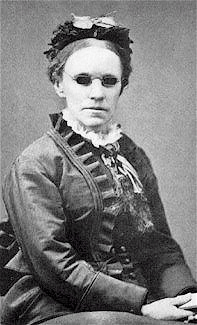

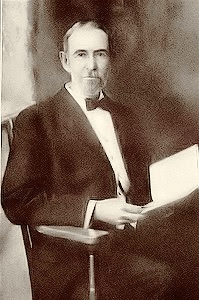
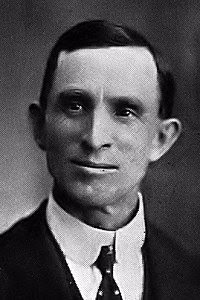
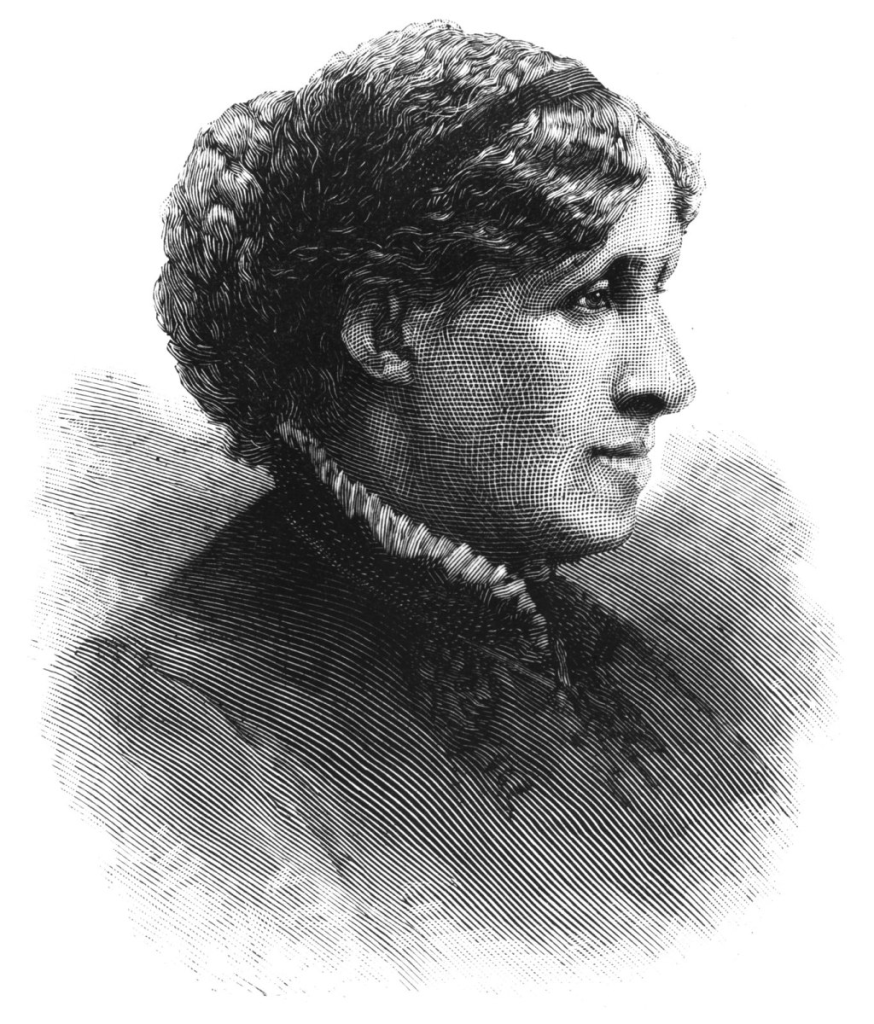
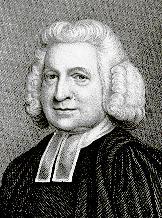
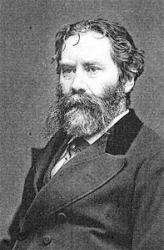

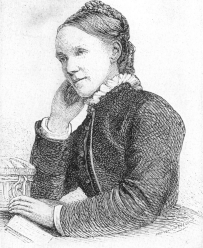



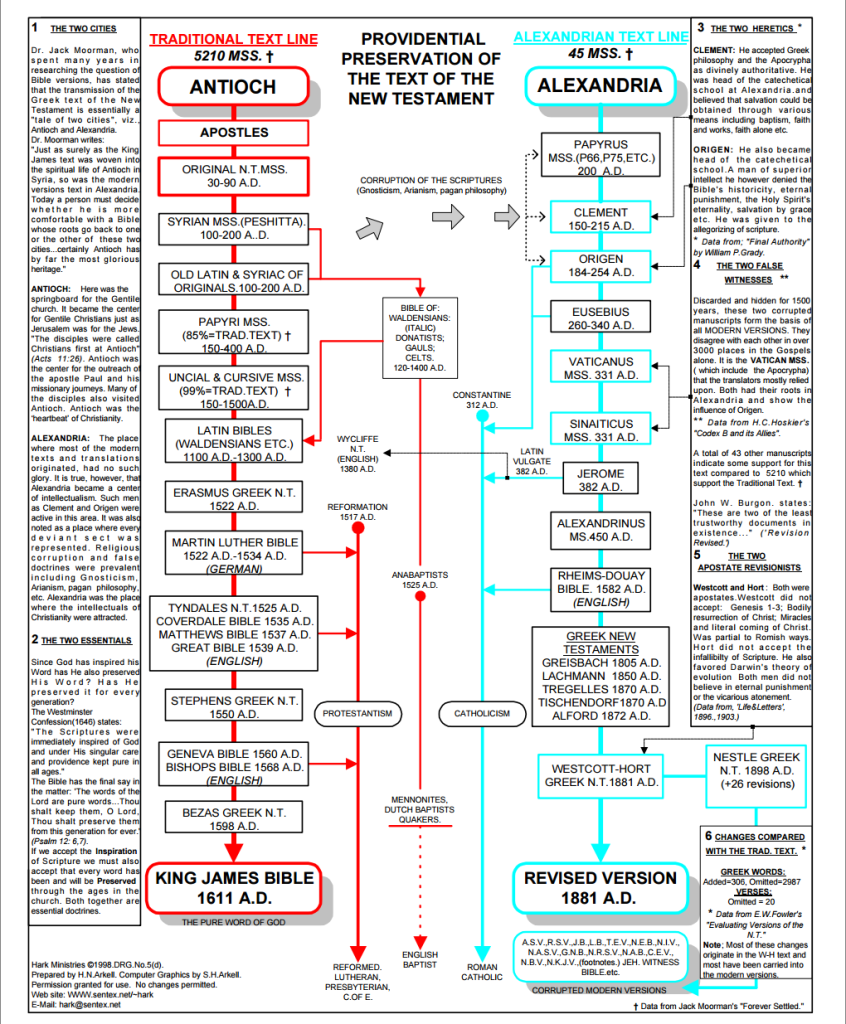
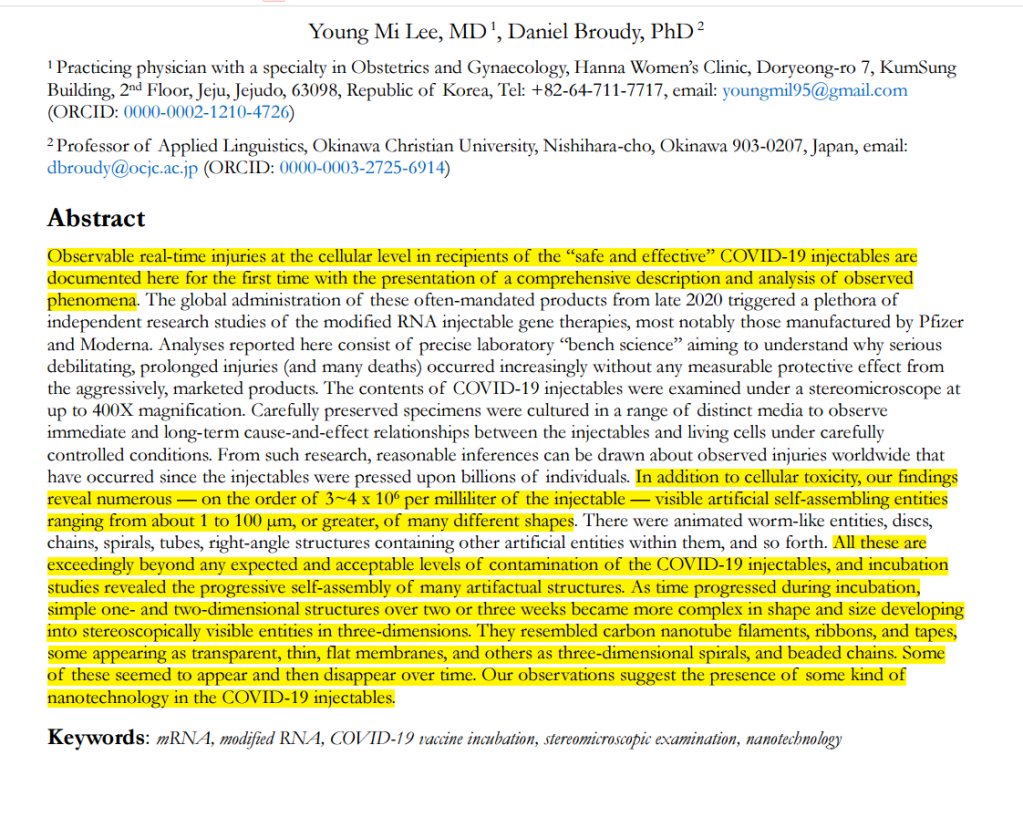



 Dr. R. Albert Mohler Jr. serves as president of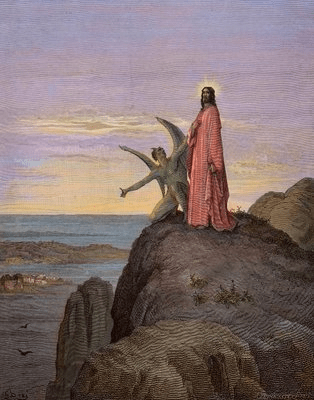



 The Vine Vigil