Often the secular world will accuse Christians of being exclusionary – “Jesus can’t be the only way.” (Oprah Winfrey) What about that? Is He the only way?
Yes !
In reality, there have always been two Books. The Bible, and Creation. Creation has been around for 2,500 years before the Bible was given.
The outdoor book speaks to man about God through natural revelation. Every person born on this earth, is witness to God’s eternal power and Godhead, through nature. Common sense tells man that there is beauty, order, intelligence, and design.
Lift up your eyes on high, and behold Who hath created these things, that bringeth out their host by number: He calleth them all by names by the greatness of His might, for that He is strong in power; not one faileth. Isaiah 40:26
Are the heathen accountable? Yes.
19 Because that which may be known of God is manifest in them; for God hath shewed it unto them. 20 For the invisible things of Him from the creation of the world are clearly seen, being understood by the things that are made, even His eternal power and Godhead; so that they are without excuse: 21 Because that, when they knew God, they glorified Him not as God, neither were thankful; but became vain in their imaginations, and their foolish heart was darkened. Romans 1: 19-21
If the individual responds positively to the truth that is revealed in nature, God, who knows our very thoughts, will raise up a missionary to give that person the truth in the written Word.
For example, when Paul and Silas wanted to go to a certain area in Asia, they were “forbidden of the Holy Ghost” – Acts 16:6,7.
Instead, God sent them to Western Europe, where He knew they were waiting to receive the Word. If people do not respond to the outdoor Book – they are still responsible for rejecting it – even if they never hear the Written Word.
Rejecting the truth of Creation will eventually cause individuals, as well as entire nations to become perverted. It makes no difference if the person is living in a hut in a third world country, or a penthouse in a fabulous city – it still applies.
1 O love that wilt not let me go, I rest my weary soul in thee; I give thee back the life I owe, that in thine ocean depths its flow may richer, fuller be.
2 O light that followest all my way, I yield my flickering torch to thee; my heart restores its borrowed ray, that in thy sunshine’s blaze its day may brighter, fairer be.
3 O joy that seekest me through pain, I cannot close my heart to thee; I trace the rainbow through the rain, and feel the promise is not vain that morn shall tearless be.
4 O cross that liftest up my head, I dare not ask to fly from thee; I lay in dust life’s glory dead, and from the ground there blossoms red life that shall endless be.
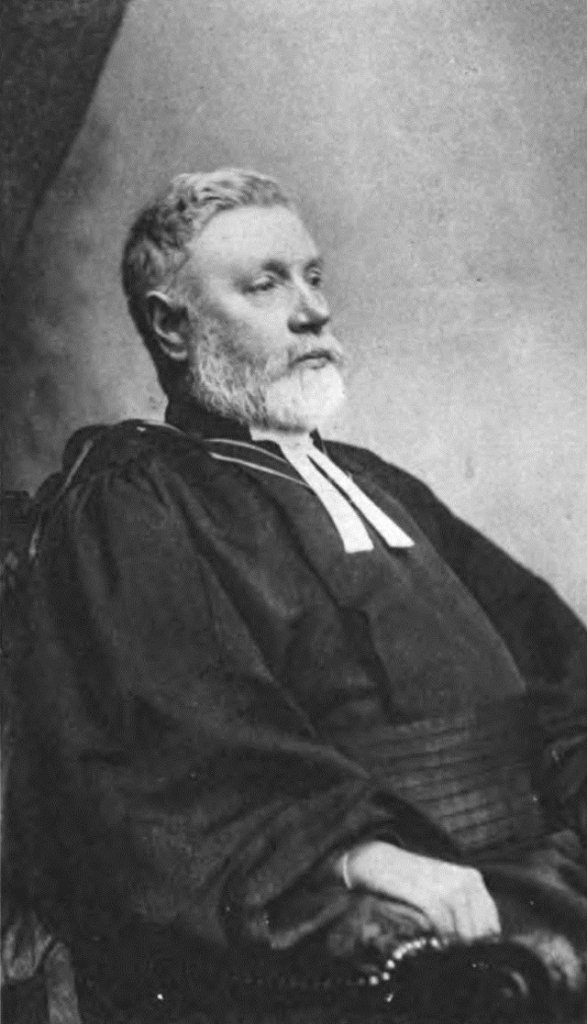
Lyrics: George Matheson 1842-1906
Music: Albert L. Peace
“Stabilizing lines, especially for those in darkness.
Do you know the story behind it?
At age 20 George Matheson (1842-1906) was engaged to be married but began going blind. When he broke the news to his fiancee, she decided she could not go through life with a blind husband. She left him. Before losing his sight he had written two books of theology and some feel that if he had retained his sight he could have been the greatest leader of the church of Scotland in his day.
A special providence was that George’s sister offered to care for him. With her help, George left the world of academia for pastoral ministry and wound up preaching to 1500 each week–blind.
The day came, however, in 1882, when his sister fell in love and prepared for marriage herself. The evening before the wedding, George’s whole family had left to get ready for the next day’s celebration. He was alone and facing the prospect of living the rest of his life without the one person who had come through for him. On top of this, he was doubtless reflecting on his own aborted wedding day twenty years earlier. It is not hard to imagine the fresh waves of grief washing over him that night.
In the darkness of that moment George Matheson wrote this hymn. He remarked afterward that it took him five minutes and that it was the only hymn he ever wrote that required no editing.
O love that will not let me go. Heartening hope for you and me.”
One way researchers are finding out is by studying coprolites, or fossilized dinosaur dung. And as it turns out, some dinosaurs ate rice plants. But if flowering plants like rice did not evolve until millions of years after dinosaurs lived—as evolution maintains—how could dinosaurs have eaten them?
Some coprolites contain phytoliths, which are uniquely shaped microscopic crystals manufactured by various plant tissues. Most phytoliths are made of silicon dioxide, the same chemical that comprises sand. Scientists examining these tiny grains can often discern from which plant they came.
For example, in 2005, researchers found phytoliths from grass, palm trees, conifers, and other flowering plants in (probably sauropod) dinosaur coprolites from India.1 “It was very unexpected….We will have to rewrite our understanding of its evolution….We may have to add grass to the dioramas of dinosaurs we see in museums,” palaeobotanist Caroline Strömberg told Nature News at the time.2
Recently, Strömberg and two of her co-authors from the 2005 study described coprolite-encased phytoliths that are so similar to those made by certain modern rice plants that those found in dinosaur rocks “can be assigned to the rice tribe, Oryzeae, of grass subfamily Ehrhartoideae.”3 They collected these samples from the same Indian rock layers, the Lameta Formation, that contained their 2005 finds.
This find joins others that have shown that rice, grass, palm trees, and conifers from dinosaur rocks were essentially the same as their living counterparts. It’s as though millions of years of plant evolution never occurred.
The Lameta formation includes sedimentary layers interbedded with volcanic rock layers. It is huge, covering a large area of India.4 The Flood described in the book of Genesis is the best explanation for this scale of upheaval, showing that the fossils found there resulted from the Flood.
Thus, these coprolites show that rice plants existed before the Flood. Either rice had diversified from an originally created grass that was common to many other grasses, like wheat and bamboo, or God created rice grasses separately from other grass kinds. Studies show that rice grasses do not hybridize with other grasses.5 These dinosaur-eaten phytoliths add weight to the idea that rice was a distinct creation from the beginning.
According to Scripture, God created all the grasses, plants, and grazing mammals, along with any grazing dinosaurs like sauropods, by the sixth day of the creation week. As far as what the fossils have shown, Scripture is right.
15 Behold now behemoth, which I made with thee; he eateth grass as an ox. 16 Lo now, his strength is in his loins, and his force is in the navel of his belly. 17 He moveth his tail like a cedar: the sinews of his stones are wrapped together. 18 His bones are as strong pieces of brass; his bones are like bars of iron. 19 He is the chief of the ways of God: He that made him can make His sword to approach unto him. 20 Surely the mountains bring him forth food, where all the beasts of the field play. 21 He lieth under the shady trees, in the covert of the reed, and fens. 22 The shady trees cover him with their shadow; the willows of the brook compass him about. 23 Behold, he drinketh up a river, and hasteth not: he trusteth that he can draw up Jordan into his mouth. 24 He taketh it with his eyes: his nose pierceth through snares. Job 40: 15-24
Oh – those loud, attention seekers. They speak without thinking, and put their proverbial feet in their mouths at every opportunity. Well, as annoying as they may be – the jabber mouths will not go on forever. The ones who take delight in mocking and ridiculing the Lord and His people will not get the last laugh!
Proverbs 10:31-32
31 The mouth of the just bringeth forth wisdom: but the froward tongue shall be cut out.
Recalling that only those who are under the Blood of Christ are considered “just” by God – it does not bode well for those who have a froward tongue!
adjective: froward
(of a person) difficult to deal with; contrary.
In point of fact – our blessed Redeemer made mention of this very thing, while He was here in the flesh:
But I say unto you, That every idle word that men shall speak, they shall give account thereof in the day of judgment.
32 The lips of the righteous know what is acceptable: but the mouth of the wicked speaketh frowardness.
How do we know what is “acceptable?” By reading, studying, and memorizing the Word of God. Being a Christian does not automatically cause you to speak with wisdom! This kind of righteousness comes only with having the mind of Christ, and making His thoughts and Words a part of you. And to prove that our own words can not count as wisdom, we look to our Savior once again, and see how He responded to the Devil during the temptation.
Matthew 4:3-10
3 And when the tempter came to him, he said, If thou be the Son of God, command that these stones be made bread.
4 But he answered and said, It is written, Man shall not live by bread alone, but by every word that proceedeth out of the mouth of God.
5 Then the devil taketh him up into the holy city, and setteth him on a pinnacle of the temple,
6 And saith unto him, If thou be the Son of God, cast thyself down: for it is written, He shall give his angels charge concerning thee: and in their hands they shall bear thee up, lest at any time thou dash thy foot against a stone.
7 Jesus said unto him, It is written again, Thou shalt not tempt the Lord thy God.
8 Again, the devil taketh him up into an exceeding high mountain, and sheweth him all the kingdoms of the world, and the glory of them;
9 And saith unto him, All these things will I give thee, if thou wilt fall down and worship me.
10 Then saith Jesus unto him, Get thee hence, Satan: for it is written, Thou shalt worship the Lord thy God, and him only shalt thou serve.
Notice that the Lord ONLY used Scripture to respond to the Devil. This is especially important for those Christians who somehow think the Old Testament no longer has meaning or importance to the Church! If the Living Christ thought it was important enough to quote – how are Christians confident in not doing so as well? Are we responding to temptation with our own logic and reason? Are we foolish enough to think that our own resources can outfox the Fox? The Devil? The Tempter? This one thing – failing to use the Word of God against temptation – is the greatest weakness of the Church.
Don’t get bogged down in debate with the evil one and his minions – you can’t possibly win against a supernatural intelligence like that using your own abilities. Use the Word of God as the sword of Truth! Memorize it, inhale it, study it, devour it. The wicked will flee. . .
Come, ye sinners, lost and hopeless, Jesus’ blood can make you free; For He saved the worst among you, When He saved a wretch like me.
Refrain:And I know, yes, I knowJesus’ blood can make the vilest sinner clean,And I know, yes, I knowJesus’ blood can make the vilest sinner clean.
To the faint He giveth power,Through the mountains makes a way;Findeth water in the desert,Turns the night to golden day.
In temptation He is near thee,Holds the pow’rs of hell at bay;Guides you to the path of safety,Gives you grace for every day.
He will keep thee while the agesRoll throughout eternity;Though earth hinders and hell rages,All must work for good to thee.
We only know that the wonderful words and music to this hymn were written by a lady name Anna W. Waterman, in 1920. . .
From a home with one brother and one sister, Charles Waterman’s urge was to see the country. This took him to hitchhiking on the railroad to California. He was influenced by the worldly crowd and gave himself to become an alcoholic. Even as such, he worked his way up to become an engineer on the steam locomotive. He married Anna, who had a Christian background and did what she could to keep the testimony before him. Anna was discouraged at the path her husband followed because it was causing him to miss work on some of his hangovers. So she asked a lady in her town in California to meet with her and help her pray for Charles to be saved. His wild life went on for three or more years and one night he became frightened while under the influence and when he finally arrived at home, he told Anna he wanted to be saved. She immediately called her friend who came over to their home and they led him to the Lord. He begged the Lord for forgiveness and to clean up his life, which the Lord did. The happiness that followed caused Anna to write this song. A book with over 30 other songs was collected and published. They visited in Lodi, Fountain County, Indiana, and at the Baptist Church, later named Waterman Baptist Church. http://www.hymntime.com/tch/htm/y/e/s/yesiknow.htm
Hebrews 7:25
Wherefore He is able also to save them to the uttermost that come unto God by Him, seeing He ever liveth to make intercession for them.
The way of the Lord is strength to the upright: but destruction shall be to the workers of iniquity.
Once again, the Proverbs make a clear demarcation between the saved and the lost. The pagan world is stymied when Christians repeatedly stand tall in the face of adversity. They would prefer, if when faced with calamity, that we collapse and fall into the abyss of sinful behaviors that they are mired in. But – the Proverb states that the Lord is our strength. We do not need to resort to the world’s accepted methods – we have the Word of God. Nothing more is required to see us through life’s darkest hours.
Psalm 1:6 For the Lord knoweth the way of the righteous: but the way of the ungodly shall perish.
Proverbs 10:30
The righteous shall never be removed: but the wicked shall not inhabit the earth.
That’s right all you Mother Earth worshipers, you do NOT inherit the earth. No matter how much you do to “save the planet,” it won’t help – because it’s not yours to save. The earth is the Lord’s, and everything in it – and He will give it to whom He chooses. It will not be given to the unrepentant, that is a fact.
Psalm 37:29
The righteous shall inherit the land, and dwell therein for ever.
Revelation 21:6-8
6 And He said unto me, It is done. I am Alpha and Omega, the beginning and the end. I will give unto him that is athirst of the fountain of the water of life freely.
7 He that overcometh shall inherit all things; and I will be his God, and he shall be my son.
8 But the fearful, and unbelieving, and the abominable, and murderers, and whoremongers, and sorcerers, and idolaters, and all liars, shall have their part in the lake which burneth with fire and brimstone: which is the second death.
30 Even the youths shall faint and be weary, and the young men shall utterly fall:
31 But they that wait upon the Lord shall renew their strength; they shall mount up with wings as eagles; they shall run, and not be weary; and they shall walk, and not faint.
The fear of the Lord prolongeth days: but the years of the wicked shall be shortened.
Proverbs 10:27
While the Word of God does not guarantee a long earthly life to truly born again believers, it does follow reason that those who fear Him, and forsake sinful lifestyles will have better health and greater joy in life. While we are in our flesh – we long to be with Him, and having the knowledge of His omniscience, omnipotence, and omnipresence will prevent us from taking a detour into the dark side.
Living the Holy Spirit filled life is a matter of surrendering our wills to His will. It is a matter of getting rid of our household gods and fleshly desires, and allowing the Holy Spirit to completely fill us. And while it seems that the wicked are holding sway at this moment in time – remember – that to God – there is no time! Time only exists here on earth – it is not a part of the heavenly realm.
The hope of the righteous shall be gladness: but the expectation of the wicked shall perish.
Proverbs 10:28
Yes – we must fear our Creator – but we must also hope in Him. One need only see the hard, brittle, look in the eyes of the abrasive atheists when they are attacking the Bible and Bible believers. It is a cold, dead expression – void of hope. And if the eyes truly are the window to the soul – what does that tell us? There is death where there is no hope – spiritual death. And then in the not so far off future – eternal death in the Lake of Fire.
We can be truly glad of heart, and take joy in the fact that our futures are already secure, and written down in the Lamb’s Book of Life. There is no reason to fret over evil doers – because their future is already determined if they remain unrepentant. What a terrible thought.
The next time you hear news of murders, corruptions, and all the sundry evils that satan has in his arsenal, it would be wise to think where your hope is. It is not here! not in America, not in anything other than our blessed savior – Jesus Christ.
Whereas ye know not what shall be on the morrow. For what is your life? It is even a vapour, that appeareth for a little time, and then vanisheth away.
[Forgive me. I so wanted to post a video with the classic hymn – “On Christ the Solid Rock I Stand,” but was unable to find one without a sensuous back-beat.]
Lord Jesus, I long to be perfectly whole; I want Thee forever to live in my soul. Break down every idol, cast out every foe; Now wash me, and I shall be whiter than snow.
Refrain
Whiter than snow, yes, whiter than snow. Now wash me, and I shall be whiter than snow.
Lord Jesus, let nothing unholy remain, Apply Thine own blood and extract every stain; To get this blest cleansing, I all things forego— Now wash me, and I shall be whiter than snow.
Refrain
Lord Jesus, look down from Thy throne in the skies, And help me to make a complete sacrifice. I give up myself, and whatever I know, Now wash me, and I shall be whiter than snow.
Refrain
Lord Jesus, for this I most humbly entreat, I wait, blessèd Lord, at Thy crucified feet. By faith, for my cleansing, I see Thy blood flow, Now wash me, and I shall be whiter than snow.
Refrain
Lord Jesus, Thou seest I patiently wait, Come now, and within me a new heart create; To those who have sought Thee, Thou never saidst No, Now wash me, and I shall be whiter than snow.
Refrain
The blessing by faith, I receive from above; O glory! my soul is made perfect in love; My prayer has prevailed, and this moment I know, The blood is applied, I am whiter than snow.
Refrain
This hymn was written in 1872 by James Nicholson, who lived in Washington D. C. He was a dedicated Christian and was active in the Wharton Street Methodist Episcopal Church as a Sunday school and evangelistic worker.
The tune was written by Philadelphia musician named William Gustavus Fischer who was a popular song leader for revival meetings. He also composed the tune for “I love to tell the story”.
The hymn is based on Ps51:7 – “Purge me with hyssop, and I shall be clean: wash me, and I shall be whiter than snow.”
This beautiful hymn tells the salvation story from start to finish. It contains all three elements of true repentance:
change of mind
change of heart
change of will
If you do not know the Lord Jesus Christ as your Savior, now is the time to get right with the Lord. In all sincerity – there is no better time than right now.
If you will only let God guide you, And hope in Him through all your ways, Whatever comes, He’ll stand beside you, To bear you through the evil days; Who trusts in God’s unchanging love Builds on the Rock that cannot move.
Only be still, and wait His leisure In cheerful hope, with heart content To take whatever the Father’s pleasure And all discerning love have sent; Nor doubt our inmost wants are known To Him Who chose us for His own.
Sing, pray, and swerve not from His ways, But do your part in conscience true; Trust His rich promises of grace, So shall they be fulfilled in you; God hears the call of those in need, The souls that trust in Him indeed.
Winkworth’s original translation:
If thou but suffer God to guide thee And hope in Him through all thy ways, He’ll give thee strength, whate’er betide thee, And bear thee through the evil days. Who trust in God’s unchanging love Builds on the rock that naught can move.
What can these anxious cares avail thee These never ceasing moans and sighs? What can it help if thou bewail thee O’er each dark moment as it flies? Our cross and trials do but press The heavier for our bitterness.
Be patient and await His leisure In cheerful hope, with heart content To take whatever thy Father’s pleasure And His discerning love hath sent, Nor doubt our inmost want are known To Him who chose us for His own.
God knows full well when time of gladness Shall be the needful thing for thee. When He has tried thy soul with sadness And from all guile has found thee free, He comes to thee all unaware And makes thee own His loving care.
Nor think amid the fiery trial That God hath cast thee off unheard, That he whose hopes meet no denial Must surely be of God preferred. Time passes and much change doth bring And set a bound to everything.
All are alike before the Highest: ’Tis easy for our God, We know, To raise thee up, though low thou liest, To make the rich man poor and low. True wonders still by Him are wrought Who setteth up and brings to naught.
Sing, pray, and keep His ways unswerving, Perform thy duties faithfully, And trust His Word: though undeserving, Thou yet shalt find it true for thee. God never yet forsook in need The soul that trusted Him indeed.
Words:Georg Neumark, 1641 (Wer nur den lieben Gott lässt walten); first published in his Fortgepflantzer musikalisch-poetischer Lustwald (Jena, Germany: 1657). Catherine Winkworth translated the words from German to English in 1855, and published them in the Chorale Book for England, 1863.
Music: Neumark, Georg Neumark, 1641 (MIDI, score). The tune is said to have been used for 400 different hymns.
Things appeared desperate for Georg Neumark. Walking cross country in the early Autumn of 1641 to begin his studies at the University of Konigsberg, the young German scholar was robbed of virtually everything he owned. With no money left to pay for food or classes, George had to drop out of college and look for work. He was hungry, poorly clothed, forced to take whatever shelter he could find as the cold weather came on.
He went back to Magdeburg but could find no work there. However, he made friends easily, and they pointed him to different cities. But he had no more success in the next three cities he tried: Luneburg, Winsen or Hamburg. He passed on to Keil. The chief pastor of Keil, Nicolaus Becker took an interest in Georg. Like Georg, he was from Thuringia. However, he could find him no immediate work. It was now December. What was Georg to do?
At this darkest moment, a miracle happened. A tutor in a prominent family fell into disgrace and fled. Nicolaus Becker recommended Georg for the position and he was hired. Georg’s response was to burst into a hymn of praise, “on that very day.”
If thou but suffer God to guide thee And hope in Him through all thy ways, He’ll give thee strength, whate’er betide thee, And bear thee through the evil days…. Sing, pray, and keep His ways unswerving, Perform thy duties faithfully, And trust His Word: though undeserving, Thou yet shalt find it true for thee. God never yet forsook in need The soul that trusted Him indeed.
We remember George Neumark mainly because of that one hymn and the tune he composed for it. For two years he worked and saved his money, finally getting together enough to enter University. In 1646 he again lost everything he owned, this time to a fire.
However, he was able to complete his studies and return to his homeland. There Duke Wilhelm II of Sachse-Weimar recognized his merits and gave him a trusted position.
Georg went blind shortly before he died, but the court allowed him to keep his jobs with their badly-needed income right to the end. He died on this day, July 18, 1681, having turned 60 shortly before. He had performed his part faithfully and God did not forsake him, bearing him through the evil days.
Bibliography:
Covert, William Chalmers and Laufer, Calvin Weiss, editors. Handbook to the Hymnal. (Philadelphia: Presbyterian Board of Christian Education, 1936).
23 But the hour cometh, and now is, when the true worshippers shall worship the Father in spirit and in truth: for the Father seeketh such to worship him.
24 God is a Spirit: and they that worship him must worship him in spirit and in truth.
How many of us think, that if we only had enough money in the bank, or enough food in storage, or enough gold coins, or enough whatever – that we would be safe from impending doom?
Or conversely, how many of us rely on our poverty to sustain us? Believing that some entity or other will always be there to pick us up after we fall, or feed, clothe, shelter, and educate us merely because we exist? Assuming no harm can befall us because “they” will help?
Proverbs 10:15
The rich man’s wealth is his strong city:
This image applies to both aspects of the Proverb – because within a city or any metropolitan area like that – both the wealthy and the poor live within yards of each other. Artificial insulation deceives the dwellers into thinking that all is well. The wealthy thinks his high tower protects him, and the poor thinks the system will protect him. And it doesn’t only apply to cities – think of the wealthy plantations in the South before the Civil War. They were micro-complexes of supra-independence. But many of them were razed and burned to the ground – lock, stock, and barrel.
the destruction of the poor is their poverty.
Do people trust in poverty? Absolutely! It is the same assumption that the wealthy make – trusting in the world. Content to let others care for them – the poor will end in destruction says the Proverb.
Not everyone who is poor or wealthy must end this way. It is a matter of where we put our trust. Trusting in ourselves, in money, in “prepping,” in the government, in family, in religion, in education, in the media, in anyone or anything other than Jesus Christ – is folly and destruction for both the rich and the poor.
Psalm 118:8-9
8 It is better to trust in the Lord than to put confidence in man.
9 It is better to trust in the Lord than to put confidence in princes.
Please look at verse 8 above – putting confidence in man – includes yourself! V. 9 – putting confidence in princes is the same as putting confidence in politicians.
Psalm 9:9-10
9 The Lord also will be a refuge for the oppressed, a refuge in times of trouble.
10 And they that know Thy name will put their trust in Thee: for Thou, Lord, hast not forsaken them that seek Thee.
1 No one understands like Jesus, He’s a friend beyond compare; Meet Him at the throne of mercy, He is waiting for you there.
Chorus: No one understands like Jesus, When the days are dark and grim; No one is so near, so dear as Jesus, Cast your every care on Him.
2 No one understands like Jesus, Every woe He sees and feels; Tenderly He whispers comfort, And the broken heart He heals. (Chorus)
3 No one understands like Jesus, When the foes of life assail; You should never be discouraged, Jesus cares and will not fail (Chorus)
4 No one understands like Jesus, When you falter on the way; Tho’ you fail Him, sadly fail Him He will pardon you today. (Chorus)
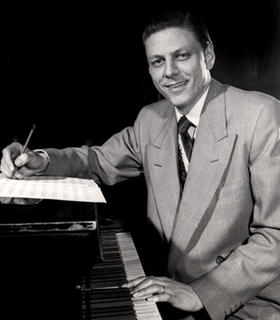
John W. Peterson (November 1, 1921 – September 20, 2006) was a songwriter who had a major influence on evangelical Christian music in the 1950s through the 1970s. He wrote over 1000 songs, and 35 cantatas.
Born in Lindsborg, Kansas, he served as an Army Air Force pilot flying the China Hump during World War II. Later, he attended Moody Bible Institute and served on the radio staff there for a number of years.
In 1953, he graduated from the American Conservatory of Music in Chicago and shortly thereafter settled in Pennsylvania to continue his songwriting career. He then moved to Grand Rapids, Michigan, where for over ten years he was President and Editor-in-Chief of Singspiration, a sacred music publishing company. While there, he compiled and edited a hymnal called “Great Hymns of the Faith”, (c) 1961. He also served on the board of Gospel Films, Inc. of Muskegon, Michigan.
He also had direct contact with popular Christian musicians of the day such as Bill Pearce and Dick Anthony. He resided in Scottsdale, Arizona, where he continued to write music. Peterson died September 20, 2006, aged 84, following a bout with prostate cancer.
Some of his more popular song titles include “It Took a Miracle”, “Over the Sunset Mountains”, “Heaven Came Down”, “So Send I You”, “Springs of Living Water”, “Jesus is Coming Again”, “Surely Goodness and Mercy” and “This is the day that the Lord hath made”. His cantatas include Night of Miracles and Down From His Glory.
In 1986, he was inducted into the Gospel Music Hall of Fame.
–www.wikipedia.org
John W. Peterson was a gifted composer of Christian music. ALL of his music is Godly, reverent, melodic, harmonic, and devoid of spiritually dangerous back-beat. I thank God for John W. Peterson, the last great writer of Christian music.
Hebrews 4:14-16
14 Seeing then that we have a great high priest, that is passed into the heavens, Jesus the Son of God, let us hold fast our profession.
15 For we have not an high priest which cannot be touched with the feeling of our infirmities; but was in all points tempted like as we are, yet without sin.
16 Let us therefore come boldly unto the throne of grace, that we may obtain mercy, and find grace to help in time of need.
There is an entire industry devoted to “prepping,” or the storing up of food and provisions in cases of extreme emergency. But there is something else we need to think about storing up. And it is something that is mentioned frequently in the Word of God – while “prepping” is not. Indeed – it would not be an exaggeration to state that “prepping” has become a religion to many people!
Another way to describe storing up – is laying up.
Proverbs 10:14
Wise men lay up knowledge:
It has been stressed repeatedly throughout these Friday Proverb studies – that the only thing truly worth knowing about – is God’s Word. It is the foundation and cornerstone of all knowledge and wisdom. There is nothing – NOTHING – more important to our earthly sojourn – than to “lay up” knowledge of His Book! If you don’t – you fall into the “but” category of this Proverb-
but the mouth of the foolish is near destruction.
The fact is – If we posted all the fools featured on television in just one day – from all the different sources such as news and talk shows – wordpress would probably crash!
Thinking before speaking is a sign of wisdom. Laying up knowledge before speaking is another sign of wisdom. Far too many open their mouths to opine on things they know nothing about. By prefacing their opinion with an “I think,” they believe they are qualified to hold forth, often having no more understanding of what they are talking about than a child would. Moreover – they resist any efforts by others to teach them what they do not understand! That is willfully ignorant! And my friends – Christians are guilty of this too. . .
Is ignorance an excuse? Not for believers! We are told again and again to feed on the Word. The more we take in the deep things of God – the more we will know when to speak and what to say, and when to hold our tongues. What should come out of our mouths, is not our thoughts – but His thoughts. And the only way to know His thoughts – is by laying up the Words in His Book!
James 1:19
Wherefore, my beloved brethren, let every man be swift to hear, slow to speak, slow to wrath
James 1:26
If any man among you seem to be religious, and bridleth not his tongue, but deceiveth his own heart, this man’s religion is vain.
1 I stand amazed in the presence of Jesus, the Nazarene, and wonder how he could love me, a sinner, condemned, unclean.
Refrain: How marvelous, how wonderful! And my song shall ever be: How marvelous, how wonderful is my Savior’s love for me!
2 He took my sins and my sorrows; he made them his very own; he bore the burden to Calvary and suffered and died alone. [Refrain]
3 When with the ransomed in glory his face I at last shall see, ’twill be my joy through the ages to sing of his love for me. [Refrain]
Charles Hutchinson Gabriel (August 18, 1856, Wilton, Iowa – September 14, 1932, Hollywood, California) was a writer of gospel songs and composer of gospel tunes. He is said to have written and/or composed between 7,000 and 8,000 songs,[1] many of which are available in 21st century hymnals. He used several pseudonyms, including Charlotte G. Homer, H. A. Henry, and S. B. Jackson.[2]
Charles Hutchinson Gabriel was born in Wilton, Muscatine County, Iowa, and raised on a farm. His father led singing schools in their home, and young Charles developed an interest in music. It is said that he taught himself to play the family’s reed organ.[2] Even though he never had any formal training in music, he began to travel and lead his own singing schools in various locations around the age of 17.[3]
His musical talent was well recognized in his boyhood home of Wilton. There is one folklore story, that the pastor of the First Presbyterian Church of Wilton (Pastor Pollock or McAulay) once saw Gabriel walking in town early in the week. He asked Gabriel if he knew a good song to go along with his sermon. The pastor shared the sermon topic and by the end of the week the boy had written a song for that Sunday, words and music. The Rev. N. A. McAulay was a pastor at the Wilton church for many years, and it is also said that young Gabriel wrote the music for one of McAulay’s songs. The song, “How Could it Be,” was later published in Songs for Service, edited by Gabriel, with the music being credited to “Charles H. Marsh,” possibly one of Gabriel’s pseudonyms.[4]
I am crucified with Christ: nevertheless I live; yet not I, but Christ liveth in me: and the life which I now live in the flesh I live by the faith of the Son of God, who loved me, and gave himself for me.
O for a thousand tongues to sing My great Redeemer’s praise, The glories of my God and King, The triumphs of His grace!
My gracious Master and my God, Assist me to proclaim, To spread through all the earth abroad The honors of Thy name.
Jesus! the name that charms our fears, That bids our sorrows cease; ’Tis music in the sinner’s ears, ’Tis life, and health, and peace.
He breaks the power of canceled sin, He sets the prisoner free; His blood can make the foulest clean, His blood availed for me.
He speaks, and, listening to His voice, New life the dead receive, The mournful, broken hearts rejoice, The humble poor believe.
Hear Him, ye deaf; His praise, ye dumb, Your loosened tongues employ; Ye blind, behold your Savior come, And leap, ye lame, for joy.
In Christ your Head, you then shall know, Shall feel your sins forgiven; Anticipate your heaven below, And own that love is heaven.
Glory to God, and praise and love Be ever, ever given, By saints below and saints above, The church in earth and heaven.
On this glad day the glorious Sun Of Righteousness arose; On my benighted soul He shone And filled it with repose.
Sudden expired the legal strife, ’Twas then I ceased to grieve; My second, real, living life I then began to live.
Then with my heart I first believed, Believed with faith divine, Power with the Holy Ghost received To call the Savior mine.
I felt my Lord’s atoning blood Close to my soul applied; Me, me He loved, the Son of God, For me, for me He died!
I found and owned His promise true, Ascertained of my part, My pardon passed in heaven I knew When written on my heart.
Look unto Him, ye nations, own Your God, ye fallen race; Look, and be saved through faith alone, Be justified by grace.
See all your sins on Jesus laid: The Lamb of God was slain, His soul was once an offering made For every soul of man.
Awake from guilty nature’s sleep, And Christ shall give you light, Cast all your sins into the deep, And wash the Æthiop white.
Harlots and publicans and thieves In holy triumph join! Saved is the sinner that believes From crimes as great as mine.
Murderers and all ye hellish crew In holy triumph join! Believe the Savior died for you; For me the Savior died.
With me, your chief, ye then shall know, Shall feel your sins forgiven; Anticipate your heaven below, And own that love is heaven.
Charles Wesley 1739
Wesley wrote this hymn to commemorate the first anniversary of his conversion to Christ. This origin is reflected in the lyrics, “On this glad day the glorious Sun of Righteousness arose.” The stanza that begins “O for a thousand tongues to sing” is verse seven of Wesley’s original poem. This work first appeared in Hymns and Sacred Poems in 1740.
The majestic music for this breathtaking hymn was composed by Carl Glaser, 1828.
Psalm 35:27-28
27 Let them shout for joy, and be glad, that favour my righteous cause: yea, let them say continually, Let the Lord be magnified, which hath pleasure in the prosperity of his servant.
28 And my tongue shall speak of thy righteousness and of thy praise all the day long.
Psalm 119:171-173
171 My lips shall utter praise, when thou hast taught me thy statutes.
172 My tongue shall speak of thy word: for all thy commandments are righteousness.
173 Let thine hand help me; for I have chosen thy precepts.
Joyful, joyful, we adore Thee, God of glory, Lord of love; Hearts unfold like flowers before Thee, opening to the sun above. Melt the clouds of sin and sadness; drive the dark of doubt away; Giver of immortal gladness, fill us with the light of day!
All Thy works with joy surround Thee, earth and heaven reflect Thy rays, Stars and angels sing around Thee, center of unbroken praise. Field and forest, vale and mountain, flowery meadow, flashing sea, Singing bird and flowing fountain call us to rejoice in Thee.
Thou art giving and forgiving, ever blessing, ever blessed, Wellspring of the joy of living, ocean depth of happy rest! Thou our Father, Christ our Brother, all who live in love are Thine; Teach us how to love each other, lift us to the joy divine.
Mortals, join the happy chorus, which the morning stars began; Father love is reigning o’er us, brother love binds man to man. Ever singing, march we onward, victors in the midst of strife, Joyful music leads us Sunward in the triumph song of life.
Henry Van Dyke 1852-1933
“The Hymn of Joy“[1] (often called “Joyful, Joyful We Adore Thee” after the first line) is a poem written by Henry van Dyke in 1907 with the intention of musically setting it to the famous “Ode to Joy” melody of the final movement of Ludwig van Beethoven‘s final symphony, Symphony No. 9.[2]
Van Dyke wrote this poem in 1907 while staying at the home of Williams College president Harry Augustus Garfield. He was serving as a guest preacher at Williams at the time. He told his host that the local Berkshire Mountains had been his inspiration.[3] The lyrics were first published in 1911 in Van Dyke’s Book of Poems, Third Edition.[3]
Van Dyke wrote of this hymn:
These verses are simple expressions of common Christian feelings and desires in this present time—hymns of today that may be sung together by people who know the thought of the age, and are not afraid that any truth of science will destroy religion, or any revolution on earth overthrow the kingdom of heaven. Therefore this is a hymn of trust and joy and hope.
“This hymn is generally considered by hymnologists to be one of the most joyous expressions of hymn lyrics in the English language.”
I will praise Thee; for I am fearfully and wonderfully made: marvellous are Thy works; and that my soul knoweth right well.
Revelation 15:3-4
And they sing the song of Moses the servant of God, and the song of the Lamb, saying, Great and marvellous are Thy works, Lord God Almighty; just and true are Thy ways, Thou King of saints.
Who shall not fear Thee, O Lord, and glorify Thy name? for Thou only art holy: for all nations shall come and worship before Thee; for Thy judgments are made manifest.
1 “Though your sins be as scarlet, they shall be as white as snow; though your sins be as scarlet, they shall be as white as snow. Though they be red like crimson, They shall be as wool. Though your sins be as scarlet, though your sins be as scarlet, they shall be as white as snow, they shall be as white as snow.”
2 Hear the voice that entreats you, O return ye unto God! Hear the voice that entreats you, O return ye unto God! He is great compassion, and of wondrous love. Hear the voice that entreats you, hear the voice that entreats you, O return ye unto God! O return ye unto God!
3 He’ll forgive your transgressions, and remember them no more: he’ll forgive your transgressions, and remember them no more. “Look unto me, ye people,” saith the Lord your God. He’ll forgive your transgressions, he’ll forgive your transgression, and remember them no more, and remember them no more.
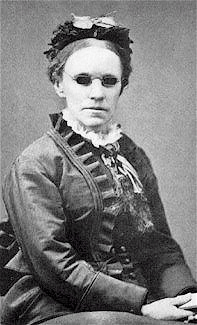
Fanny Crosby 1820-1915
She could compose at any time and did not need to wait for any special inspiration, and her best hymns have come on the spur of the moment. She always composed with an open book in her hand, generally a copy of Golden Hymns, held closely over her eyes, bottom side up. She learned to play on the guitar and piano while at the institution, and has a clear soprano voice. She also received a technical training in music, and for this reason she could, and did, compose airs for some of her hymns. One of these is, “Jesus, dear, I come to Thee, Thou hast said I may,” both words and music of which are wonderfully sweet. “Safe in the arms of Jesus”, probably one of her best known hymns, was her own favorite. Fanny loved her work, and was happy in it. She was always ready either to sympathize or join in a mirthful conversation, as the case may be. The secret of this contentment dates from her first composition at the age of eight years. “It has been the motto of my life,” she says. It is: “O what a happy soul am I! Although I cannot see, I am resolved that in this world Contented I will be;”
This has continued to be her philosophy. She says that had it not been for her affliction she might not have so good an education, nor so great an influence, and certainly not so fine a memory. She knows a great many portions of the Bible by heart, and had committed to memory the first four books of the Old Testament, and also the four Gospels before she was ten years of age.
17 Learn to do well; seek judgment, relieve the oppressed, judge the fatherless, plead for the widow.
18 Come now, and let us reason together, saith the Lord: though your sins be as scarlet, they shall be as white as snow; though they be red like crimson, they shall be as wool.
19 If ye be willing and obedient, ye shall eat the good of the land
1. I’m pressing on the upward way, New heights I’m gaining every day; Still praying as I’m onward bound, “Lord, plant my feet on higher ground.”
Refrain: Lord, lift me up and let me stand, By faith, on Heaven’s tableland, A higher plane than I have found; Lord, plant my feet on higher ground.
2. My heart has no desire to stay Where doubts arise and fears dismay; Though some may dwell where those abound, My prayer, my aim, is higher ground.
3. I want to live above the world, Though Satan’s darts at me are hurled; For faith has caught the joyful sound, The song of saints on higher ground.
4. I want to scale the utmost height And catch a gleam of glory bright; But still I’ll pray till heav’n I’ve found, “Lord, plant my feet on higher ground.”
Born: April 21, 1856, near Medford, New Jersey.
Died: September 25, 1922, Norman, Oklahoma.
Buried: Mt. Holly, New Jersey.
Johnson Oatman, Jr., son of Johnson and Rachel Ann Oatman, was born near Medford, N. J., April 21, 1856. His father was an excellent singer, and it always delighted the son to sit by his side and hear him sing the songs of the church.
Outside of the usual time spent in the public schools, Mr. Oatman received his education at Herbert’s Academy, Princetown, N. J., and the New Jersey Collegiate Institute, Bordentown, N. J. At the age of nineteen he joined the M.E. Church, and a few years later he was granted a license to preach the Gospel, and still later he was regularly ordained by Bishop Merrill. However, Mr. Oatman only serves as a local preacher.
For many years he was engaged with his father in the mercantile business at Lumberton, N. J., under the firm name of Johnson Oatman & Son. Since the death of his father, he has for the past fifteen years been in the life insurance business, having charge of the business of one of the great companies in Mt. Holly, N. J., where he resides.
He has written over three thousand hymns, and no gospel song book is considered as being complete unless it contains some of his hymns.
In 1878 he married Wilhelmina Reid, of Lumberton, N.J. and had three children, Rachel, Miriam, and Percy.
Excerpted from Biography of Gospel Song and Hymn Writers by Jacob Henry Hall; Fleming H. Revell, Co. 1914
12 Wherefore seeing we also are compassed about with so great a cloud of witnesses, let us lay aside every weight, and the sin which doth so easily beset us, and let us run with patience the race that is set before us,
2 Looking unto Jesus the author and finisher of our faith; who for the joy that was set before him endured the cross, despising the shame, and is set down at the right hand of the throne of God.
Due to the stressfulness of this past week, the Lord put it on my heart to choose this hymn, and post it this evening instead of waiting for tomorrow morning. Please let this wonderful hymn be a balm to your spirit.
Far away in the depths of my spirit tonight Rolls a melody sweeter than psalm; In celestial strains it unceasingly falls O’er my soul like an infinite calm.
Refrain
Peace, peace, wonderful peace, Coming down from the Father above! Sweep over my spirit forever, I pray In fathomless billows of love!
What a treasure I have in this wonderful peace, Buried deep in the heart of my soul, So secure that no power can mine it away, While the years of eternity roll!
Refrain
I am resting tonight in this wonderful peace, Resting sweetly in Jesus’ control; For I’m kept from all danger by night and by day, And His glory is flooding my soul!
Refrain
And I think when I rise to that city of peace, Where the Anchor of peace I shall see, That one strain of the song which the ransomed will sing In that heavenly kingdom will be:
Refrain
Ah, soul! are you here without comfort and rest, Marching down the rough pathway of time? Make Jesus your Friend ere the shadows grow dark; O accept of this peace so sublime!
Refrain
Lyrics – Warren D. Cornell – Alas – no picture is available of brother Warren Cornell.
Born: April 25, 1858, Whiteford, Michigan.
Died: February 4, 1901, Fond du Lac, Wisconsin.
Cornell & Cooper wrote this song at a camp meeting near West Bend, Wisconsin:
One day while seated in the tent, Mr. Cornell, following a period of deep introspection, wrote down the thoughts with which his mind had been busied. They later proved to be parts of this hymn, Wonderful Peace. Sinking again into introspective rumination, he arose, unwittingly dropped the written verses on the tent floor and went out. When Mr. Cooper entered the tent an hour or two later he discovered the paper. He was fascinated by the theme and the accompanying verses. It so fitted his own thinking that he filled in and completed the poem. Then sitting down at the organ he composed the melody as it has since been sung.
Cooper was living in Fond du Lac, Wisconsin (1870); Buchanan, Michigan (1880); and Hortonville Village, Wisconsin (1900). He pastored at the Hortonville Community Baptist Church from September 1, 1897 to April 1, 1901. In May 1922, he became pastor of the Baptist church in Ira, Vermont. His works include:
History of the Baptist Church of Ira, Vermont, with Simon Lewis Peck (Rutland, Vermont: Tuttle Company, 1925)
Sacred Songs (Canton, Maine: The Pinewood Press, 1936)
A Biblical understanding of peace begins with the Hebrew expression שָׁלוֹם (shalom), a word as rich in meaning as it is lovely in sound. In English we generally think of “peace” in terms of what it is not–as an absence of conflict, or confusion, or struggle. But shalom is defined positively, as the presence of certain qualities, such as “completeness,” “soundness,” and “wellness” (Brown, 1022). In this sense it was (and still is) used in Hebrew as an all-purpose greeting and farewell (Jewish Encyclopedia). With this in view, it becomes apparent that even when shalom is used in our sense of “peace”–the opposite of war–it is more a state of mind than of situation. One might have shalom even in the midst of all sorts of external stresses and conflicts; it is not dependent on the actions of others.
Tis So Sweet to Trust in JesusRefrain: Jesus, Jesus, how I trust Him! How I’ve proved Him o’er and o’er Jesus, Jesus, precious Jesus! O for grace to trust Him more!‘Tis so sweet to trust in Jesus, And to take Him at His Word; Just to rest upon His promise, And to know, ‘Thus says the Lord!’RefrainO how sweet to trust in Jesus, Just to trust His cleansing blood; And in simple faith to plunge me ‘Neath the healing, cleansing flood!RefrainYes, ’tis sweet to trust in Jesus, Just from sin and self to cease; Just from Jesus simply taking Life and rest, and joy and peace.RefrainI’m so glad I learned to trust Thee, Precious Jesus, Savior, Friend; And I know that Thou art with me, Wilt be with me to the end.Refrain
Text: Louisa M. R. Stead, c. 1850-1917 Music: William J. Kirkpatrick, 1838-1921
Trust is one of those marvelous words that can be used in many different ways. As a noun, it refers to the confidence that we have in someone or something. It can also be an account that is entitled to special treatment and special protection. As a verb, it is the act of placing confidence in someone else. Whether it is a thing or an action, though, we often speak of “levels” or “degrees” of trust. Between the best of friends there is great trust. How much do we trust others? How much do they trust us?
This week’s featured hymn was written by Louisa Stead. The story is told that she and her husband were watching their young daughter by the beach. Someone cried out for help. There was a boy in the water. Mr. Stead went to the rescue, but the frightened boy pulled him under the water in a panic. Mrs. Stead and her daughter could only watch from the beach as the boy and her husband drowned.
Stead was a poor woman and she was hardly able to provide for her daughter. One day when it seemed that all of their resources were gone, she found a gift of food and money left on her doorstep. It was on that day that she sat and wrote these words.
9 But we see Jesus, who was made a little lower than the angels for the suffering of death, crowned with glory and honour; that he by the grace of God should taste death for every man.
10 For it became him, for whom are all things, and by whom are all things, in bringing many sons unto glory, to make the captain of their salvation perfect through sufferings.
11 For both he that sanctifieth and they who are sanctified are all of one: for which cause he is not ashamed to call them brethren,
12 Saying, I will declare thy name unto my brethren, in the midst of the church will I sing praise unto thee.
13 And again, I will put my trust in him. And again, Behold I and the children which God hath given me.
Love divine, all loves excelling, Joy of Heav’n to earth come down; Fix in us thy humble dwelling; All thy faithful mercies crown! Jesus, Thou art all compassion, Pure unbounded love Thou art; Visit us with Thy salvation; Enter every trembling heart.
Breathe, O breathe Thy loving Spirit, Into every troubled breast! Let us all in Thee inherit; Let us find that second rest. Take away our bent to sinning; Alpha and Omega be; End of faith, as its beginning, Set our hearts at liberty.
Come, Almighty to deliver, Let us all Thy life receive; Suddenly return and never, Never more Thy temples leave. Thee we would be always blessing, Serve Thee as Thy hosts above, Pray and praise Thee without ceasing, Glory in Thy perfect love.
Finish, then, Thy new creation; Pure and spotless let us be. Let us see Thy great salvation Perfectly restored in Thee; Changed from glory into glory, Till in Heav’n we take our place, Till we cast our crowns before Thee, Lost in wonder, love, and praise.
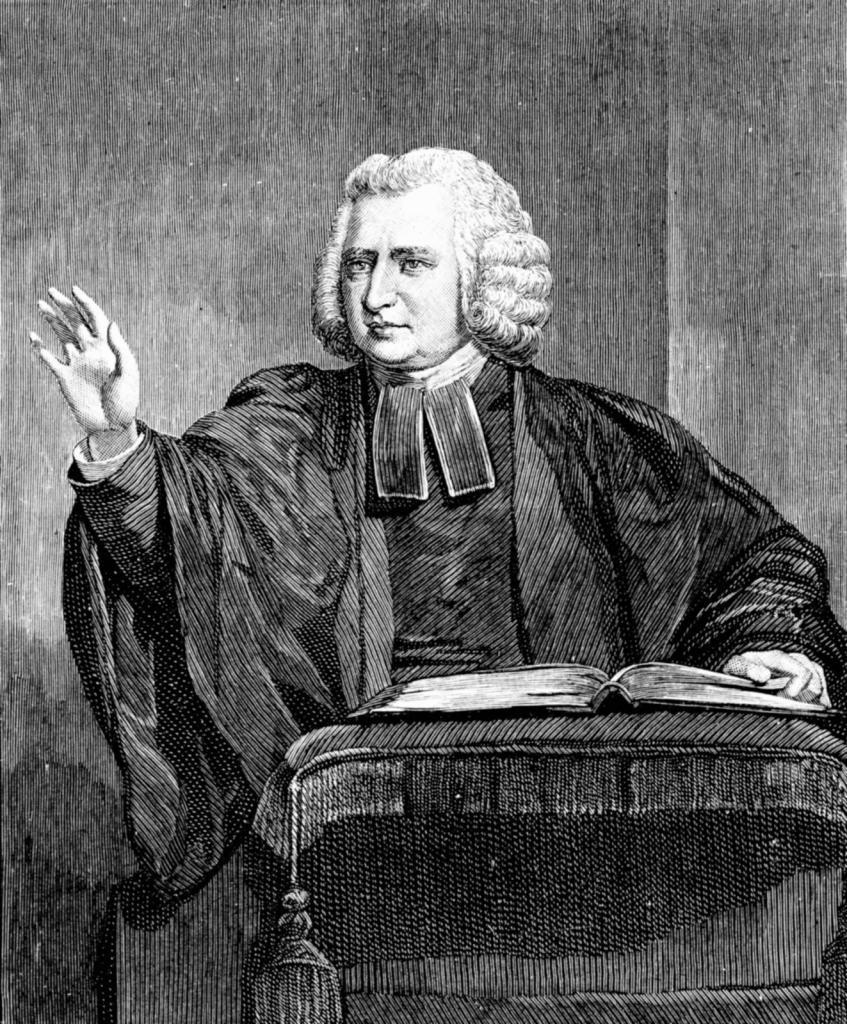
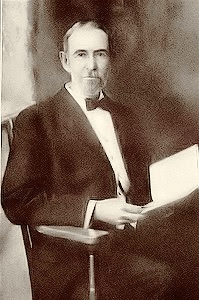
Charles Wesley (1707-1788)
In 1961, during the Manchester, England, crusade…just as the meetings were about to start, Billy Graham became quite seriously ill…Billy had been scheduled to speak to the ministers of London just before the crusade opened. You can imagine my feelings when he sent word that I should represent him and speak at that meeting. The British pastors are themselves thorough scholars and often brilliant preachers. And they were expecting to hear Billy Graham, not me!
At the beginning of that meeting in Westminster’s Central Hall, the ministers joined in singing this great hymn of Charles Wesley. Most of these British clergymen were also well acquainted with hymn texts and hymn tunes, and they sang gloriously. Accompanied by the grand piano and the great pipe organ and using the Welsh tune “Blaenwern,” these familiar words lifted our hearts in praise and prayer to God. I felt God’s strength evident through the singing; He blessed our meeting together despite my fears and their disappointment.
1 Once to ev’ry man and nation Comes the moment to decide, In the strife of truth and falsehood, For the good or evil side; Some great cause, some great decision, Off’ring each the bloom or blight, And the choice goes by forever ‘Twixt that darkness and that light.
2 Then to side with truth is noble, When we share her wretched crust, Ere her cause bring fame and profit, And ’tis prosperous to be just; Then it is the brave man chooses While the coward stands aside. Till the multitude make virtue Of the faith they had denied.
3 By the light of burning martyrs, Christ, Thy bleeding feet we track, Toiling up new Calv’ries ever With the cross that turns not back; New occasions teach new duties, Ancient values test our youth; They must upward still and onward, Who would keep abreast of truth.
4 Tho’ the cause of evil prosper, Yet the truth alone is strong; Tho’ her portion be the scaffold, And upon the throne be wrong; Yet that scaffold sways the future, And, behind the dim unknown, Standeth God within the shadow, Keeping watch above His own.
Short Name:
James Russell Lowell
Full Name:
Lowell, James Russell, 1819-1891
Birth Year:
1819
Death Year:
1891
Lowell, James Russell, LL.D., was born at Cambridge, Massachusetts, February 22, 1819; graduated at Harvard College, 1838, and was called to the Bar in 1840. Professor of Modern Languages and Literature (succeeding the Poet Longfellow) in Harvard, 1855; American Minister to Spain, also to England in 1881. He was editor of the Atlantic Monthly, from 1857 to 1862; and of the North American Review from 1863 to 1872. Professor Lowell is the most intellectual of American poets, and first of her art critics and humorists. He has written much admirable moral and sacred poetry, but no hymns. One piece, “Men, whose boast it is that ye” (Against Slavery), is part of an Anti-Slavery poem, and in its present form is found in Hymns of the Spirit, 1864. Part of this is given in Songs for the Sanctuary, N.Y., 1865, as “They are slaves who will not choose.” [Rev. F. M. Bird, M.A.] –John Julian, Dictionary of Hymnology (1907) http://www.hymnary.org/person/Lowell_JR
1 Kings 18:21
And Elijah came unto all the people, and said, How long halt ye between two opinions? if the Lord be God, follow Him: but if Baal, then follow him. And the people answered him not a word.
1 Open my eyes, that I may see glimpses of truth thou hast for me. Place in my hands the wonderful key that shall unclasp and set me free. Silently now I wait for thee, ready, my God, thy will to see. Open my eyes; illumine me, Spirit divine!
2 Open my ears, that I may hear voices of truth thou sendest clear. And while the wave notes fall on my ear, everything false will disappear. Silently now I wait for thee, ready, my God, thy will to see. Open my ears; illumine me, Spirit divine!
3 Open my mouth, and let me bear gladly the warm truth everywhere. Open my heart, and let me prepare love with thy children thus to share. Silently now I wait for thee, ready, my God, thy will to see. Open my heart; illumine me, Spirit divine!
Clara H. Scott (December 3, 1841 – June 21, 1897) was an American composer, hymnwriter and publisher.[1] She was the first woman to publish a volume of anthems, the Royal Anthem Book, in 1882.[2] Scott was also well known for her hymn, Open My Eyes, That I May See, written in 1895.[3] The hymn was inspired by Psalm 119, verse 18.[4] She died in 1897 after being thrown from her carriage by a spooked horse. http://en.wikipedia.org/wiki/Clara_H._Scott
Psalm 119:18
Open thou mine eyes, that I may behold wondrous things out of Thy law.
Like a river glorious, is God’s perfect peace, Over all victorious, in its bright increase; Perfect, yet it floweth, fuller every day, Perfect, yet it groweth, deeper all the way.
Refrain
Stayed upon Jehovah, hearts are fully blest Finding, as He promised, perfect peace and rest.
Hidden in the hollow of His blessed hand, Never foe can follow, never traitor stand; Not a surge of worry, not a shade of care, Not a blast of hurry touch the spirit there.
Refrain
Every joy or trial falleth from above, Traced upon our dial by the Sun of Love; We may trust Him fully all for us to do. They who trust Him wholly find Him wholly true.
Refrain
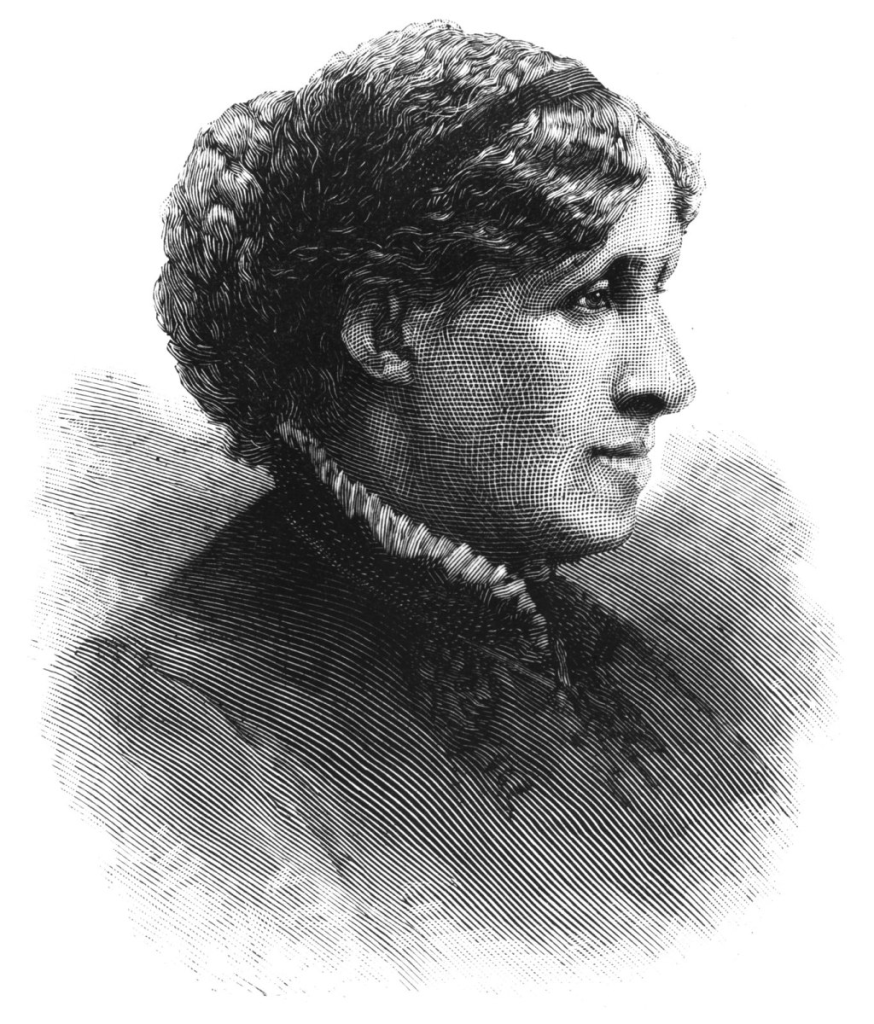
Frances Ridley Havergal
Frances Ridley Havergal was an English religious poet and hymn writer. Take My Life and Let it Be and Thy Life for Me are two of her best known hymns. She also wrote hymn melodies, religious tracts, and works for children. Wikipedia
When Frances Havergal was vacationing in the south of Wales, 1876, she caught a severe cold, accompanied by inflammation of the lungs. Hearing how ill she was, and that she might die, she replied, “If I am really going, it is too good to be true.” Her friends were amazed at how peacefully she received this information. She did survive that illness, and later that year she wrote the hymn “Like a River Glorious” in which she pointed to the source of her perfect peace: “Stayed upon Jehovah, hearts are fully blessed, finding, as He promised, perfect peace and rest.”
Miss Havergal, a devout Bible scholar, echoed Isaiah in “Like a River Glorious” in which God promises “peace like a river.” She also incorporated Isaiah 26:3, which states “You will keep him in perfect peace, whose mind is stayed on You, because he trusts in You.” “Like a River Glorious” paints the picture of this peace.
Miss Havergal wrote to another hymn writer who had also written about peace. In her letter, Miss Havergal quoted Romans 5:1 “We have peace with God,” adding “It is yours already, purchased for you, made for you, sealed for you, pledged to you – by the word of the Father and the precious blood of Jesus.”
6 Be careful for nothing; but in every thing by prayer and supplication with thanksgiving let your requests be made known unto God.
7 And the peace of God, which passeth all understanding, shall keep your hearts and minds through Christ Jesus.
8 Finally, brethren, whatsoever things are true, whatsoever things are honest, whatsoever things are just, whatsoever things are pure, whatsoever things are lovely, whatsoever things are of good report; if there be any virtue, and if there be any praise, think on these things.
This post was dedicated to our gracious and merciful lord and savior, Jesus Christ, and to a cyber friend and follower who had gone through terrible loss, and had shared her grief and glowing testimony.
1 Jesus, the very thought of thee with sweetness fills the breast; but sweeter far thy face to see, and in thy presence rest.
2 O hope of every contrite heart, O joy of all the meek, to those who fall, how kind thou art! How good to those who seek!
3 But what to those who find? Ah, this nor tongue nor pen can show; the love of Jesus, what it is, none but his loved ones know.
4 Jesus, our only joy be thou, as thou our prize wilt be; Jesus, be thou our glory now, and through eternity.
“Down through the ages many great hymns have been written. Many of them have survived the centuries and decades and still minister to people today. This week’s choice comes from the height of the Middle Ages, the period of history often called “The Dark Ages.” The spiritual and moral darkness of the church had reached a new blackness. The institution founded by Christ some 1,000 years prior was mainly degenerate and corrupt. The moral standards of many of its prominent leaders were characterized by disgrace and shame. Yet within this system of religious confusion, God laid it upon the heart of a dedicated monk, Bernard of Clairvaux (1091- 1153) to write a devotional poem about his Lord. At an early age Bernard was known for his piety and scholarship. With his natural charms and talents, he had many opportunities open to him for a successful secular life. While still in his early 20s, however, he chose the life of a monk at the monastery of Citeaux, France. Within three years Bernard’s forceful personality, talents, and leadership qualities were recognized, and he was asked to form other branches of this order throughout Europe. Within Bernard’s lifetime, 162 other such orders were founded. One of these new monasteries was at Clairvaux, France, where Bernard was made its abbot. He remained there until his death in 1153. The English Translation of this hymn is attributed to Edward Caswall, (1814–1876). Meditate upon these great words this week which call us to love and worship Jesus, our hope and our only joy. Does the very thought of Him fill you with sweetness?”
15 For without are dogs, and sorcerers, and whoremongers, and murderers, and idolaters, and whosoever loveth and maketh a lie.
16 I Jesus have sent mine angel to testify unto you these things in the churches. I am the root and the offspring of David, and the bright and morning star.
17 And the Spirit and the bride say, Come. And let him that heareth say, Come. And let him that is athirst come. And whosoever will, let him take the water of life freely.
God never moves without purpose or plan
When trying His servant or molding a man.
Give thanks to the Lord though your testing seems long
In darkness He giveth a song.
Oh, rejoice in the Lord
He makes no mistakes
He knoweth the end of each path that I take
For when I am tried and purified
I shall come forth as gold.
I could not see through the shadows ahead
So I looked at the cross of my Savior instead.
I bowed to the will of the Master that day
Then peace came and tears fled away.
Oh, rejoice in the Lord
He makes no mistakes
He knoweth the end of each path that I take
For when I am tried and purified
I shall come forth as gold.
Now, I can see testing comes from above
God strengthens His children and purges in love.
My Father knows best and I trust in His care
Through purging, more fruit I will bear.
Oh, rejoice in the Lord
He makes no mistakes
He knoweth the end of each path that I take
For when I am tried and purified
I shall come forth as gold.
Ron Hamilton never planned to become a pirate; it just happened, in a divine way. In 1975, the discovery of cancer in Ron’s left eye resulted in the loss of his eye. The surgeon removed the bandages a week later and presented Hamilton with a black eye patch—the real-life prop that thrust him into his role as a pirate evangelist. Everywhere he went, children pointed and exclaimed, “Look! A pirate!” “Hearing a doctor say I had cancer and may die was a very sobering experience,” he says. “Many people would see the loss of my eye and the need for wearing a patch as a great trial. But I see it as one of the greatest blessings of my life. It reminds me that God teaches us the greatest lessons in the deepest valleys.” Immediately following the loss of his eye due to cancer, Ron Hamilton penned a song based on Philippians 4:4. Its message has encouraged many folks while journeying through a dark valley. https://www.majestymusic.com/about-majesty-music
Philippians 4:4-5
4 Rejoice in the Lord always: and again I say, Rejoice.
5 Let your moderation be known unto all men. The Lord is at hand.
p.s. Many decades ago, we received Patch the Pirate through A Beka Home School and it was a blessing to me and my little ones for many years, as it was considered a treat during our long hours of study. However – there is some question as to the newer Pirate music, as it is trending towards CCM. As always – use Biblical discretion with music, especially music for little ones. It is better always – to err on the side of caution. Solid Christian music can be found on this blog, as well as some radio stations. I recommend http://www.familyradio.com/bible-readings/streaming-audio/ with a strong caution against the regularly aired teaching of Harold Camping. Excellent music, thrilling KJV Bible reading, and very dicey teachings.
Sing them over again to me, wonderful words of life, Let me more of their beauty see, wonderful words of life; Words of life and beauty teach me faith and duty.
Refrain
Beautiful words, wonderful words, wonderful words of life, Beautiful words, wonderful words, wonderful words of life.
Christ, the blessèd One, gives to all wonderful words of life; Sinner, list to the loving call, wonderful words of life; All so freely given, wooing us to heaven.
Refrain
Sweetly echo the Gospel call, wonderful words of life; Offer pardon and peace to all, wonderful words of life; Jesus, only Savior, sanctify us forever.
Refrain
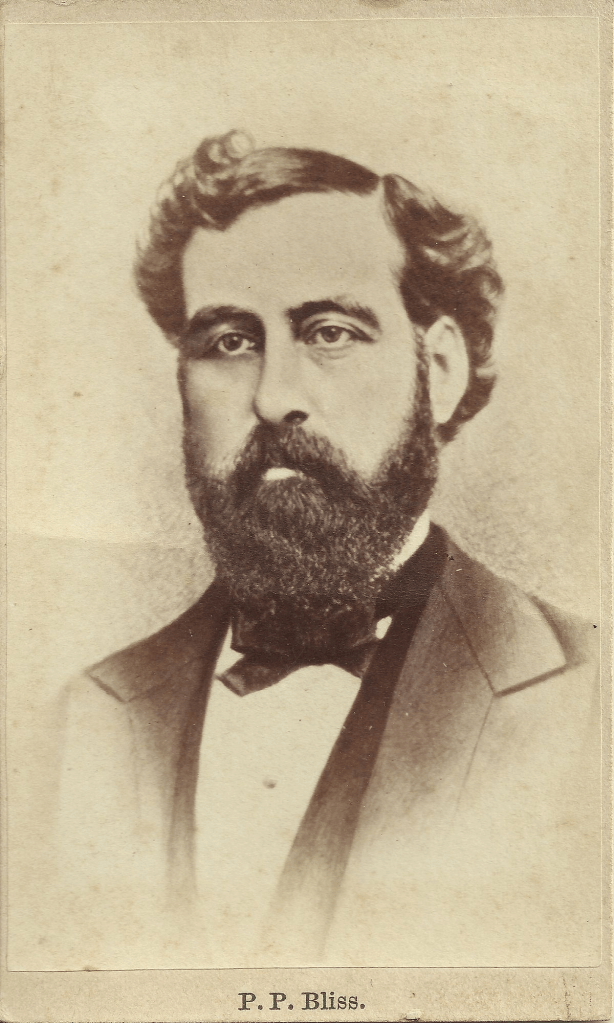
Philip Paul Bliss (9 July 1838 – 29 December 1876) was an American composer, conductor, writer of hymns and a bass-baritone[1]Gospel singer. He wrote many well-known hymns, including Almost Persuaded, Hallelujah, What a Saviour!, Let the Lower Lights Be Burning, Wonderful Words of Life, and the tune for Horatio Spafford‘s It Is Well with My Soul.
I carried that song through two seasons of evangelistic work, never thinking it possessed much merit, or that it had the element of special usefulness, particularly for solo purposes. It occurred to me to try it one day during the campaign in New Haven, [Connecticut, 1878,] and, with the help of Mrs. Stebbins, we sang it as a duet. To our surprise the song was received with the greatest enthusiasm and from that time on to the close of the meetings was the favorite of all the hymns used. As an illustration of the hold it got upon the people all about that section of the country, I received a letter from the Secretary of the Connecticut State Sunday School Association offering me what seemed an absurdly large sum of money, if I would, with Mrs. Stebbins, come to the State Convention and sing that one song.
Tell me the story of Jesus, Write on my heart every word; Tell me the story most precious, Sweetest that ever was heard. Tell how the angels in chorus, Sang as they welcomed His birth, “Glory to God in the highest! Peace and good tidings to earth.”
Refrain: Tell me the story of Jesus, Write on my heart every word; Tell me the story most precious, Sweetest that ever was heard.
Fasting alone in the desert, Tell of the days that are past, How for our sins He was tempted, Yet was triumphant at last. Tell of the years of His labor, Tell of the sorrow He bore; He was despised and afflicted, Homeless, rejected and poor.
Tell of the cross where they nailed Him, Writhing in anguish and pain; Tell of the grave where they laid Him, Tell how He liveth again. Love in that story so tender, Clearer than ever I see; Stay, let me weep while you whisper, “Love paid the ransom for me.”
Tell how He’s gone back to heaven, Up to the right hand of God: How He is there interceding While on this earth we must trod. Tell of the sweet Holy Spirit He has poured out from above; Tell how He’s coming in glory For all the saints of His love.
SONG WRITER: Fanny Crosby MUSIC WRITER: John R. Sweney WHEN WRITTEN: 1880
Blindness never produced self-pity in Fanny and she did not look on her blindness as a terrible thing. At eight years old she composed this little verse:
Oh, what a happy child I am, although I cannot see! I am resolved that in this world contented I will be! How many blessings I enjoy that other people don’t! So weep or sigh because I’m blind, I cannot – nor I won’t.














 The Vine Vigil


