1 Open my eyes, that I may see glimpses of truth thou hast for me. Place in my hands the wonderful key that shall unclasp and set me free. Silently now I wait for thee, ready, my God, thy will to see. Open my eyes; illumine me, Spirit divine!
2 Open my ears, that I may hear voices of truth thou sendest clear. And while the wave notes fall on my ear, everything false will disappear. Silently now I wait for thee, ready, my God, thy will to see. Open my ears; illumine me, Spirit divine!
3 Open my mouth, and let me bear gladly the warm truth everywhere. Open my heart, and let me prepare love with thy children thus to share. Silently now I wait for thee, ready, my God, thy will to see. Open my heart; illumine me, Spirit divine!
Clara H. Scott (December 3, 1841 – June 21, 1897) was an American composer, hymnwriter and publisher.[1] She was the first woman to publish a volume of anthems, the Royal Anthem Book, in 1882.[2] Scott was also well known for her hymn, Open My Eyes, That I May See, written in 1895.[3] The hymn was inspired by Psalm 119, verse 18.[4] She died in 1897 after being thrown from her carriage by a spooked horse. http://en.wikipedia.org/wiki/Clara_H._Scott
Psalm 119:18
Open thou mine eyes, that I may behold wondrous things out of Thy law.
Like a river glorious, is God’s perfect peace, Over all victorious, in its bright increase; Perfect, yet it floweth, fuller every day, Perfect, yet it groweth, deeper all the way.
Refrain
Stayed upon Jehovah, hearts are fully blest Finding, as He promised, perfect peace and rest.
Hidden in the hollow of His blessed hand, Never foe can follow, never traitor stand; Not a surge of worry, not a shade of care, Not a blast of hurry touch the spirit there.
Refrain
Every joy or trial falleth from above, Traced upon our dial by the Sun of Love; We may trust Him fully all for us to do. They who trust Him wholly find Him wholly true.
Refrain
Frances Ridley Havergal
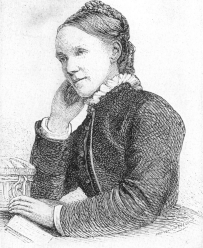
Frances Ridley Havergal was an English religious poet and hymn writer. Take My Life and Let it Be and Thy Life for Me are two of her best known hymns. She also wrote hymn melodies, religious tracts, and works for children. Wikipedia
When Frances Havergal was vacationing in the south of Wales, 1876, she caught a severe cold, accompanied by inflammation of the lungs. Hearing how ill she was, and that she might die, she replied, “If I am really going, it is too good to be true.” Her friends were amazed at how peacefully she received this information. She did survive that illness, and later that year she wrote the hymn “Like a River Glorious” in which she pointed to the source of her perfect peace: “Stayed upon Jehovah, hearts are fully blessed, finding, as He promised, perfect peace and rest.”
Miss Havergal, a devout Bible scholar, echoed Isaiah in “Like a River Glorious” in which God promises “peace like a river.” She also incorporated Isaiah 26:3, which states “You will keep him in perfect peace, whose mind is stayed on You, because he trusts in You.” “Like a River Glorious” paints the picture of this peace.
Miss Havergal wrote to another hymn writer who had also written about peace. In her letter, Miss Havergal quoted Romans 5:1 “We have peace with God,” adding “It is yours already, purchased for you, made for you, sealed for you, pledged to you – by the word of the Father and the precious blood of Jesus.”
6 Be careful for nothing; but in every thing by prayer and supplication with thanksgiving let your requests be made known unto God.
7 And the peace of God, which passeth all understanding, shall keep your hearts and minds through Christ Jesus.
8 Finally, brethren, whatsoever things are true, whatsoever things are honest, whatsoever things are just, whatsoever things are pure, whatsoever things are lovely, whatsoever things are of good report; if there be any virtue, and if there be any praise, think on these things.
This post was dedicated to our gracious and merciful lord and savior, Jesus Christ, and to a cyber friend and follower who had gone through terrible loss, and had shared her grief and glowing testimony.
1 Jesus, the very thought of thee with sweetness fills the breast; but sweeter far thy face to see, and in thy presence rest.
2 O hope of every contrite heart, O joy of all the meek, to those who fall, how kind thou art! How good to those who seek!
3 But what to those who find? Ah, this nor tongue nor pen can show; the love of Jesus, what it is, none but his loved ones know.
4 Jesus, our only joy be thou, as thou our prize wilt be; Jesus, be thou our glory now, and through eternity.
“Down through the ages many great hymns have been written. Many of them have survived the centuries and decades and still minister to people today. This week’s choice comes from the height of the Middle Ages, the period of history often called “The Dark Ages.” The spiritual and moral darkness of the church had reached a new blackness. The institution founded by Christ some 1,000 years prior was mainly degenerate and corrupt. The moral standards of many of its prominent leaders were characterized by disgrace and shame. Yet within this system of religious confusion, God laid it upon the heart of a dedicated monk, Bernard of Clairvaux (1091- 1153) to write a devotional poem about his Lord. At an early age Bernard was known for his piety and scholarship. With his natural charms and talents, he had many opportunities open to him for a successful secular life. While still in his early 20s, however, he chose the life of a monk at the monastery of Citeaux, France. Within three years Bernard’s forceful personality, talents, and leadership qualities were recognized, and he was asked to form other branches of this order throughout Europe. Within Bernard’s lifetime, 162 other such orders were founded. One of these new monasteries was at Clairvaux, France, where Bernard was made its abbot. He remained there until his death in 1153. The English Translation of this hymn is attributed to Edward Caswall, (1814–1876). Meditate upon these great words this week which call us to love and worship Jesus, our hope and our only joy. Does the very thought of Him fill you with sweetness?”
15 For without are dogs, and sorcerers, and whoremongers, and murderers, and idolaters, and whosoever loveth and maketh a lie.
16 I Jesus have sent mine angel to testify unto you these things in the churches. I am the root and the offspring of David, and the bright and morning star.
17 And the Spirit and the bride say, Come. And let him that heareth say, Come. And let him that is athirst come. And whosoever will, let him take the water of life freely.
God never moves without purpose or plan
When trying His servant or molding a man.
Give thanks to the Lord though your testing seems long
In darkness He giveth a song.
Oh, rejoice in the Lord
He makes no mistakes
He knoweth the end of each path that I take
For when I am tried and purified
I shall come forth as gold.
I could not see through the shadows ahead
So I looked at the cross of my Savior instead.
I bowed to the will of the Master that day
Then peace came and tears fled away.
Oh, rejoice in the Lord
He makes no mistakes
He knoweth the end of each path that I take
For when I am tried and purified
I shall come forth as gold.
Now, I can see testing comes from above
God strengthens His children and purges in love.
My Father knows best and I trust in His care
Through purging, more fruit I will bear.
Oh, rejoice in the Lord
He makes no mistakes
He knoweth the end of each path that I take
For when I am tried and purified
I shall come forth as gold.
Ron Hamilton never planned to become a pirate; it just happened, in a divine way. In 1975, the discovery of cancer in Ron’s left eye resulted in the loss of his eye. The surgeon removed the bandages a week later and presented Hamilton with a black eye patch—the real-life prop that thrust him into his role as a pirate evangelist. Everywhere he went, children pointed and exclaimed, “Look! A pirate!” “Hearing a doctor say I had cancer and may die was a very sobering experience,” he says. “Many people would see the loss of my eye and the need for wearing a patch as a great trial. But I see it as one of the greatest blessings of my life. It reminds me that God teaches us the greatest lessons in the deepest valleys.” Immediately following the loss of his eye due to cancer, Ron Hamilton penned a song based on Philippians 4:4. Its message has encouraged many folks while journeying through a dark valley. https://www.majestymusic.com/about-majesty-music
Philippians 4:4-5
4 Rejoice in the Lord always: and again I say, Rejoice.
5 Let your moderation be known unto all men. The Lord is at hand.
p.s. Many decades ago, we received Patch the Pirate through A Beka Home School and it was a blessing to me and my little ones for many years, as it was considered a treat during our long hours of study. However – there is some question as to the newer Pirate music, as it is trending towards CCM. As always – use Biblical discretion with music, especially music for little ones. It is better always – to err on the side of caution. Solid Christian music can be found on this blog, as well as some radio stations. I recommend http://www.familyradio.com/bible-readings/streaming-audio/ with a strong caution against the regularly aired teaching of Harold Camping. Excellent music, thrilling KJV Bible reading, and very dicey teachings.
Sing them over again to me, wonderful words of life, Let me more of their beauty see, wonderful words of life; Words of life and beauty teach me faith and duty.
Refrain
Beautiful words, wonderful words, wonderful words of life, Beautiful words, wonderful words, wonderful words of life.
Christ, the blessèd One, gives to all wonderful words of life; Sinner, list to the loving call, wonderful words of life; All so freely given, wooing us to heaven.
Refrain
Sweetly echo the Gospel call, wonderful words of life; Offer pardon and peace to all, wonderful words of life; Jesus, only Savior, sanctify us forever.
Refrain
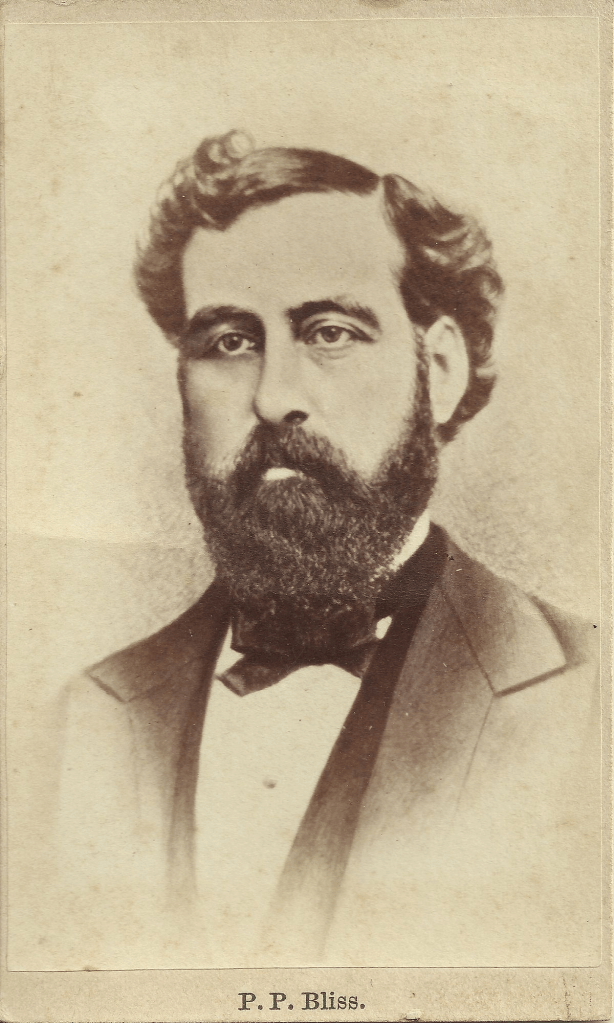
Philip Paul Bliss (9 July 1838 – 29 December 1876) was an American composer, conductor, writer of hymns and a bass-baritone[1]Gospel singer. He wrote many well-known hymns, including Almost Persuaded, Hallelujah, What a Saviour!, Let the Lower Lights Be Burning, Wonderful Words of Life, and the tune for Horatio Spafford‘s It Is Well with My Soul.
I carried that song through two seasons of evangelistic work, never thinking it possessed much merit, or that it had the element of special usefulness, particularly for solo purposes. It occurred to me to try it one day during the campaign in New Haven, [Connecticut, 1878,] and, with the help of Mrs. Stebbins, we sang it as a duet. To our surprise the song was received with the greatest enthusiasm and from that time on to the close of the meetings was the favorite of all the hymns used. As an illustration of the hold it got upon the people all about that section of the country, I received a letter from the Secretary of the Connecticut State Sunday School Association offering me what seemed an absurdly large sum of money, if I would, with Mrs. Stebbins, come to the State Convention and sing that one song.
Tell me the story of Jesus, Write on my heart every word; Tell me the story most precious, Sweetest that ever was heard. Tell how the angels in chorus, Sang as they welcomed His birth, “Glory to God in the highest! Peace and good tidings to earth.”
Refrain: Tell me the story of Jesus, Write on my heart every word; Tell me the story most precious, Sweetest that ever was heard.
Fasting alone in the desert, Tell of the days that are past, How for our sins He was tempted, Yet was triumphant at last. Tell of the years of His labor, Tell of the sorrow He bore; He was despised and afflicted, Homeless, rejected and poor.
Tell of the cross where they nailed Him, Writhing in anguish and pain; Tell of the grave where they laid Him, Tell how He liveth again. Love in that story so tender, Clearer than ever I see; Stay, let me weep while you whisper, “Love paid the ransom for me.”
Tell how He’s gone back to heaven, Up to the right hand of God: How He is there interceding While on this earth we must trod. Tell of the sweet Holy Spirit He has poured out from above; Tell how He’s coming in glory For all the saints of His love.
SONG WRITER: Fanny Crosby MUSIC WRITER: John R. Sweney WHEN WRITTEN: 1880
Blindness never produced self-pity in Fanny and she did not look on her blindness as a terrible thing. At eight years old she composed this little verse:
Oh, what a happy child I am, although I cannot see! I am resolved that in this world contented I will be! How many blessings I enjoy that other people don’t! So weep or sigh because I’m blind, I cannot – nor I won’t.
All for Jesus, all for Jesus! All my being’s ransomed pow’rs: All my thoughts and words and doings, All my days and all my hours.
Refrain 1: All for Jesus! All for Jesus! All my days and all my hours; All for Jesus! All for Jesus! All my days and all my hours.
Let my hands perform His bidding, Let my feet run in His ways; Let my eyes see Jesus only, Let my lips speak forth His praise.
Refrain 2: All for Jesus! All for Jesus! Let my lips speak forth His praise; All for Jesus! All for Jesus! Let my lips speak forth His praise.
Since my eyes were fixed on Jesus, I’ve lost sight of all beside; So enchained my spirit’s vision, Looking at the Crucified.
Refrain 3: All for Jesus! All for Jesus! Looking at the Crucified; All for Jesus! All for Jesus! Looking at the Crucified.
Oh, what wonder! How amazing! Jesus, glorious King of kings, Deigns to call me His beloved, Lets me rest beneath His wings.
Refrain 4: All for Jesus! All for Jesus! Resting now beneath His wings; All for Jesus! All for Jesus! Resting now beneath His wings.
Short Name:
Mary D. James
Full Name:
James, Mary D. (Mary Dagworthy), 1810-1883
Birth Year:
1810
Death Year:
1883
Born: August 10, 1810, Trenton, New Jersey. Died: October 4, 1883, New York City. Buried: Mercer Cemetery, Trenton, New Jersey.
When she was 13 years old, James began teaching Sunday school in the Methodist Episcopal church. She became a prominent figure in the Wesleyan Holiness movement, assisting Phoebe Palmer, and often leading meetings at Ocean Grove, New Jersey, and elsewhere. She wrote about 50 hymns, and articles by her appeared in the Guide to Holiness, the New York Christian Advocate, The Contributor, The Christian Witness, The Christian Woman, The Christian Standard, and the Ocean Grove Record. Her works include:
The Soul Winner: A Sketch of Life and Fact and Incidents in the Life and Labors of Edmund J. Yard, 1883
I beseech you therefore, brethren, by the mercies of God, that ye present your bodies a living sacrifice, holy, acceptable unto God, which is your reasonable service.
Please enjoy the wonderfully complex choir work, of this beloved hymn. The many layers are indicative of the depth of the Savior’s eternal love and mercy for mankind.
Refrain
There is a balm in Gilead To make the wounded whole; There is a balm in Gilead To heal the sin sick soul.
Some times I feel discouraged, And think my work’s in vain, But then the Holy Spirit Revives my soul again.
Refrain
If you can’t preach like Peter, If you can’t pray like Paul, Just tell the love of Jesus, And say He died for all.
Refrain
Question: “What is the balm of Gilead?”
Answer: A balm is an aromatic, medicinal substance derived from plants. Gilead was an area east of the Jordan River, well known for its spices and ointments. The “balm of Gilead” was, therefore, a high-quality ointment with healing properties. The balm was made from resin taken from a flowering plant in the Middle East, although the exact species is unknown. It was also called the “balsam of Mecca.” Myrrh is taken from a similar plant—Commiphora myrrha.The Bible uses the term “balm of Gilead” metaphorically as an example of something with healing or soothing powers.
“Balm of Gilead” has three references in the Bible. In Genesis 37:25, as Joseph’s brothers contemplated how to kill him, a caravan of Ishmaelites passed by on their way to Egypt from Gilead. In their cargo were “spices, balm, and myrrh.” Jeremiah 8 records God’s warning to Judah of what Babylon would do to them. Upon hearing the news, Jeremiah laments, “Is there no balm in Gilead?” (verse 22). His question is a poetic search for hope—a plea for healing. Then, in Jeremiah 46:11, as God describes an impending judgment on Egypt, He taunts them: “Go up to Gilead and obtain balm, O virgin daughter of Egypt! In vain have you multiplied remedies; there is no healing for you!”
These scriptural references to the balm of Gilead have inspired many literary and cultural allusions, including references in “The Raven” by Edgar Allen Poe and movies such as The Spitfire Grill. Notably, “There Is a Balm in Gilead” is an African-American spiritual that compares the healing balm to the saving power of Jesus—the one true treatment that never fails to heal our spiritual wounds.
Precious Lord, take my hand, Lead me on, let me stand, I am tired, I am weak, I am worn; Through the storm, through the night, Lead me on to the light:
Refrain
Take my hand, precious Lord, Lead me home.
When my way grows drear, Precious Lord, linger near, When my life is almost gone, Hear my cry, hear my call, Hold my hand lest I fall:
Refrain
When the darkness appears And the night draws near, And the day is past and gone, At the river I stand, Guide my feet, hold my hand:
Refrain
Words: Thomas A. Dorsey, 1932. Dorsey wrote this song in Chicago, Illinois, after his wife Nettie died while giving birth to a child (who also died shortly thereafter). Dorsey sang the song for his friend, Gospel singer Theodore Frye, and Frye’s choir sang it the next Sunday at the Ebenezer Baptist Church.
3 Blessed be God, even the Father of our Lord Jesus Christ, the Father of mercies, and the God of all comfort;
4 Who comforteth us in all our tribulation, that we may be able to comfort them which are in any trouble, by the comfort wherewith we ourselves are comforted of God.
5 For as the sufferings of Christ abound in us, so our consolation also aboundeth by Christ.
6 And whether we be afflicted, it is for your consolation and salvation, which is effectual in the enduring of the same sufferings which we also suffer: or whether we be comforted, it is for your consolation and salvation.
7 And our hope of you is stedfast, knowing, that as ye are partakers of the sufferings, so shall ye be also of the consolation.
This hymn is also known under the title “Jesus! What A Friend For Sinners!
Jesus! what a Friend for sinners! Jesus! Lover of my soul; Friends may fail me, foes assail me, He, my Savior, makes me whole.
Refrain
Hallelujah! what a Savior! Hallelujah! what a Friend! Saving, helping, keeping, loving, He is with me to the end.
Jesus! what a Strength in weakness! Let me hide myself in Him. Tempted, tried, and sometimes failing, He, my Strength, my victory wins.
Refrain
Jesus! what a Help in sorrow! While the billows over me roll, Even when my heart is breaking, He, my Comfort, helps my soul.
Refrain
Jesus! what a Guide and Keeper! While the tempest still is high, Storms about me, night overtakes me, He, my Pilot, hears my cry.
Refrain
Jesus! I do now receive Him, [or Jesus! I do now adore Him,] More than all in Him I find. He hath granted me forgiveness, I am His, and He is mine.
Refrain
John Wilbur Chapman (June 17, 1859, Richmond, Indiana – December 25, 1918, New York, New York) was a Presbyterian evangelist in the late 19th Century, generally traveling with gospel singer Charles Alexander. His parents were Alexander H. and Lorinda (McWhinney) Chapman.
Chapman grew up attending Quaker Day School and Methodist Sunday School. At age 17, he made a public declaration of his Christian faith and joined the Richmond Presbyterian Church. He received his Bachelor of Arts degree from Lake Forest College and his seminary degree from Lane Theological Seminary in Cincinnati, Ohio. He completed his ordination into the ministry 13 April 1881, while still attending Lane. He was later awarded a Doctorate in Divinity from the College of Wooster and an LL.D. from Heidelberg University.
In May 1882, Chapman married Irene Steddon. In April 1886, she bore him a daughter, Bertha Irene Chapman. Irene Steddon Chapman died in May 1886. Chapman remarried on November 4, 1888 to Agnes Pruyn Strain; they had four children: Robert (who died in infancy), John Wilbur, Jr., Alexander Hamilton, and Agnes Pruyn. His second wife died on June 25, 1907 and Chapman married a third and final time on August 30, 1910 to Mabel Cornelia Moulton.
Chapman took on several pastorates before shifting to the evangelistic circuit. He began preaching with the legendary D. L. Moody in 1893, as well as leading many evangelistic events of his own. Among Chapman’s disciples on the evangelistic circuit was Billy Sunday.
In 1905, John H. Converse, a wealthy Presbyterian philanthropist, offered to underwrite Chapman’s expenses if he would re-enter the evangelistic field full-time. Converse also set up a trust fund so as to finance Chapman’s crusades posthumously. Chapman accepted the offer and in 1907, joined forces with popular gospel singer Charles McCallon Alexander to launch the “Chapman-Alexander Simultaneous Campaign.”
The duo assembled an impressive team of evangelists and song leaders and took to the streets. The first joint campaign was held in Philadelphia from March 12 to April 19, 1908. They partitioned the city into 42 sections covered by 21 evangelist-musicians teams. They spent three weeks on each half of the city, resulting in approximately 8000 conversions. It was at a similar Chapman-Alexander event in North Carolina that the legendary King James Only proponent, David Otis Fuller, committed to the Christian faith.
In 1909, Chapman demanded that any field evangelist who doubted the inerrancy of Scripture be removed from ministry. Chapman’s biography reports, “The first Chapman-Alexander worldwide campaign left Vancouver, British Columbia on March 26, 1909, and returned on November 26, 1909.
This beautiful song of praise, is characterized as “plain-song,” which was developed during the earliest centuries of the church age. It shows influence from both the ancient singing of the Jewish synagogue, and the Greek modal style. The heartfelt worship of the only begotten Son of God is the theme.
1. Of the Father’s love begotten Ere the worlds began to be, He is Alpha and Omega, He the Source, the Ending He, Of the things that are, that have been, And that future years shall see Evermore and evermore.
2. Oh, that birth forever blessed When the Virgin, full of grace, By the Holy Ghost conceiving, Bare the Savior of our race, And the Babe, the world’s Redeemer, First revealed His sacred face Evermore and evermore.
3. O ye heights of heaven, adore Him; Angel hosts, His praises sing; Powers, dominions, bow before Him And extol our God and King. Let no tongue on earth be silent, Every voice in concert ring Evermore and evermore.
4. This is He whom Heaven-taught singers Sang of old with one accord; Whom the Scriptures of the prophets Promised in their faithful word. Now He shines, the Long-expected; Let creation praise its Lord Evermore and evermore.
5. Christ, to Thee, with God the Father, And, O Holy Ghost, to Thee Hymn and chant and high thanksgiving And unending praises be, Honor, glory, and dominion, And eternal victory Evermore and evermore.
“Of the Father’s Love Begotten” by Aurelius C. Prudentius, 413, cento Translated by John. M. Neale, 1818-1866 and Henry W. Baker, 1821-1977
Revelation 1:7-8
7 Behold, He cometh with clouds; and every eye shall see Him, and they also which pierced Him: and all kindreds of the earth shall wail because of Him. Even so, Amen.
8 I am Alpha and Omega, the beginning and the ending, saith the Lord, which is, and which was, and which is to come, the Almighty.
In times like these, we need a Savior In times like these, we need an anchor Be very sure, be very sure Your anchor holds and grips the Solid Rock
This Rock is Jesus, Yes, He’s the one This Rock is Jesus, The only One Be very sure, be very sure Your anchor holds and grips the Solid Rock
In times like these oh be not idle In times like these we need the bible Be very sure, be very sure Your anchor holds and grips the Solid Rock
That Rock is Jesus, Yes, He’s the one That Rock is Jesus, The only One Be very sure, oh you’ve gotta be sure That your anchor holds, and it grips the Solid Rock Your anchor it holds, and it grips the Solid Rock
In times like these, I have a Savior In times like these, I have an anchor I’m very sure, I’m very sure My anchor holds and grips the Solid Rock
That Rock is Jesus, Yes, He’s the one That Rock is Jesus, The only One Be very sure, oh you’ve gotta be sure That your anchor it holds, and it grips the Solid Rock
Author: Ruth Caye Jones
Born: 1902, Wilmerding, Pennsylvania. Died: August 18, 1972, Erie, Pennsylvania. A self taught pianist and organist, Ruth married Bert Jones, and together they worked in the evangelism field. In 1948, they founded a radio ministry in Erie, Pennsylvania, broadcasting a weekly family devotional program from their home called “A Visit with the Jones.” http://www.hymnary.org/text/in_times_like_these_you_need_a_savior
Psalm 95:1-3
95 O come, let us sing unto the Lord: let us make a joyful noise to the rock of our salvation.
2 Let us come before His presence with thanksgiving, and make a joyful noise unto Him with psalms.
3 For the Lord is a great God, and a great King above all gods.
Is there a heart bent o’erbound by sorrow? Is there a life weighed down by care? Come to the cross, each burden bearing; All your anxiety—leave it there.
Refrain
All your anxiety, all your care, Bring to the mercy seat, leave it there, Never a burden He cannot bear, Never a friend like Jesus!
No other friend so swift to help you, No other friend so quick to hear, No other place to leave your burden, No other one to hear your prayer.
Refrain
Come then at once; delay no longer! Heed His entreaty kind and sweet, You need not fear a disappointment; You shall find peace at the mercy seat.
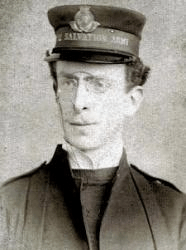
Words & Music: Edward H. Joy, 1920, alt. (MIDI, score). Joy, a Salvation Army musician, introduced the song to the Thornton Heath Corps, and later used it throughout Canada. It was published in The Musical Salvationist in 1929.
Joy joined the Salvation Army (SA) in Canterbury, then played in the band at Folkestone, and became an SA officer in 1894. He went on serve the SA Corps at Tunstall, then the SA International headquarters in 1917, where he was Under Secretary in the Foreign Office. After 1919, he served as Immigration Secretary in western Canada, and in 1932 became editor-in-chief of The War Cry in South Africa. He rose to the rank of SA colonel, and retired in 1938.
Beneath the cross of Jesus I fain would take my stand, The shadow of a mighty rock within a weary land; A home within the wilderness, a rest upon the way, From the burning of the noontide heat, and the burden of the day.
O safe and happy shelter, O refuge tried and sweet, O trysting place where Heaven’s love and Heaven’s justice meet! As to the holy patriarch that wondrous dream was given, So seems my Savior’s cross to me, a ladder up to heaven.
There lies beneath its shadow but on the further side The darkness of an awful grave that gapes both deep and wide And there between us stands the cross two arms outstretched to save A watchman set to guard the way from that eternal grave.
Upon that cross of Jesus mine eye at times can see The very dying form of One Who suffered there for me; And from my stricken heart with tears two wonders I confess; The wonders of redeeming love and my unworthiness.
I take, O cross, thy shadow for my abiding place; I ask no other sunshine than the sunshine of His face; Content to let the world go by to know no gain or loss, My sinful self my only shame, my glory all the cross.
Clephane, Elizabeth Cecilia, third daughter of Andrew Clephane, Sheriff of Fife, was born at Edinburgh, June 18, 1830, and died at Bridgend House, near Melrose, Feb. 19, 1869. Her hymns appeared, almost all for the first time, in the Family Treasury, under the general title of Breathings on the Border. In publishing the first of these in the Treasury, the late Rev. W. Arnot, of Edinburgh, then editor, thus introduced them:—
“These lines express the experiences, the hopes, and the longings of a young Christian lately released. Written on the very edge of this life, with the better land fully, in the view of faith, they seem to us footsteps printed on the sands of Time, where these sands touch the ocean of Eternity. These footprints of one whom the Good Shepherd led through the wilderness into rest, may, with God’s blessing, contribute to comfort and direct succeeding pilgrims.”
1. Nearer, still nearer, close to Thy heart, Draw me, my Savior—so precious Thou art! Fold me, oh, fold me close to Thy breast. Shelter me safe in that Haven of Rest; Shelter me safe in that Haven of Rest.
2. Nearer, still nearer, nothing I bring, Naught as an offering to Jesus, my king; Only my sinful, now contrite heart. Grant me the cleansing Thy blood doth impart. Grant me the cleansing Thy blood doth impart.
3. Nearer, still nearer, Lord, to be Thine! Sin, with its follies, I gladly resign, All of its pleasures, pomp and its pride, Give me but Jesus, my Lord, crucified. Give me but Jesus, my Lord, crucified.
4. Nearer, still nearer, while life shall last. Till safe in glory my anchor is cast; Through endless ages ever to be Nearer, my Savior, still nearer to Thee; Nearer, my Savior, still nearer to Thee!
Lelia N. Morris. Usage Mrs. C. H. Morris. Born: April 15, 1862, Pennsville, Ohio. Died: July 23, 1929, Auburn, New York (at her daughter’s home). Buried: McConnelsville, Ohio. Leila Naylor Morris(1862-1929) As a child, Leila lived in Malta and McConnelsville, Ohio. In 1881, she married Charles H. Morris. Leila was active in the Methodist church, camp meetings, and song writing, authoring more than 1,000 Gospel songs. When her eyes began to fail in 1913, her son built a 28-foot blackboard with oversized staff lines, so she could continue composing. –hymntime.com/tch
“I Heard the Voice of Jesus Say” by Horatius Bonar, 1808-1899
1. I heard the voice of Jesus say, “Come unto Me and rest; Lay down, thou weary one, lay down, Thy head upon My breast.” I came to Jesus as I was, Weary and worn and sad; I found in Him a resting-place, And He has made me glad.
2. I heard the voice of Jesus say, “Behold, I freely give The living water; thirsty one, Stoop down and drink and live.” I came to Jesus, and I drank Of that life-giving stream. My thirst was quenched, my soul revived, And now I live in Him.
3. I heard the voice of Jesus say, “I am this dark world’s Light. Look unto Me; thy morn shall rise And all thy day be bright.” I looked to Jesus, and I found In Him my Star, my Sun; And in that Light of Life I’ll walk Till traveling days are done.
Words: Horatius Bonar, Hymns Original and Selected 1846.
Music: Vox Dilecti John B. Dykes, 1868 The key change halfway through accents the positive message of the last two lines, I came to Jesus…
The last time that Henry Ward Beecher was in his pulpit—6th March, 1887—he remained for some time at the close of the evening service listening to the choir practising, and was evidently moved by their rendering of this hymn. While sitting and listening he noticed two street arabs coming into the church to enjoy the music also. He came down, and speaking to them tenderly he drew them to his heart and kissed them. Whether this touch of humanity was due to the hymn or simply the response of his deeply emotional nature in seeing two unfortunates before him, with all their undeveloped possibilities, we cannot say, but of this we are sure, that the last grand utterance that he heard in his church was this hymn: I Heard the Voice, etc., for, a few hours afterwards the shadows of the long night fell upon his ethereal spirit; the silver cord that bound him with the outer world was loosed, and though the soul still lingered over the mortal frame which she had filled with abundant life for seventy-four years, as if loath to depart, the eyes, the senses were all but sealed, and the lips on which listening thousands had hung for half a century were silent. It was fitting that he who took such an active part in the emancipation of the slave should close his life under the inspiration of this tender hymn, and take those two street arabs to his heart as representing the humanity he loved so well!
Alas! and did my Savior bleed And did my Sovereign die? Would He devote that sacred head For sinners such as I? [originally, For such a worm as I?]
Refrain
At the cross, at the cross where I first saw the light, And the burden of my heart rolled away, It was there by faith I received my sight, And now I am happy all the day!
Thy body slain, sweet Jesus, Thine— And bathed in its own blood— While the firm mark of wrath divine, His Soul in anguish stood.
Was it for crimes that I had done He groaned upon the tree? Amazing pity! grace unknown! And love beyond degree!
Well might the sun in darkness hide And shut his glories in, When Christ, the mighty Maker died, For man the creature’s sin.
Thus might I hide my blushing face While His dear cross appears, Dissolve my heart in thankfulness, And melt my eyes to tears.
But drops of grief can ne’er repay The debt of love I owe: Here, Lord, I give my self away ’Tis all that I can do.
Words: Isaac Watts, Hymns and Spiritual Songs, 1707;
[***Note from sage – you may not be familiar with this rendition – but it was the one that Fanny Crosby was referring to in 1880. The music sung in churches today was not written until 1885 when the well known refrain was added]
Hudson, Ralph E. Hudson, Songs of Peace, Love and Joy (Alliance, Ohio: 1885) It is with this tune that the hymn is known as At the Cross.
Fanny Crosby wrote of this hymn:
[In] the autumn of 1850…revival meetings were being held in the Thirtieth Street Methodist Church [, New York City]. Some of us went down every evening; and, on two occasions, I sought peace at the atlar [sic], but did not find the joy I craved, until one evening, November 20, 1850, it seemed to me that the light must indeed come then or never; and so I arose and went to the altar alone. After a prayer was offered, they began to sing the grand old consecration hymn, “Alas, and did my Saviour bleed, And did my Sovereign die?” And when they reached the third line of the fourth [sic] stanza, “Here Lord, I give myself away,” my very soul was flooded with a celestial light. I sprang to my feet, shouting “hallelujah,” and then for the first time I realized that I had been trying to hold the world in one hand and the Lord in the other.
As earnest Christian pastor told of a young man about whom he had long felt much anxiety, as he had seemed so unconcerned about his soul, and was, in reality, a real cause of disturbance and interruption in classes for other young men. Meeting him one day, the loving pastor sought once more to influence him, urging, “We want you for Christ and his service.” There was a certain change in his manner which did not escape the eye of the prayerful watcher for souls, and—lacking time to do more—he seized the opportunity to secure the presence of his young friend at a Christian Endeavor meeting soon to be held. True to his promise he was there. When an opportunity was given for some of the young men to choose a song, it was seen that he was urging his companion to select some particular hymn. The other, yielding to his request, asked if the hymn, “Pass me not, O gentle Saviour,” might be sung; and both young men joined in the singing with evident interest and heartiness. Later in the evening it was requested that all who were definitely on the Lord’s side would confess their allegiance by standing. Whereupon the one over whom the heart of the pastor was specially yearning rose at once, and with decision.
“Tell me about your conversion,” the thankful pastor requested at the close of the meeting, when hands were clasped in glad, brotherly welcome and recognition.
“Oh, yes,” assented the other. “It was all through that hymn we have just sung. I was working on the canal at G–, and there was a meeting being held at the Mariner’s Chapel, nearby. The words floated out over the water, and from the tug where I was working I could hear them plainly enough. When they were just going to sing those lines—‘While on others Thou are calling, Do not pass me by!’ a great fear came over me, and I thought, ‘Oh, if the Lord were to pass me by, how terrible it would be!’ Then and there, on the tug, I cried out, ‘O Lord, do not pass me by.’ And”—with a bright smile—“he didn’t pass me by. I am saved.’”
The Lord is not slack concerning His promise, as some men count slackness; but is longsuffering to us-ward, not willing that any should perish, but that all should come to repentance.
Thy way, not mine, O Lord, However dark it be; Lead me by Thine own hand, Choose out the path for me.
Smooth let it be or rough, It will be still the best; Winding or straight, it leads Right onward to Thy rest.
I dare not choose my lot; I would not, if I might; Choose Thou for me, my God, So I shall walk aright.
Take Thou my cup, and it With joy or sorrow fill, As best to Thee may seem; Choose Thou my good and ill.
Choose Thou for me my friends, My sickness or my health; Choose Thou my cares for me My poverty or wealth.
The kingdom that I seek Is Thine: so let the way That leads to it be Thine, Else I must surely stray.
Not mine, not mine the choice In things or great or small; Be Thou my Guide, my Strength My Wisdom, and my All.
Horatius Bonar
Born: December 19, 1808, Old Broughton, Edinburgh, Scotland.
Died: July 31, 1889, Edinburgh, Scotland.
Buried: Canongate churchyard.
Bonar has been called “the prince of Scottish hymn writers.” After graduating from the University of Edinburgh, he was ordained in 1838, and became pastor of the North Parish, Kelso. He joined the Free Church of Scotland after the “Disruption” of 1843, and for a while edited the church’s The Border Watch. Bonar remained in Kelso for 28 years, after which he moved to the Chalmers Memorial church in Edinburgh, where he served the rest of his life. Bonar wrote more than 600 hymns. At a memorial service following his death, his friend, Rev. E. H. Lundie, said:
His hymns were written in very varied circumstances, sometimes timed by the tinkling brook that babbled near him; sometimes attuned to the ordered tramp of the ocean, whose crested waves broke on the beach by which he wandered; sometimes set to the rude music of the railway train that hurried him to the scene of duty; sometimes measured by the silent rhythm of the midnight stars that shone above him.
Luke 16:10
He that is faithful in that which is least is faithful also in much: and he that is unjust in the least is unjust also in much.
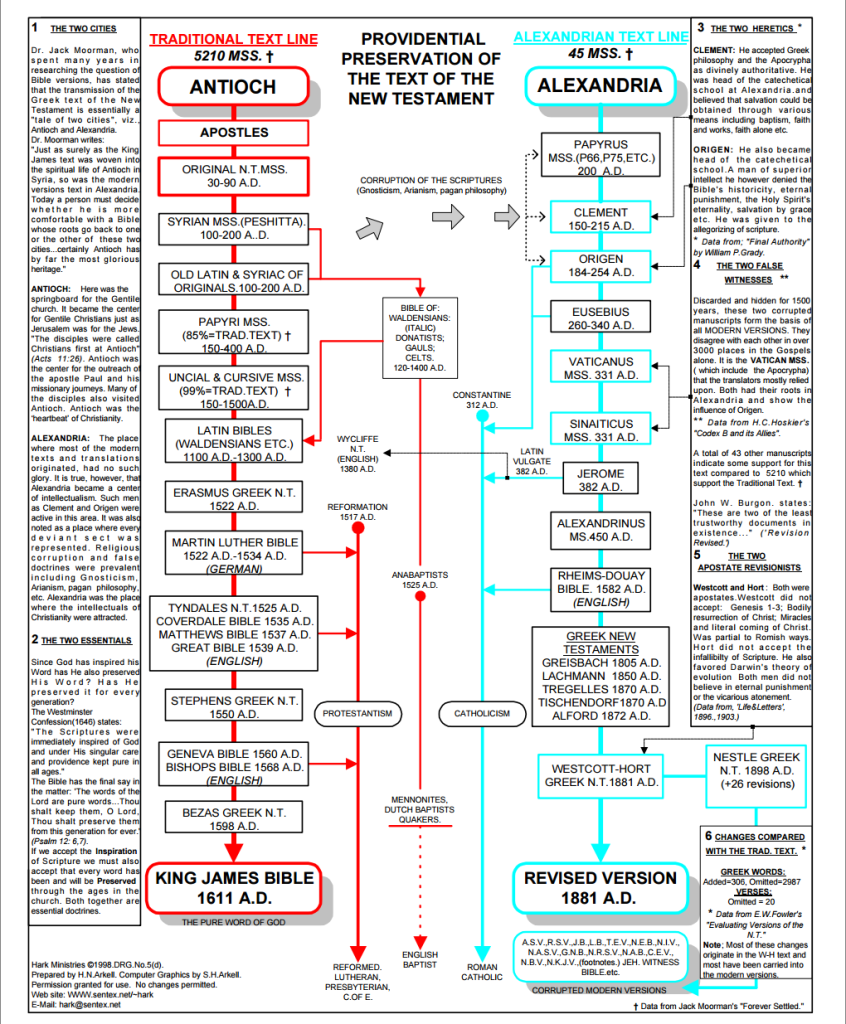
Bible translations – it’s a mess. If you are anything like me (logical, analytical, likes to read peer-reviewed research for *fun* on the weekends), the confusion surrounding Biblical translations seems to almost invalidate the Bible as a whole. To an external observer with a penchant towards experimental and evidence-based analysis, contradicting results invalidates the authority of the results. Due to the conflicting views on translations of Scripture, I am working to assemble my research to validate the authority of the Scripture in terms of the Authorized King James Version.
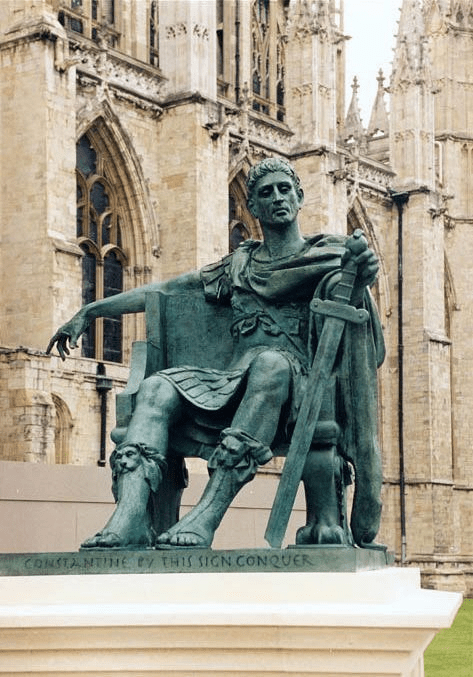
When Emperor Constantine took over the Roman Empire thanks to strong connections that were enabled by his father Caesar Constantius of the First Tetrarchy (AD 293 – 305), he sought to unify paganism and Christianity. By unifying them, he would be able to manipulate himself into a position of absolute divine authority and unanimous approval from all classes through an imperial cult, a state religion wherein an emperor or group of emperors are worshipped as demigods or deities. When Emperor Constantine did this, he:
Increased tolerance of Christianity while limiting regulations against Roman polytheism.
Mingled pagan holidays with Christian beliefs.
Called for the Council of Nicaea, establishing the Nicene Creed and deity of Christ.
All of the unified religions established as the official religion of the Roman Empire were called, as a unit, Roman Catholicism. In an effort to unify Christianity and people who had pantheistic views for peace under his “divine leadership,” Constantine played his role carefully after analyzing that the Christians would not be so easily eliminated with simple persecution and massacre as was attempted during the reign of prior Emperor Diocletian and his Tetrarchy. Roman Catholicism embellished Christianity with ritualistic ceremonies, focusing on the value and authority of paganist rituals and ceremony as opposed to the authority of Scripture. Thus, any Scripture which was derived from the influence of that intermingling of Gnosticism, paganism and Arianism that was the result of Constantine’s efforts for a unified religion (Roman Catholicism) andany translation of Scripture which stemmed from that unification and desperate attempt to unite the pagans of the world with Christians uses a translation that:
1.) is anti-Trinitarian
2.) denies the authority of Scripture.
Most English Translations of Scripture come from copies of Greek codices of questionable translational authenticity kept in “the holy city of Catholics” – Vatican City.
Please note the following illustration:
I will be providing more information on this topic as time permits.
Matthew 5:18
18 For verily I say unto you, Till heaven and earth pass, one jot or one tittle shall in no wise pass from the law, till all be fulfilled.
Click “Watch on YouTube” to hear this classic hymn!
Alas! and did my Savior bleed And did my Sovereign die? Would He devote that sacred head For sinners such as I? [originally, For such a worm as I?]
Refrain
At the cross, at the cross where I first saw the light, And the burden of my heart rolled away, It was there by faith I received my sight, And now I am happy all the day!
Thy body slain, sweet Jesus, Thine— And bathed in its own blood— While the firm mark of wrath divine, His Soul in anguish stood.
Was it for crimes that I had done He groaned upon the tree? Amazing pity! grace unknown! And love beyond degree!
Well might the sun in darkness hide And shut his glories in, When Christ, the mighty Maker died, For man the creature’s sin.
Thus might I hide my blushing face While His dear cross appears, Dissolve my heart in thankfulness, And melt my eyes to tears.
But drops of grief can ne’er repay The debt of love I owe: Here, Lord, I give my self away ’Tis all that I can do.
Issac Watts [1707]
From his birth his father would read the Word of God to him and pray for him. His father was a godly preacher and a Nonconformist to the Church of England. His father was sent to prison twice because of his convictions. His family were Dissenters or Non- conformists. The Dissenters were Protestants who did not think that the Church of England had separated enough from the doctrines of the Roman Catholics and refused to conform to the Church of England.
Isaac was born in 1674 and was the oldest of nine children. At the age of eleven his father addressed a letter to all of his children encouraging them to “frequently to read the Scriptures – get your hearts to delight in them – above all books and writings account the Bible the best and read it most – lay up the truth of it in your hearts”.
Isaac Watts was saved at the age of fifteen and by the age of sixteen he had mastered Latin, Greek, Hebrew and French. When Isaac was about twenty he became dissatisfied with the singing of the Nonconformist Congregation. At that time it was viewed as sinful to sing songs that were not taken from the Scriptures the majority of which were Psalms or metrical Psalters. His major complaint was the quality of the writing, his father challenged him if he did not like what was being sung to do something better. Over the next two years, from the age of Twenty until he was Twenty two, he wrote the majority of his hymns. He was greatly criticized by both the Roman Catholics and the nonconformist who called his hymns “uninspired” because they were not direct quotations from Scripture. His reply to this was “…if we can pray to God in sentences that we have made up ourselves (instead of confining ourselves to the Our Father and other prayers taken directly from the Scriptures), then surely we can sing to God in sentences that we have made up ourselves”.
Isaac Watts wrote Alas and Did My Saviour Bleed in 1707, it originally had six stanzas and no refrain. The original tune as intended by Isaac Watts is not known, but in 1800 Hugh Wilson began using his original music composition entitled Martyrdom. In 1885 Ralph F. Hudson added the refrain and the tune that we know use and know as “At The Cross”.
It is interesting to note before we explore the doctrinal content of Alas and Did My Saviour Bleed, the in the Fall of 1850 at the age of thirty, Fanny J. Crosby went to the altar at the Thirtieth Street Methodist Church in New York City. She had been to the altar twice before by had not received the peace she sought. While at the altar the congregation was singing the hymn “Alas and Did My Saviour Bleed”, according to her own testimony and in her own words she says: “…it seemed to me that the light must indeed come then or never; and so I arose and went to the altar alone. After a prayer was offered, they began to sing the grand old consecration hymn, ‘Alas, and did my Saviour bleed, And did my Sovereign die?’ And when they reached the third line of the fourth stanza, ‘Here Lord, I give myself away,’ my very soul was flooded with a celestial light. I sprang to my feet, shouting ‘hallelujah,’ and then for the first time I realized that I had been trying to hold the world in one hand and the Lord in the other.”
Isaac Watts was a brilliant young man and because of his intellectual acumen and proclivity to study he was encouraged by his friends and a prominent Southampton physician to go to one of the Universities, at their expense, in hopes that he would eventually be ordained into the Church of England. Because of his background and being raised as a Dissenting Nonconformist, he refused and rather chose a nonconformist academy. He started preaching at the age of twenty-four and pastored his became pastor of a well-know independent congregation in 1702, he died on November 25, 1748.
The doctrinal content of “Alas and Did My Saviour Bleed” could be examined from a plethora of Christian Theology, Justification, Propitiation, Christology, Anthropology, Harmitiology, Soteriology just to name a few, for all of these are contained within the lines of this hymn. We will however, briefly explore the doctrine of propitiation as found in the lines of “Alas and Did My Saviour Bleed”.
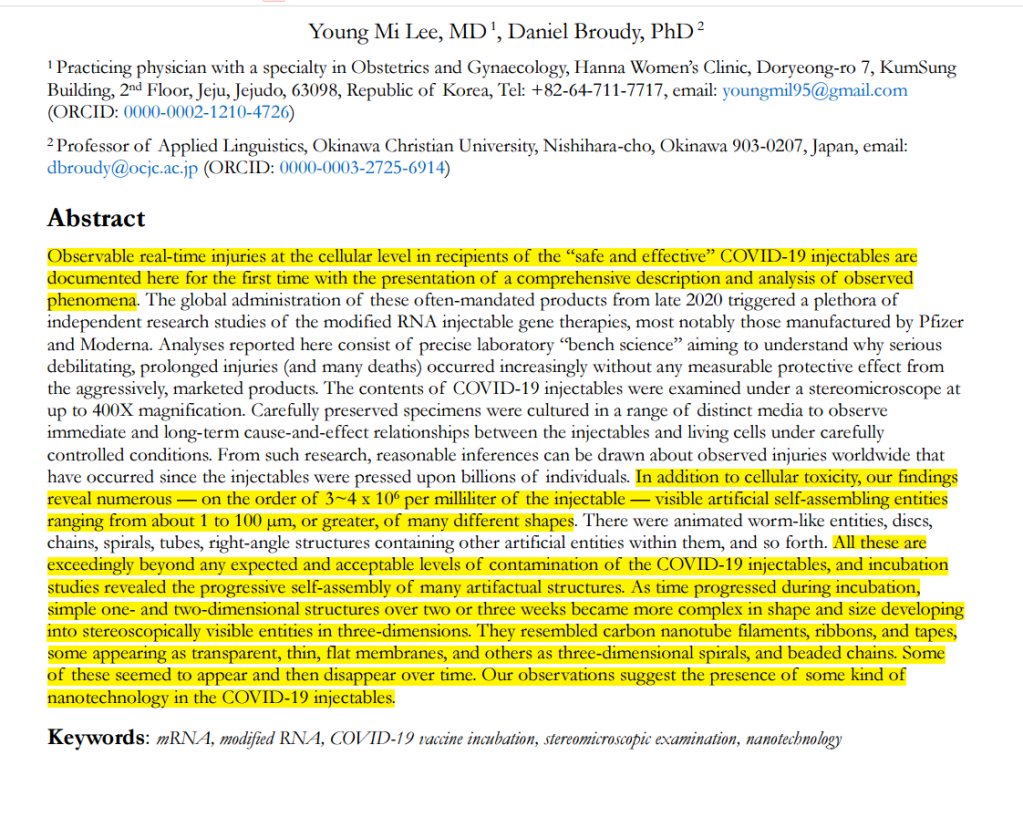
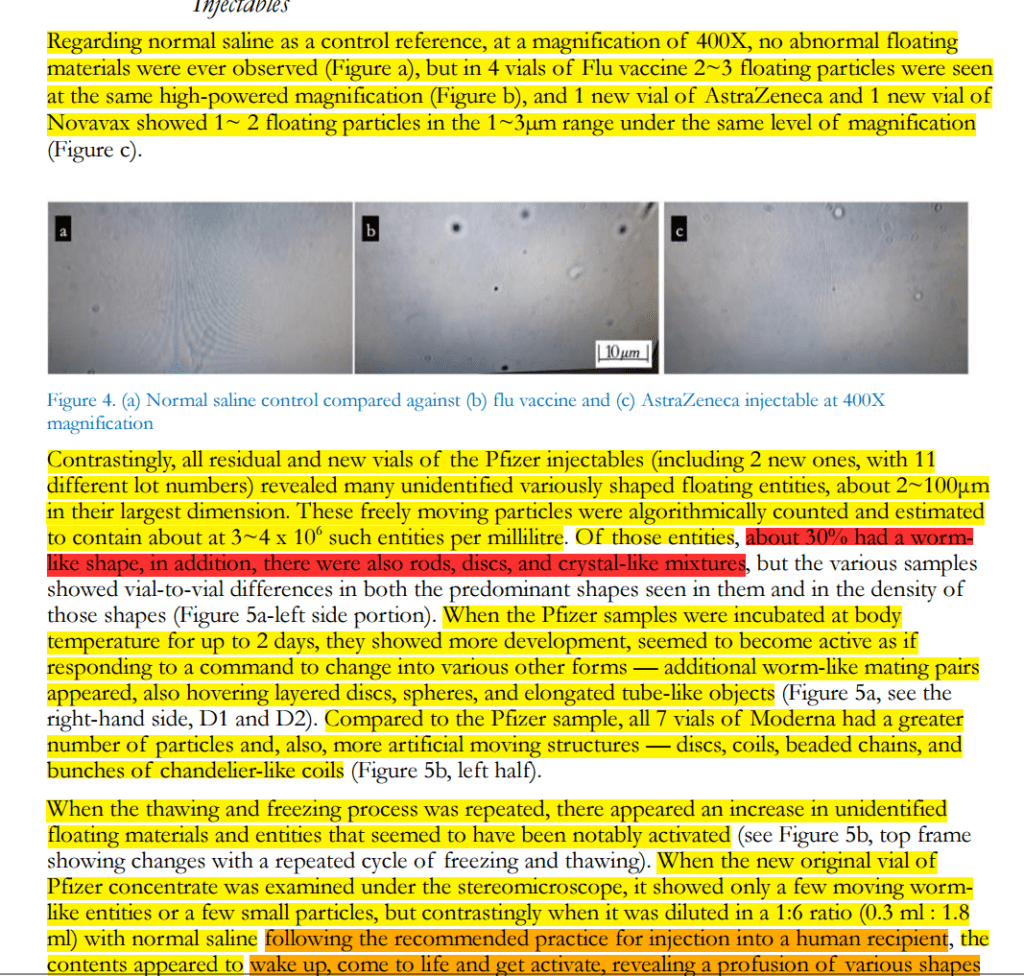
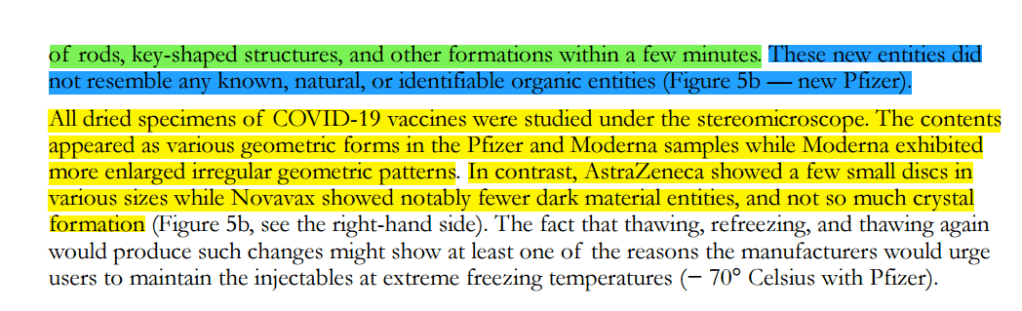
This research, recently published (July 2024), entitled “Real-Time Self-Assembly of Stereo microscopically Visible Artificial Constructions in Incubated Specimens of mRNA Products Mainly from Pfizer and Moderna: A Comprehensive Longitudinal Study,” indicates that everyone who was coerced into taking that Pfizer or Moderna vaccine could very well be infected with some strange unidentifiable nanotech.
Just Read the Highlighted Text:
As we reported here, we have isolated numerous and various unidentified materials — a few μm in size — beyond the nanoparticles described in FDA reports for the mRNA injectables, in the Pfizer and even more so in the Moderna products.
Having concluded various experiments and careful observational studies, we infer that the materials and their observed stages of development are not natural. They are synthetic, and elemental seeming to govern a well-programmed process of structural self-assembly. That their provisional final production could be described as artificial has already been suggested in the numerous articles referenced so far…
…Sasha Latypova, an executive and researcher for the pharmaceutical industry, discovered an extreme deviation in side effects among the batch-to-batch vials of mRNA COVID-19 injectables. In a normal world, this sort of wildly uneven deviation would be intolerable in ordinary pharmaceutical products receiving routine oversight by regulatory bodies adhering strictly to established protocols and safety guidelines. Nevertheless, as the public has been reminded continually, we are living in a “new normal”. How, therefore, might we understand more generally this obvious deviation from the old normal? One way is to consider intentionality. These products were meant to serve foremost as experimental injections for the whole of humanity — including all ethnicities, sexes, and age groups.
This depiction squares with the FDA approval letter of the Comirnaty (Pfizer product; FDA, 2021), the post-marketing requirement, in infants under 6 months of age, the study completion of July 31, 2024, and the final report which is to be submitted by October 31, 2024. Worth nothing is that in the accompanying documents for the injectable products all details referring to the factories where they were manufactured were conspicuously redacted, which begs larger questions about secrecy undermining informed consent.
Broudy, Daniel & Lee, Young. (2024). Real-Time Self-Assembly of Stereomicroscopically Visible Artificial Constructions in Incubated Specimens of mRNA Products Mainly from Pfizer and Moderna: A Comprehensive Longitudinal Study. International Journal of Vaccine Theory, Practice, and Research. 3. 1180-1244. 10.56098/586k0043.
…
2 Timothy 3:1-9
3 This know also, that in the last days perilous times shall come.
2 For men shall be lovers of their own selves, covetous, boasters, proud, blasphemers, disobedient to parents, unthankful, unholy,3 Without natural affection, trucebreakers, false accusers, incontinent, fierce, despisers of those that are good,4 Traitors, heady, highminded, lovers of pleasures more than lovers of God;5 Having a form of godliness, but denying the power thereof: from such turn away.6 For of this sort are they which creep into houses, and lead captive silly women laden with sins, led away with divers lusts,7 Ever learning, and never able to come to the knowledge of the truth.8 Now as Jannes and Jambres withstood Moses, so do these also resist the truth: men of corrupt minds, reprobate concerning the faith.9 But they shall proceed no further: for their folly shall be manifest unto all men, as their’s also was.
Congressional Republicans are trying to thwart a new federal housing rule they claim would allow Washington to play a heavy-handed role in trying to remake upscale neighborhoods as racially and economically diverse “utopias.”
The forthcoming regulations, expected to be formally proposed later this month, would leverage grant money to try and bring more affordable options into these neighborhoods. It would require local jurisdictions to report on their progress; they’d risk federal housing money if they don’t.
But while the Department of Housing and Urban Development program essentially aims for more integration and equality, critics see a meddling federal government.
“[The rule] tells us how we can live, where we go to school, how we will vote, what this utopian type of neighborhood should look like,” charged Rep. Paul Gosar, R-Ariz., who sponsored an amendment to the House HUD spending bill Wednesday, blocking any future funding for the new rule. The spending bill was passed in the House with the amendment.
“These rules want to manipulate the way American neighborhoods look,” he told FoxNews.com in an interview.
HUD officials and proponents of the new rule say it would do nothing but clarify — even simplify — current obligations under The Fair Housing Act of 1968.
More on this…
How Obama plans to diversify wealthy neighborhoods
Right now, local and state housing authorities must have plans showing they are “affirmatively furthering fair housing.” In other words, making sure their communities offer affordable housing opportunities in all neighborhoods, not just the poor ones, and do not discriminate based on color, religion, sex, or national origin. Affordable housing is generally defined as housing that costs no more than a third of a family’s monthly income.
The new rule would require jurisdictions to file a full assessment every five years that not only addresses the affordable housing landscape, but patterns in poverty and minority concentrations, as well as “community access” to transportation, good schools and jobs.
In addition to the assessments, the new requirements include an action plan obligating the jurisdiction to “identify the primary determinants influencing fair housing conditions, prioritize addressing these conditions, and set one or more goals for mitigating or addressing their determinants.” For its part, HUD would be sharing demographic data that local officials need to pull this together, while offering guidance and technical assistance.
But here’s the rub. If cities and counties don’t comply, it could put millions of dollars in annual federal block grants at risk, which critics say is how Washington can bully governments to do their bidding.
“This is nothing new,” countered Debby Goldberg, vice president at the National Fair Housing Alliance, who supports the rule. “It’s a planning tool. They leave it up to the jurisdictions to make their own decisions. HUD is not dictating what the answers must be, that’s up to the locality.”
HUD Secretary Julian Castro argued this in a hearing of the House Financial Services Committee June 11, when Rep. Mia Love, R-Utah, asked him directly if HUD would be actively telling localities how to remake their maps. “I know as a [former] mayor you wouldn’t want the federal government to come in and tell you what to do with your zoning and your rules,” she charged.
Castro said: “This is not about changing zoning laws, planning laws or anything like that.” He called the new requirements a “tool” for local communities to do what they already are obligated to do better.
“I wish I had this tool when I was mayor,” said Castro, who was mayor of San Antonio, Texas before he was appointed secretary of HUD in 2014. “We want to ensure that local communities have the tools to assess the landscape of housing in their area, where the investments are, where the affordable housing opportunities are,” he said.
But Gosar is concerned that the feds would force local officials to plot out significant changes to their communities, as a requirement for grant money.
In order to get the money, he said, “you have to give them the plan and ask for a sign-off. These rules are put into place to manipulate the way America looks.”
Critics point to the case of Westchester County, N.Y., which has been locked in a battle with HUD since it settled in a lawsuit brought by the nonprofit Anti-Discrimination Center over the county’s lack of affordable housing units. The 2009 settlement, which HUD helped broker with the Justice Department, mandated the affluent county spend $50 million of its own money to build units, most of which would be in predominantly white neighborhoods. The county and HUD have been arguing ever since over compliance, with Westchester claiming HUD has been changing the rules along the way. As a result, HUD has repeatedly withheld annual funding from the county.
But Goldberg said this is the way it works — jurisdictions aren’t forced to comply with the law, but they won’t get federal grants if they don’t. “The law says if you are getting funds you have to show that you are affirmatively furthering fair housing,” she said, noting it was designed that way to better the quality of life for all Americans, not just the ones who can afford to live in affluent neighborhoods. Segregation by race and poverty traps families in dead-end, often unhealthy circumstances, Goldberg added.
“We know that the more inclusive the neighborhoods are, the more robust your economy, the better the schools are, the jobs.”
This should be directed at the local level, not from Washington, Gosar said. He has introduced a stand-alone bill that would block the rule from reaching fruition. For now, it is up to the Senate if it wants to carve it out of their own HUD spending bill.
“Once again,” he said, “it’s an overreach on our liberties to live and work and move to wherever we want.”
Just think about what takes place while you are worrying about paying your mortgage or if your sons and daughters will be sent to fight a no-win war. . . the liberals are busy at work leveling the playing field. There is a lot more to this story than appears on the surface. It is only a small piece of the total effort to eliminate the middle class. Stir your memories and look for commonality:
Common core dumbed- down education mandate
Pope and other religious leaders pushing for ecumenism
Climate change treated as a mandate
Sweden and Denmark move to eliminate cash
Terms like multi-lateralism and sustainability have become formulaic catch phrases to massage sheeple into the one world system
Biblical standards marginalized and excoriated
Merging of services, government agencies, and blurring of boundaries
There is no profit in belaboring this idea. Those who wish to be aware, are already aware. Those who are content to sit and passively accept the take over, are welcome to it. The blame for this, lies squarely in the pulpits of churches whose shepherds have herded their flocks straight into the New World Order. I have heard with my own ears, more than one pastor who proudly proclaims he will not preach on prophecy – because it is too controversial. Well, that is dropping the ball in a big way, especially since the Bible itself, is at a bare minimum – 40% prophecy. That means in conservative terms, you are missing almost half of the Bible. Is that OK with you? If Rick Warren is America’s pastor – we are in serious trouble – right now.
The Vine Vigil urges everyone to get out of their Cotton Candy churches, and find a fundamental, King James only church. Do you truly want to be sitting in a luke-warm, Laodicean church when the Lord calls us home? How will you answer the Lord about why you stayed in that worldly church? Your pastor should be speaking out about things going on in the world. If he isn’t – he is a weak coward and not following the pattern for shepherding which is Divinely recorded for us in the New Testament. I found my church by making phone calls, and visiting. It is definitely not the church that is closest for me to drive to, but it is by far the church that is closet to my Bible.
Under His wings I am safely abiding, Though the night deepens and tempests are wild, Still I can trust Him; I know He will keep me, He has redeemed me, and I am His child.
Refrain
Under His wings, under His wings, Who from His love can sever? Under His wings my soul shall abide, Safely abide forever.
Under His wings, what a refuge in sorrow! How the heart yearningly turns to His rest! Often when earth has no balm for my healing, There I find comfort, and there I am blessed.
Refrain
Under His wings, oh, what precious enjoyment! There will I hide till life’s trials are o’er; Sheltered, protected, no evil can harm me, Resting in Jesus, I’m safe evermore.
Refrain
If $100,000 was your whole life savings, would you give every penny of it to someone in need? William O. Cushing did something like that. In the nineteenth century, when $1,000 was a lot of money, he gave his entire life savings to pay for the education of a blind girl.
That is not what he is remembered for, however. His fame is as a hymnwriter. One of his earliest hymns was the song, “When He Cometh,” which compared Christians to jewels whom Christ would gather when he came. Other notable hymns were written after he had experienced great grief and loss. But that is getting ahead of the story.
William Orcutt Cushing was born in Hingham, Massachusetts on this date, December 31, 1823. His parents raised him as a Universalist, but by reading the Bible for himself as a teenager, he became an orthodox believer. At eighteen he was convinced the Lord wanted him to become a minister and he trained for it.
His first pastorate was at Searsburg, New York. There he met and married Rena Proper in 1854 (which was also the year he wrote “When He Cometh”). After that he served in Auburn, Brooklyn, Buffalo and Sparta, New York. With the decline of his wife’s health, William returned with her to Searsburg where she died in 1870.
After that, “creeping paralysis” stole his voice and prevented him from preaching any longer. He pleaded with the Lord to allow him to continue to serve in some capacity.
His prayer was granted. He wrote over 300 hymns. Some of these are still beloved by the church. “Follow on” was written in 1878 to a tune by Robert Lowry. “Follow, follow, I will follow Jesus; anywhere, everywhere…” it promises. “Under His Wings,” printed and sung by Ira Sankey, sprang out of Cushing’s personal suffering and was suggested by Psalm 17:8, “Hide me under the shadow of your wings.” Another of his famous hymns “Ring the Bells of Heaven” was written before his deep troubles had descended upon him. Composer George F. Root had sent him the tune. Cushing felt it needed joyful words and mused on it all day before the words came to him.
Last Friday, we studied that falsehood can ruin our lives. The next passage of Proverbs is so dramatic and intense, that it has received the Hollywood treatment, being featured in a movie, a television series, and a four part mini-series.
These six things doth the lord hate; yea, seven are an abomination unto him.
abomination = a person or thing that is disgusting; an action that is vicious, vile, etc.; intense loathing
Sin is a very, very, serious offense against God.
A proud look
+++++++++++++++++++++++++++++++++++++++
A lying tongue
+++++++++++++++++++++++++++++++++++++++
and hands that shed innocent blood.
++++++++++++++++++++++++++++++++++++++++
a heart that deviseth wicked imaginations.
++++++++++++++++++++++++++++++++++++++
feet that be swift in running to mischief.
++++++++++++++++++++++++++++++++++++++++
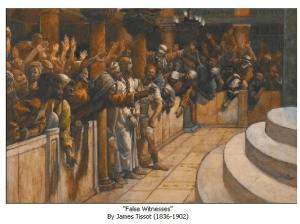
a false witness that speaketh lies.
+++++++++++++++++++++++++++++++++++++++++++++
and he that soweth discord among the brethren.
Proverbs 6:16-19
++++++++++++++++++++++++++++++
All sin is wicked in God’s sight. Humans tend to “categorize” sin by making relative comparisons. In man’s eyes, lying is not as serious of a sin as murder is – but this famous Proverb proves that lying is an abomination to The LORD. Even the “smallest” sin will keep a person out of heaven. That means, even our “little white lies,” and gossiping had to be placed on Jesus Christ at Calvary. We all need to embrace God’s perspective of sin, and completely eliminate man’s perspective.
Last week the lesson from the Word was a cautionary against idleness. Today, another warning – against falsehood – which is the sin most Christians overlook within themselves, while being quick to point it out in others.
Proverbs 6:12-13
King James Version (KJV)
12 A naughty person, a wicked man, walketh with a froward mouth.
froward = habitually disposed to disobedience and opposition
13 He winketh with his eyes, he speaketh with his feet, he teacheth with his fingers;
A direct gaze, without averting the eyes has long been considered a way of detecting honesty in a person. The Proverb is saying here that darting eyes, excessive blinking, and rapid hand gestures are all indicative of a dishonest person.
14 Frowardness is in his heart, he deviseth mischief continually; he soweth discord.
Truly – this must be the greatest trouble in the Body of Christ. It is tragic that so many false converts are within the fold – but it is a fact that must be faced. How could anyone professing the Name of Christ be “devising mischief continually?” The LORD sees everything – and those that do these things will not go unpunished.
15 Therefore shall his calamity come suddenly; suddenly shall he be broken without remedy.
While we may sometimes wonder how evil people seem to prosper – (how do they get away with it?) we can see from this Proverb that the judgement for these offenses will come as a shock to the unrepentant – and without a cure.
2 Chronicles 36:16
King James Version (KJV)
But they mocked the messengers of God, and despised His words, and misused His prophets, until the wrath of the Lord arose against His people, till there was no remedy.
What a fellowship, what a joy divine, Leaning on the everlasting arms; What a blessedness, what a peace is mine, Leaning on the everlasting arms.
Refrain: Leaning, leaning, safe and secure from all alarms; Leaning, leaning, leaning on the everlasting arms.
Oh, how sweet to walk in this pilgrim way, Leaning on the everlasting arms; Oh, how bright the path grows from day to day, Leaning on the everlasting arms.
What have I to dread, what have I to fear, Leaning on the everlasting arms? I have blessed peace with my Lord so near, Leaning on the everlasting arms.
The Story Behind Leaning on the Everlasting Arms
Anthony Showalter was leading a singing school in an Alabama church in 1887. When he returned to his boardinghouse room one night, two letters awaited him. Both were from former students, and both men told of the recent loss of their wives. Mr. Showalter wrote back, seeking to comfort the young men in the midst of their grief.But what to write? When he came to the end of each letter, he wanted to include a Bible verse. He picked Deuteronomy 33:27, “The eternal God is thy refuge, and underneath are the everlasting arms ….”
He pondered the words of that verse as he penned them into the letters, and the lyrics of the chorus of Leaning on the Everlasting Arms came to his mind. He wrote to his friend, Elisha Hoffman, explaining that he had a chorus, but no verses. Mr. Hoffman wrote back with the rest of the words of this famous hymn. Sam Duncan, a student and nephew of Mr. Showalter, was given the class assignment to write the tune for this poem. The piece was published under his uncle’s name in the book Glad Evangel for Revival, Camp and Evangelistic Meeting Hymnal.
The eternal God is thy refuge, and underneath are the everlasting arms: and He shall thrust out the enemy from before thee; and shall say, Destroy them.
Revelation 19:11-16
11 And I saw heaven opened, and behold a white horse; and He that sat upon him was called Faithful and True, and in righteousness He doth judge and make war.
12 His eyes were as a flame of fire, and on His head were many crowns; and He had a name written, that no man knew, but He Himself.
13 And He was clothed with a vesture dipped in blood: and His name is called The Word of God.
14 And the armies which were in heaven followed Him upon white horses, clothed in fine linen, white and clean.
15 And out of His mouth goeth a sharp sword, that with it He should smite the nations: and He shall rule them with a rod of iron: and He treadeth the winepress of the fierceness and wrath of Almighty God.
16 And He hath on his vesture and on His thigh a name written, King Of Kings, And Lord Of Lords.
Beyond the sunset, O blissful morning, When with our Savior, heaven is begun; Earth’s toiling ended, O glorious dawning, Beyond the sunset when day is done.
Beyond the sunset, no clouds will gather, No storms will threaten, no fears annoy; O day of gladness, O day unending, Beyond the sunset eternal joy!
Beyond the sunset, a hand will guide me To God the Father whom I adore; His glorious presence, His words of welcome, Will be my portion on that fair shore.
Beyond the sunset, O glad reunion, With our dear loved ones who’ve gone before; In that fair homeland we’ll know no parting, Beyond the sunset forever more!
Virgil Prentiss Brock – Lyrics 1887-1978
Born: January 6, 1887, Mercer County, Ohio. Buried: Warsaw, Indiana.
Blanche Kerr Brock – Composer 1888-1958
Born: February 3, 1888, Greens Fork, Indiana. Died: January 3, 1958, Winona Lake, Indiana. Buried: Warsaw, Indiana.
One of the best-known and widely-used songs in the entire field of gospel hymnody is “Beyond the Sunset.” Mr. Brock has left the following account of its writing:
This song was born during a conversation at the dinner table, one evening in 1936, after watching a very unusual sunset at Winona Lake Indiana, with a blind guest—my cousin Horace Burr—and his wife Grace. A large area of the water appeared ablaze with the glory of God, yet there were threatening storm clouds gathering overhead. Returning to our home, we went to the dinner table still talking about the impressive spectacle we had witnessed. Our blind guest excitedly remarked the he had never seen a more beautiful sunset.
“People are always amazed when you talk about seeing,” I told him, “I can see,” Horace replied. “I see through other peoples eyes, and think I often see more; I see beyond the sunset.”
The phrase “beyond the sunset” and the striking inflection of his voice struck me so forcibly, I began singing the first few measures. “That’s beautiful!” his wife interrupted, “Please go to the piano and sing it.
We went to the piano nearby and completed the first verse. “You should have a verse about the storm clouds,” our guest urged, and the words for this verse came quickly as well. Recalling how closely our guest had walked hand in hand together for so many years due to his blindness, the third verse was soon added. Before the evening meal was finished, all four stanzas had been written and we sang the entire song together.
And God shall wipe away all tears from their eyes; and there shall be no more death, neither sorrow, nor crying, neither shall there be any more pain: for the former things are passed away.
sage
p.s. This post is dedicated to my husband for our 33rd anniversary.




















 The Vine Vigil


