This magnificent old hymn is pure praise from start to finish, and is chock full of solid doctrine. Turn up your speakers and see His glory. The chord progressions are spectacular.
All people that on earth do dwell, Sing to the Lord with cheerful voice. Him serve with fear, His praise forth tell; Come ye before Him and rejoice.
The Lord, ye know, is God indeed; Without our aid He did us make; We are His folk, He doth us feed, And for His sheep He doth us take.
O enter then His gates with praise; Approach with joy His courts unto; Praise, laud, and bless His Name always, For it is seemly so to do.
For why? the Lord our God is good; His mercy is for ever sure; His truth at all times firmly stood, And shall from age to age endure.
To Father, Son and Holy Ghost, The God Whom Heaven and earth adore, From men and from the angel host Be praise and glory evermore.
Hymn Story
All People That on Earth Do Dwell
In the Reformation, there was a difference of opinion between Luther and Calvin concerning music for congregational singing. Luther advocated the use of hymns and carols, and even wrote a number of those. Calvin was concerned that hymns not clearly based on scripture might introduce false doctrine into the church, and so he advocated the singing of Psalms. He said that there were “no better songs nor more appropriate to the purpose (of congregational singing) than the Psalms of David which the Holy Spirit made and spoke through him.”
Calvin, of course, was based in Geneva, Switzerland. In 1551, a Psalter was published in Geneva that included a song based on Psalm 134 and set to a tune by Louis Bourgeois. In 1561, the Anglo-Genevan Psalter (an English-language Psalter) was published in Geneva that included “All People That on Earth Do Dwell” set to that earlier tune by Bourgeois.
The words to “All People That on Earth Do Dwell” were written by William Kethe, a Scottish clergyman who had fled the persecutions of Queen Mary. His exile took him first to Frankfurt, Germany and thence to Geneva. Kethe helped with the translation of the Geneva Bible in 1560 and contributed 25 psalms to the Anglo-Genevan Psalter.
Kethe left Geneva for England in 1561, and took a copy of the Anglo-Genevan Psalter with him –– thereby introducing this music to the English. A number of his psalms found their way into the English Psalter of 1562, which was published by Thomas Sternhold and John Hopkins. All of his psalms were included in the Scottish Psalter two years later.
“All People That on Earth Do Dwell” is based on Psalm 100. That Psalm is five verses in length, and the song is four verses. The first verse of the song is based on verses 1 and 2 of the psalm, and each of the subsequent verses of the song is based on one verse of the psalm. It is probably the oldest hymn in common use today.
The tune by Bourgeois is known today as “Old Hundredth,” and is one of the best-known tunes in modern hymnals –– in large measure because it is also sung to the Doxology, “Praise God from Whom All Blessings Flow.”
2 Serve the Lord with gladness: come before His presence with singing.
3 Know ye that the Lord He is God: it is He that hath made us, and not we ourselves; we are His people, and the sheep of His pasture.
4 Enter into His gates with thanksgiving, and into His courts with praise: be thankful unto Him, and bless His name.
5 For the Lord is good; His mercy is everlasting; and His truth endureth to all generations.
sage
p.s. I post this as part of my continuous effort to point up the dangers of CCM, and hope and pray that God’s people will wake up to the serpent in the singing. Can you see what is being lost as the old hymns are cast aside for simple lyrics and rhythmic melodies? CCM is now firmly in IFB churches everywhere.
1 “Though your sins be as scarlet, they shall be as white as snow; though your sins be as scarlet, they shall be as white as snow. Though they be red like crimson, They shall be as wool. Though your sins be as scarlet, though your sins be as scarlet, they shall be as white as snow, they shall be as white as snow.”
2 Hear the voice that entreats you, O return ye unto God! Hear the voice that entreats you, O return ye unto God! He is great compassion, and of wondrous love. Hear the voice that entreats you, hear the voice that entreats you, O return ye unto God! O return ye unto God!
3 He’ll forgive your transgressions, and remember them no more: he’ll forgive your transgressions, and remember them no more. “Look unto me, ye people,” saith the Lord your God. He’ll forgive your transgressions, he’ll forgive your transgression, and remember them no more, and remember them no more.
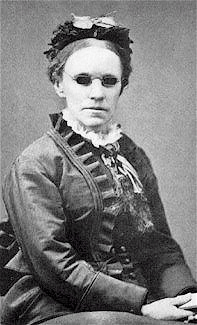
Fanny Crosby 1820-1915
She could compose at any time and did not need to wait for any special inspiration, and her best hymns have come on the spur of the moment. She always composed with an open book in her hand, generally a copy of Golden Hymns, held closely over her eyes, bottom side up. She learned to play on the guitar and piano while at the institution, and has a clear soprano voice. She also received a technical training in music, and for this reason she could, and did, compose airs for some of her hymns. One of these is, “Jesus, dear, I come to Thee, Thou hast said I may,” both words and music of which are wonderfully sweet. “Safe in the arms of Jesus”, probably one of her best known hymns, was her own favorite. Fanny loved her work, and was happy in it. She was always ready either to sympathize or join in a mirthful conversation, as the case may be. The secret of this contentment dates from her first composition at the age of eight years. “It has been the motto of my life,” she says. It is: “O what a happy soul am I! Although I cannot see, I am resolved that in this world Contented I will be;”
This has continued to be her philosophy. She says that had it not been for her affliction she might not have so good an education, nor so great an influence, and certainly not so fine a memory. She knows a great many portions of the Bible by heart, and had committed to memory the first four books of the Old Testament, and also the four Gospels before she was ten years of age.
17 Learn to do well; seek judgment, relieve the oppressed, judge the fatherless, plead for the widow.
18 Come now, and let us reason together, saith the Lord: though your sins be as scarlet, they shall be as white as snow; though they be red like crimson, they shall be as wool.
19 If ye be willing and obedient, ye shall eat the good of the land
Tis So Sweet to Trust in JesusRefrain: Jesus, Jesus, how I trust Him! How I’ve proved Him o’er and o’er Jesus, Jesus, precious Jesus! O for grace to trust Him more!‘Tis so sweet to trust in Jesus, And to take Him at His Word; Just to rest upon His promise, And to know, ‘Thus says the Lord!’RefrainO how sweet to trust in Jesus, Just to trust His cleansing blood; And in simple faith to plunge me ‘Neath the healing, cleansing flood!RefrainYes, ’tis sweet to trust in Jesus, Just from sin and self to cease; Just from Jesus simply taking Life and rest, and joy and peace.RefrainI’m so glad I learned to trust Thee, Precious Jesus, Savior, Friend; And I know that Thou art with me, Wilt be with me to the end.Refrain
Text: Louisa M. R. Stead, c. 1850-1917 Music: William J. Kirkpatrick, 1838-1921
Trust is one of those marvelous words that can be used in many different ways. As a noun, it refers to the confidence that we have in someone or something. It can also be an account that is entitled to special treatment and special protection. As a verb, it is the act of placing confidence in someone else. Whether it is a thing or an action, though, we often speak of “levels” or “degrees” of trust. Between the best of friends there is great trust. How much do we trust others? How much do they trust us?
This week’s featured hymn was written by Louisa Stead. The story is told that she and her husband were watching their young daughter by the beach. Someone cried out for help. There was a boy in the water. Mr. Stead went to the rescue, but the frightened boy pulled him under the water in a panic. Mrs. Stead and her daughter could only watch from the beach as the boy and her husband drowned.
Stead was a poor woman and she was hardly able to provide for her daughter. One day when it seemed that all of their resources were gone, she found a gift of food and money left on her doorstep. It was on that day that she sat and wrote these words.
9 But we see Jesus, who was made a little lower than the angels for the suffering of death, crowned with glory and honour; that he by the grace of God should taste death for every man.
10 For it became him, for whom are all things, and by whom are all things, in bringing many sons unto glory, to make the captain of their salvation perfect through sufferings.
11 For both he that sanctifieth and they who are sanctified are all of one: for which cause he is not ashamed to call them brethren,
12 Saying, I will declare thy name unto my brethren, in the midst of the church will I sing praise unto thee.
13 And again, I will put my trust in him. And again, Behold I and the children which God hath given me.
Like a river glorious, is God’s perfect peace, Over all victorious, in its bright increase; Perfect, yet it floweth, fuller every day, Perfect, yet it groweth, deeper all the way.
Refrain
Stayed upon Jehovah, hearts are fully blest Finding, as He promised, perfect peace and rest.
Hidden in the hollow of His blessed hand, Never foe can follow, never traitor stand; Not a surge of worry, not a shade of care, Not a blast of hurry touch the spirit there.
Refrain
Every joy or trial falleth from above, Traced upon our dial by the Sun of Love; We may trust Him fully all for us to do. They who trust Him wholly find Him wholly true.
Refrain
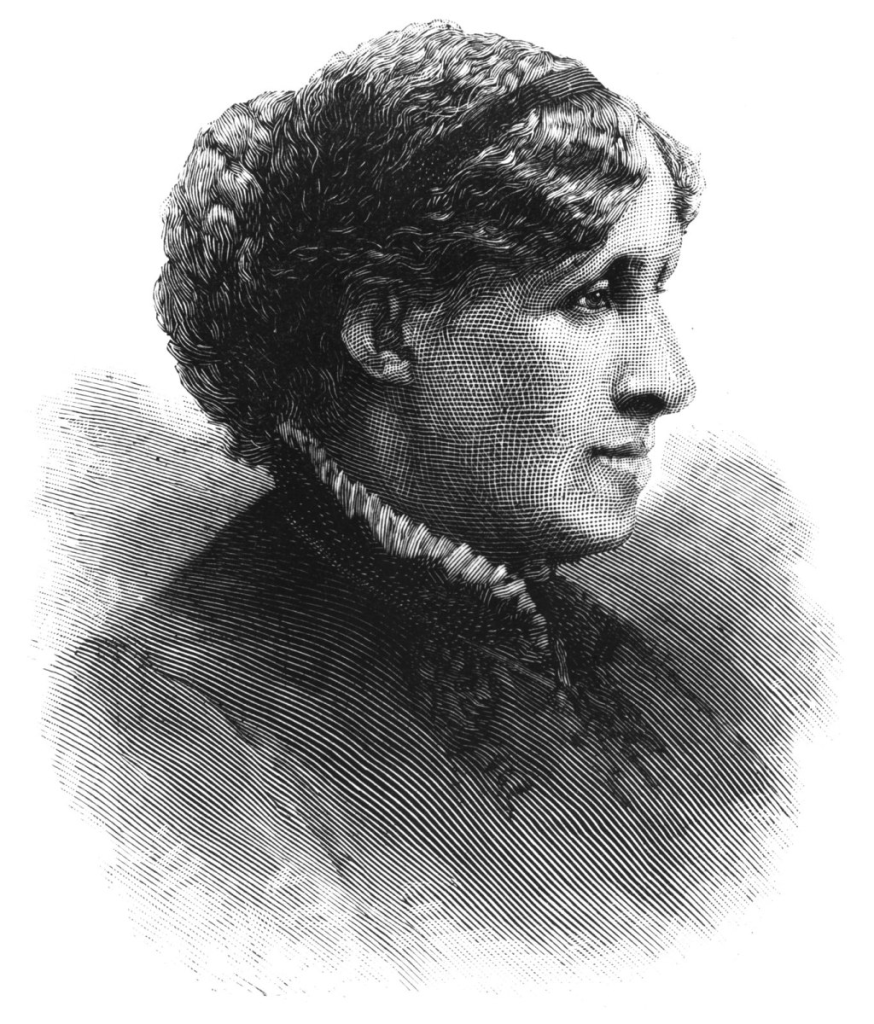
Frances Ridley Havergal
Frances Ridley Havergal was an English religious poet and hymn writer. Take My Life and Let it Be and Thy Life for Me are two of her best known hymns. She also wrote hymn melodies, religious tracts, and works for children. Wikipedia
When Frances Havergal was vacationing in the south of Wales, 1876, she caught a severe cold, accompanied by inflammation of the lungs. Hearing how ill she was, and that she might die, she replied, “If I am really going, it is too good to be true.” Her friends were amazed at how peacefully she received this information. She did survive that illness, and later that year she wrote the hymn “Like a River Glorious” in which she pointed to the source of her perfect peace: “Stayed upon Jehovah, hearts are fully blessed, finding, as He promised, perfect peace and rest.”
Miss Havergal, a devout Bible scholar, echoed Isaiah in “Like a River Glorious” in which God promises “peace like a river.” She also incorporated Isaiah 26:3, which states “You will keep him in perfect peace, whose mind is stayed on You, because he trusts in You.” “Like a River Glorious” paints the picture of this peace.
Miss Havergal wrote to another hymn writer who had also written about peace. In her letter, Miss Havergal quoted Romans 5:1 “We have peace with God,” adding “It is yours already, purchased for you, made for you, sealed for you, pledged to you – by the word of the Father and the precious blood of Jesus.”
6 Be careful for nothing; but in every thing by prayer and supplication with thanksgiving let your requests be made known unto God.
7 And the peace of God, which passeth all understanding, shall keep your hearts and minds through Christ Jesus.
8 Finally, brethren, whatsoever things are true, whatsoever things are honest, whatsoever things are just, whatsoever things are pure, whatsoever things are lovely, whatsoever things are of good report; if there be any virtue, and if there be any praise, think on these things.
This post was dedicated to our gracious and merciful lord and savior, Jesus Christ, and to a cyber friend and follower who had gone through terrible loss, and had shared her grief and glowing testimony.
Congressional Republicans are trying to thwart a new federal housing rule they claim would allow Washington to play a heavy-handed role in trying to remake upscale neighborhoods as racially and economically diverse “utopias.”
The forthcoming regulations, expected to be formally proposed later this month, would leverage grant money to try and bring more affordable options into these neighborhoods. It would require local jurisdictions to report on their progress; they’d risk federal housing money if they don’t.
But while the Department of Housing and Urban Development program essentially aims for more integration and equality, critics see a meddling federal government.
“[The rule] tells us how we can live, where we go to school, how we will vote, what this utopian type of neighborhood should look like,” charged Rep. Paul Gosar, R-Ariz., who sponsored an amendment to the House HUD spending bill Wednesday, blocking any future funding for the new rule. The spending bill was passed in the House with the amendment.
“These rules want to manipulate the way American neighborhoods look,” he told FoxNews.com in an interview.
HUD officials and proponents of the new rule say it would do nothing but clarify — even simplify — current obligations under The Fair Housing Act of 1968.
More on this…
How Obama plans to diversify wealthy neighborhoods
Right now, local and state housing authorities must have plans showing they are “affirmatively furthering fair housing.” In other words, making sure their communities offer affordable housing opportunities in all neighborhoods, not just the poor ones, and do not discriminate based on color, religion, sex, or national origin. Affordable housing is generally defined as housing that costs no more than a third of a family’s monthly income.
The new rule would require jurisdictions to file a full assessment every five years that not only addresses the affordable housing landscape, but patterns in poverty and minority concentrations, as well as “community access” to transportation, good schools and jobs.
In addition to the assessments, the new requirements include an action plan obligating the jurisdiction to “identify the primary determinants influencing fair housing conditions, prioritize addressing these conditions, and set one or more goals for mitigating or addressing their determinants.” For its part, HUD would be sharing demographic data that local officials need to pull this together, while offering guidance and technical assistance.
But here’s the rub. If cities and counties don’t comply, it could put millions of dollars in annual federal block grants at risk, which critics say is how Washington can bully governments to do their bidding.
“This is nothing new,” countered Debby Goldberg, vice president at the National Fair Housing Alliance, who supports the rule. “It’s a planning tool. They leave it up to the jurisdictions to make their own decisions. HUD is not dictating what the answers must be, that’s up to the locality.”
HUD Secretary Julian Castro argued this in a hearing of the House Financial Services Committee June 11, when Rep. Mia Love, R-Utah, asked him directly if HUD would be actively telling localities how to remake their maps. “I know as a [former] mayor you wouldn’t want the federal government to come in and tell you what to do with your zoning and your rules,” she charged.
Castro said: “This is not about changing zoning laws, planning laws or anything like that.” He called the new requirements a “tool” for local communities to do what they already are obligated to do better.
“I wish I had this tool when I was mayor,” said Castro, who was mayor of San Antonio, Texas before he was appointed secretary of HUD in 2014. “We want to ensure that local communities have the tools to assess the landscape of housing in their area, where the investments are, where the affordable housing opportunities are,” he said.
But Gosar is concerned that the feds would force local officials to plot out significant changes to their communities, as a requirement for grant money.
In order to get the money, he said, “you have to give them the plan and ask for a sign-off. These rules are put into place to manipulate the way America looks.”
Critics point to the case of Westchester County, N.Y., which has been locked in a battle with HUD since it settled in a lawsuit brought by the nonprofit Anti-Discrimination Center over the county’s lack of affordable housing units. The 2009 settlement, which HUD helped broker with the Justice Department, mandated the affluent county spend $50 million of its own money to build units, most of which would be in predominantly white neighborhoods. The county and HUD have been arguing ever since over compliance, with Westchester claiming HUD has been changing the rules along the way. As a result, HUD has repeatedly withheld annual funding from the county.
But Goldberg said this is the way it works — jurisdictions aren’t forced to comply with the law, but they won’t get federal grants if they don’t. “The law says if you are getting funds you have to show that you are affirmatively furthering fair housing,” she said, noting it was designed that way to better the quality of life for all Americans, not just the ones who can afford to live in affluent neighborhoods. Segregation by race and poverty traps families in dead-end, often unhealthy circumstances, Goldberg added.
“We know that the more inclusive the neighborhoods are, the more robust your economy, the better the schools are, the jobs.”
This should be directed at the local level, not from Washington, Gosar said. He has introduced a stand-alone bill that would block the rule from reaching fruition. For now, it is up to the Senate if it wants to carve it out of their own HUD spending bill.
“Once again,” he said, “it’s an overreach on our liberties to live and work and move to wherever we want.”
Just think about what takes place while you are worrying about paying your mortgage or if your sons and daughters will be sent to fight a no-win war. . . the liberals are busy at work leveling the playing field. There is a lot more to this story than appears on the surface. It is only a small piece of the total effort to eliminate the middle class. Stir your memories and look for commonality:
Common core dumbed- down education mandate
Pope and other religious leaders pushing for ecumenism
Climate change treated as a mandate
Sweden and Denmark move to eliminate cash
Terms like multi-lateralism and sustainability have become formulaic catch phrases to massage sheeple into the one world system
Biblical standards marginalized and excoriated
Merging of services, government agencies, and blurring of boundaries
There is no profit in belaboring this idea. Those who wish to be aware, are already aware. Those who are content to sit and passively accept the take over, are welcome to it. The blame for this, lies squarely in the pulpits of churches whose shepherds have herded their flocks straight into the New World Order. I have heard with my own ears, more than one pastor who proudly proclaims he will not preach on prophecy – because it is too controversial. Well, that is dropping the ball in a big way, especially since the Bible itself, is at a bare minimum – 40% prophecy. That means in conservative terms, you are missing almost half of the Bible. Is that OK with you? If Rick Warren is America’s pastor – we are in serious trouble – right now.
The Vine Vigil urges everyone to get out of their Cotton Candy churches, and find a fundamental, King James only church. Do you truly want to be sitting in a luke-warm, Laodicean church when the Lord calls us home? How will you answer the Lord about why you stayed in that worldly church? Your pastor should be speaking out about things going on in the world. If he isn’t – he is a weak coward and not following the pattern for shepherding which is Divinely recorded for us in the New Testament. I found my church by making phone calls, and visiting. It is definitely not the church that is closest for me to drive to, but it is by far the church that is closet to my Bible.
In this article by Al Mohler [president of The Southern Baptist Theological Seminary] he covers how the Hegelian Dialectic [though not identifying it as such] has effectively been used to disarm and deflate the Christians and Conservatives in America [and throughout the world] so that a battle was won without a shot ever being fired.
Thursday • June 3, 2004
After the Ball–Why the Homosexual Movement Has Won
The spectacular success of the homosexual movement stands as one of the most fascinating phenomena of our time. In less than two decades, homosexuality has moved from “the love that dares not speak its name,” to the center of America’s public life. The homosexual agenda has advanced even more quickly than its most ardent proponents had expected, and social change of this magnitude demands some explanation.
A partial explanation of the homosexual movement’s success can be traced to the 1989 publication of After the Ball: How America Will Conquer Its Fear and Hatred of Gays in the 90s. Published with little fanfare, this book became the authoritative public relations manual for the homosexual agenda, and its authors presented the book as a distillation of public relations advice for the homosexual community. A look back at its pages is an occasion for understanding just how successful their plan was.
Authors Marshall Kirk and Hunter Madsen combined psychiatric and public relations expertise in devising their strategy. Kirk, a researcher in neuropsychiatry, and Madsen, a public relations consultant, argued that homosexuals must change their presentation to the heterosexual community if real success was to be made.
Conceiving their book as a “gay manifesto for the 1990s,” the authors called for homosexuals to repackage themselves as mainstream citizens demanding equal treatment, rather than as a promiscuous sexual minority seeking greater opportunity and influence.
Writing just as the AIDS crisis hit its greatest momentum, the authors saw the disease as an opportunity to change the public mind. “As cynical as it may seem, AIDS gives us a chance, however brief, to establish ourselves as a victimized minority legitimately deserving of America’s special protection and care,” they wrote.
Give them credit: they really did understand the operation of the public mind. Kirk and Madsen called for homosexuals to talk incessantly about homosexuality in public. “Open, frank talk makes gayness seem less furtive, alien, and sinful; more above board,” they asserted. “Constant talk builds the impression that public opinion is at least divided on the subject, and that a sizeable bloc–the most modern, up-to-date citizens–accept or even practice homosexuality.”
Nevertheless, not all talk about homosexuality is helpful. “And when we say talk about homosexuality, we mean just that. In the early stages of the campaign, the public should not be shocked and repelled by premature exposure to homosexual behavior itself. Instead, the imagery of sex per se should be downplayed, and the issue of gay rights reduced, as far as possible, to an abstract social question.”
Portraying homosexuals as victims was essential to their strategy. Offering several principles for tactical advance in their cause, the authors called upon homosexuals to “portray gays as victims of circumstance and depression, not as aggressive challengers.” This would be necessary, they argued, because “gays must be portrayed as victims in need of protection so that straights will be inclined by reflex to adopt the role of protector.”
Such a strategy could, they asserted, lead to something like a “conversion” of the public mind on the question of homosexuality. “The purpose of victim imagery is to make straights feel very uncomfortable; that is, to jam with shame the self-righteous pride that would ordinarily accompany and reward their antigay belligerence, and to lay groundwork for the process of conversion by helping straights identify with gays and sympathize with their underdog status.”
Obviously, this would mean marginalizing some members of the homosexual community. Kirk and Madsen were bold to advise a mainstreaming of the homosexual image. “In practical terms, this means that cocky mustachioed leather-men, drag queens, and bull dykes would not appear in gay commercials and other public presentations. Conventional young people, middle-age women, and older folks of all races would be featured, not to mention the parents and straight friends of gays.” Furthermore, “It cannot go without saying, incidentally, that groups on the farthest margins of acceptability, such as NAMBLA [North American Man-Boy Love Association], must play no part at all in such a campaign. Suspected child molesters will never look like victims.”
What about the origin of sexual orientation? The success of the homosexual movement can be largely traced to the very idea of “orientation” itself. More precisely, homosexuals advanced their cause by arguing that they were born that way. Madsen and Kirk offer this as candid public relations advice. “We argue that, for all practical purposes, gays should be considered to have been born gay–even though sexual orientation, for most humans, seems to be the product of a complex interaction between innate predispositions and environmental factors during childhood and early adolescence.” Alas, “To suggest in public that homosexuality might be chosen is to open the can of worms labeled ‘moral choices and sin’ and give the religious intransigents a stick to beat us with. Straights must be taught that it is as natural for some persons to be homosexual as it is for others to be heterosexual: wickedness and seduction have nothing to do with it.”
There can be no doubt that Christianity represents the greatest obstacle to the normalization of homosexual behavior. It cannot be otherwise, because of the clear biblical teachings concerning the inherent sinfulness of homosexuality in all forms, and the normativity of heterosexual marriage. In order to counter this obstacle, Kirk and Madsen advised gays to “use talk to muddy the moral waters, that is, to undercut the rationalizations that ‘justify’ religious bigotry and to jam some of its psychic rewards.” How can this be done? “This entails publicizing support by moderate churches and raising serious theological objections to conservative biblical teachings. It also means exposing the inconsistency and hatred underlying antigay doctrines.”
Conservative churches, defined by the authors as “homohating” are portrayed as “antiquated backwaters, badly out of step with the times and with the latest findings of psychology.”
A quick review of the last 15 years demonstrates the incredible effectiveness of this public relations advice. The agenda set out by Kirk and Madsen led to nothing less than social transformation. By portraying themselves as mainstream Americans seeking nothing but liberty and self-fulfillment, homosexuals redefined the moral equation. Issues of right and wrong were isolated as outdated, repressive, and culturally embarrassing. Instead, the assertion of “rights” became the hallmark of the public relations strategy.
Other principles offered by the authors included making gays look good by identifying strategic historical figures as being hidden homosexuals, and, on the other hand, making “victimizers” look bad in the public eye. Kirk and Madsen suggested isolating conservative Christians by presenting them as “hysterical backwoods preachers, drooling with hate to a degree that looks both comical and deranged.” They offered a concrete example of how this strategy could be used on television and in print. “For example, for several seconds an unctuous beady-eyed Southern preacher is shown pounding the pulpit in rage against ‘those perverted, abominable creatures.’” While his tirade continues over the soundtrack, the picture switches to heart-rending photos of badly beaten persons, or of gays who look decent, harmless, and likeable; and then we cut back to the poisonous face of the preacher. The contrast speaks for itself. The effect is devastating.”
Public relations is now a major part of the American economy, with hundreds of millions of dollars poured into advertising strategies and image enhancement programs. Observers of the public relations world must look back with slack-jawed amazement at the phenomenal success of the approach undertaken by homosexuals over the last two decades. The advice offered by Marshall Kirk and Hunter Madsen is nothing less than a manifesto for moral revolution. A look back at this strategy indicates just how self-consciously the homosexual movement advanced its cause by following this plan.
Those who oppose the normalization of homosexuality have indeed been presented as backwoods, antiquated, and dangerous people, while those advancing the cause are presented as forces for light, progress, and acceptance. Conservative Christians have indeed been presented as proponents of hatred rather than as individuals driven by biblical conviction. The unprecedented success of this public relations strategy helps to explain why America has accepted everything from homosexual characters and plotlines in prime-time entertainment to the lack of outrage in response to same-sex marriage in Massachusetts.
At least we know what we are up against. Biblical Christians must continue to talk about right and wrong even when the larger world dismisses morality as an outdated concept. We must maintain marriage as a non-negotiable norm–a union of a man and a woman–even when the courts redefine marriage by fiat. At the same time, we must take into account the transformation of the American mind that is now so devastatingly evident to all who have eyes to see.
The real tragedy of After the Ball is that the great result of this is not a party, but the complete rejection of the very moral foundations which made this society possible. In order to address the most fundamental problems, we must understand the shape of the American mind. Looking back at After the Ball after fifteen years, it all comes into frightening focus.
Dr. R. Albert Mohler Jr. serves as president of The Southern Baptist Theological Seminary – the flagship school of the Southern Baptist Convention and one of the largest seminaries in the world.
If you own and watch television, you have been subjected to the Dialectic. If you read a newspaper, internet, listen to radio, or have attended government grade schools and institutes of higher learning, [sarc] you have been subjected to the Dialectic. In most large corporations, hirelings are indoctrinated with the Dialectic. In “seeker-friendly” churches and “Purpose Driven” churches, the Dialectic takes precedence over the Gospel of Jesus Christ.
The Hegelian dialectic is the framework for guiding our thoughts and actions into conflicts that lead us to a predetermined solution. If we do not understand how the Hegelian dialectic shapes our perceptions of the world, then we do not know how we are helping to implement the vision. When we remain locked into dialectical thinking, we cannot see out of the box.
Make no mistake about it – the Dialectic is diabolical. And so is its instigator. His methods have NEVER changed, and the progression of sin is always the same.
Belief in a lie
Pride
Rebellion
The evil one still lies today, and people listen to him and turn from the truth.
2 Corinthians 11:3
But I fear, lest by any means, as the serpent beguiled Eve through his subtilty, so your minds should be corrupted from the simplicity that is in Christ.
We never rebel against God unless we first believe a lie. And it is usually a lie about ourselves. Once we believe a lie about ourselves, pride takes over, and rebellion against God and His authority ensue.
“Everybody’s doing it!”
“It feels good to do it!”
“Life is so unfair!”
“I know more than my {parents, boss, teacher, pastor…}!”
“Those values/music/Bibles are so old fashioned!”
“I am more beautiful/attractive than _____!”
“I am more talented than ______!”
The doctrine of Satan is ridiculed by the world. He is portrayed as wearing a red suit, smelling of brimstone, and even holding a pitchfork! That is not how the Word of God describes him. In 2 Corinthians 11:14, he is called an”angel of light.” And in 4:4, he is called the “god of this world.” Ephesians 2:2 he is the “prince of the power of the air.” Well – this new FOX television series is proof enough of that! And the following linked article should quell any doubts about the true purpose of the FOX networks – including the news branch.
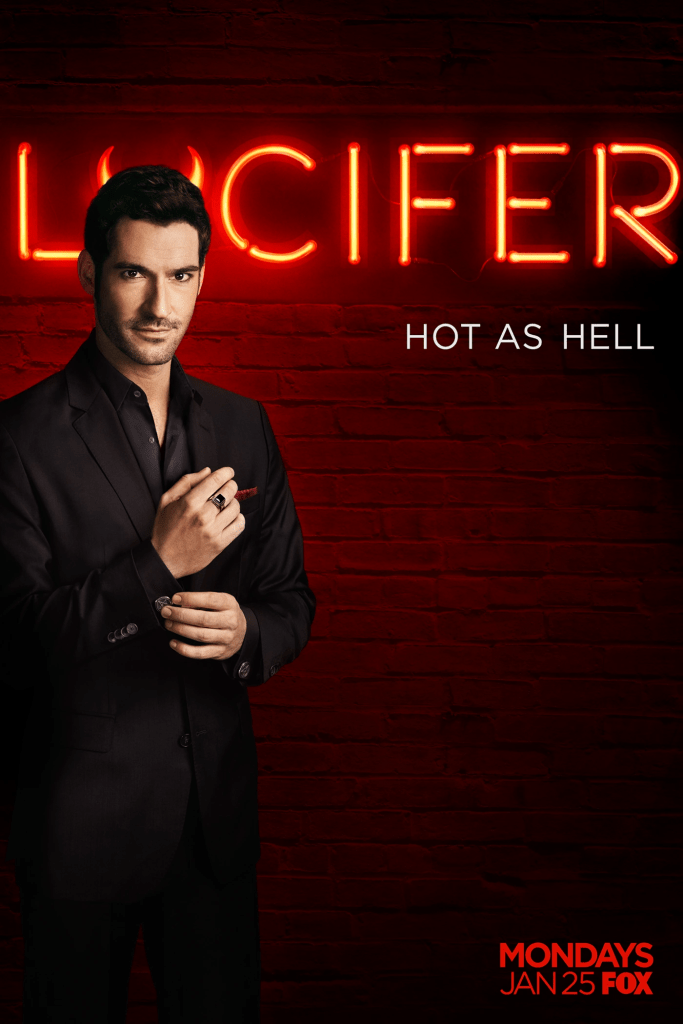
(NaturalNews) The more subtle side of satanism in Hollywood entertainment is now a thing of the past, as primetime television airs blatantly evil shows like the upcoming Fox drama Lucifer, which glorifies the goings about of the “lord of hell” after he fictitiously leaves the lake of fire and retires to Los Angeles.
The premise behind the absurd drama, which is set to release in 2016, centers around so-called “Lucifer Morningstar” and his new life as the owner of Lux, an upscale nightclub located in the City of Angels.
A trailer for the show portrays Lucifer as a handsome, British-accented, well-to-do ladykiller full of charm and wit.
This is the image most people, and especially Roman Catholics, are familiar with. 100% repellent. Sometimes on the cute side, as a “little devil,” other times menacing and hideous.
Through the use of the Dialectic, here is the Satan of today. Attractive, charming, and even – moral. Someone that you might be interested in getting to know. He’s not evil – he’s edgy! What could be more appealing? In the same way Satan has been repackaged for today’s fleshly crowd, so has the Bible, the preachers, and the church of today – Laodicea.
Revelation 3:13-15
13 He that hath an ear, let him hear what the Spirit saith unto the churches.
14 And unto the angel of the church of the Laodiceans write; These things saith the Amen, the faithful and true witness, the beginning of the creation of God;
15 I know thy works, that thou art neither cold nor hot: I would thou wert cold or hot.
16 So then because thou art lukewarm, and neither cold nor hot, I will spue thee out of my mouth.
2 Corinthians 11:13-15
13 For such are false apostles, deceitful workers, transforming themselves into the apostles of Christ.
14 And no marvel; for Satan himself is transformed into an angel of light.
15 Therefore it is no great thing if his ministers also be transformed as the ministers of righteousness; whose end shall be according to their works.
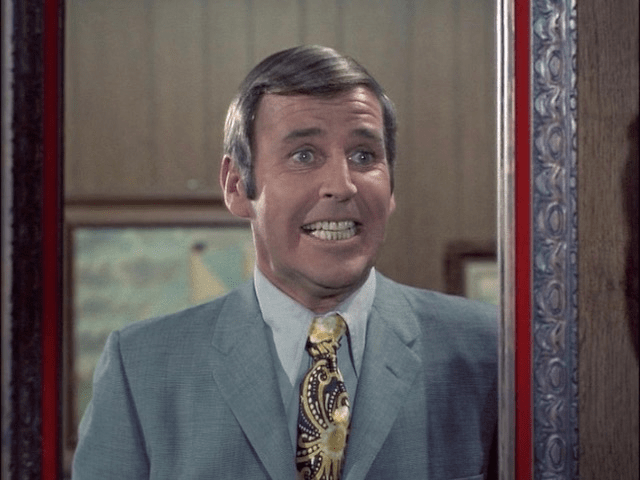
We truly are living in the last days. Do you see where this all leads? First the idea is introduced into popular culture for conditioning of the masses. Does anyone recall the ridiculous “Uncle Arthur” on the 60’s Tv show – “Bewitched?”
He was the penultimate funny “gay guy.” He wore a neck scarf and had homosexual affectations, yet he was appealing because he was so funny. The TV consumer, lets down their guard and the Dialectic has done its job. Now, we are faced with the worst perversions known to mankind being “normalized” into our society. Decades of “funny gay guys” leads to not so funny sodomites parading their sin down the streets of our cities.
I’m not laughing now – are you? I hope you can see how the Dialectic progresses, and how we got to where we are now.
Rock and jazz beats have no place in the worship of our Creator. Any move to place electric instruments and/or drums in your church indicates that your church has already been compromised. Run – don’t walk – out of that church.
In syncopation, the beat that is normally weak, is heavily stressed. It is also known as the “back-beat” in pop and rock music. It causes the left brain (emotional) to respond, and causes the heart to attempt to match the back-beat.



 Dr. R. Albert Mohler Jr. serves as president of



 The Vine Vigil