
Christmas Day 8
Leave a reply

1. O come, O come, Immanuel,
and ransom captive Israel
that mourns in lonely exile here
until the Son of God appear.
Refrain:
Rejoice! Rejoice! Immanuel
shall come to you, O Israel.
2. O come, O Wisdom from on high,
who ordered all things mightily;
to us the path of knowledge show
and teach us in its ways to go.
Refrain:
Rejoice! Rejoice! Immanuel
shall come to you, O Israel.
3. O come, O come, great Lord of might,
who to your tribes on Sinai’s height
in ancient times did give the law
in cloud and majesty and awe.
Refrain:
Rejoice! Rejoice! Immanuel
shall come to you, O Israel.
As we continue our descent into the month of December, we remember the birth of Christ, and we will be posting a selection of some of our favorite Christmas hymns so that you can celebrate this momentous and beloved time with us. This hymn, “O Come, O Come, Emmanuel,” is one of my very favorite Christmas hymns.
As a child, my parents always made Christmas very special. I remember on Christmas morning, waking up to the smell of my mother’s homemade cinnamon rolls with her secret lemon, cream-cheese icing. Of which, I – reminiscent of the prophet Elisha (in my own mind) – did not hesitate to ask for and proudly acquire, my own double portioning. As I sat at the table, bedecked by a Christmas-cheery tablecloth, this would be one of the hymns my mother would play on her record player. Perhaps it is the somber humility with which the verses beckon the coming of Christ, or perhaps it is the overwhelming reverence with which the refrain exclaims, “Rejoice! Rejoice!” this hymn, “O Come, O Come, Emmanuel,” stirs our hearts into movement and attention in recollection of the birth of Christ.
Cat Mahm
On this page, we invite our readers to share their thrifty ideas with us and other readers. It behooves the truly born-again Christian, to make proper use of whatever God gives. I always like to think, that the more frugal I am, the more I will have to support missions, ministries, and to give to worthy causes – like the crisis pregnancy center. Wastefulness has no place in the family of God, especially when we consider that every breath we draw is a gift from Him.
I’ll get it started with some of my major thrifty stuff. Please feel free to share your frugal fun with us in the comment section – and if I deem any of them to be superior – they will be edited into the post.

Cut down old flannel sheets, shirts, and anything else that is 100% cotton, into handkerchiefs. Serge or overcast the edges, or pink if no sewing machine is available. Wash with bleach or borax and hot water for sanitation, since it doesn’t matter what color they are as long as they are clean. A good size is 10 x 10.
Use plastic lids that have a deep lip as plant saucers to catch water run off. For example – the lid to large Nesquick canisters are ample saucers for a 5″ pot.

Use large clear “pretzel barrels” as mini cloches/greenhouses for your early tomato and pepper plants. They are the perfect size, and will protect tender plants from late frosts and torrential downpours. A lot of snack foods come in these barrels now. And you can use the lids as plant saucers!

Empty yogurt containers make ideal seed starting pots, with holes poked in the bottom for drainage. Filled with cheap soilless planting media you can save oodles of money by starting your own plants from seeds. Especially if you save seeds!
Cat Mahm:
Keep the heat in at Christmas-time by lining the windows with “fake snow”. This could be cotton fluff from the inside of an old pillow, or I even sometimes use white dish clothes.
Keeping heat in can reduce the heating bill, so I line everything with towels or insulating materials. It especially helps around the bases of the windows!

Cat Mahm:

Yes it does.
Need to kill the weeds in the driveway? Don’t buy all of that expensive weed killer.
During the spring/summer/fall months, I get a tea kettle to boil. Shortly after it has boiled, I pour it on the dandelions or persistent grass growing up through concrete. I go out the next morning and the weeds have completely withered and are easy to pull up. My driveway is weed free all year long.
Cat Mahm:
I never go out to eat. I never do take out. It’s never healthier, it’s addictive, and it’s way more expensive.
I buy my ground beef in bulk and chop it up into individual pounds, and store them in the freezer. You can do this with so many things. I would love to get a chest freezer someday. Buy everything on sale, freeze it. So many things can go in a chest freezer.
Please share your thrifty secrets with us!


There’s a lot of talk in the media lately about “low information.” This or that politician or pundit is excoriated for making overreaching statements about things they don’t know enough about. Well, the same thing happens in the Church family. How often do we gaze around at what our brothers and sisters are doing and make judgments about them? I sometimes bristle when people try to tell me about music, most often scolding me for not liking jazz. There is an assumption that those heavily involved in classical music are also jazz lovers. This assumption is based on low information.
In the same fashion, when we decide that someone is a “bad” Christian because they don’t make it to church every Sunday, or don’t “pony-up” for the offering – we are als0 demonstrating low information. It is a sad state of affairs, when the family of God turns on itself.
Wouldn’t you rather be a man or woman of understanding? There is no way, that we can know everything that is going on in the lives of our church family. Only God knows. Making petty statements about why this person is doing this or that, is gossip, and it is very harmful to the Church. If there is something serious going on, that is for the pastor and church elders to handle. If you notice someone struggling – then go over and talk to them! Don’t talk to someone else! Be Jesus’ representative in church as well as in the world. Your title – Christian – means “of Christ, or follower of Christ.” That is an important title to carry, with awesome responsibility.
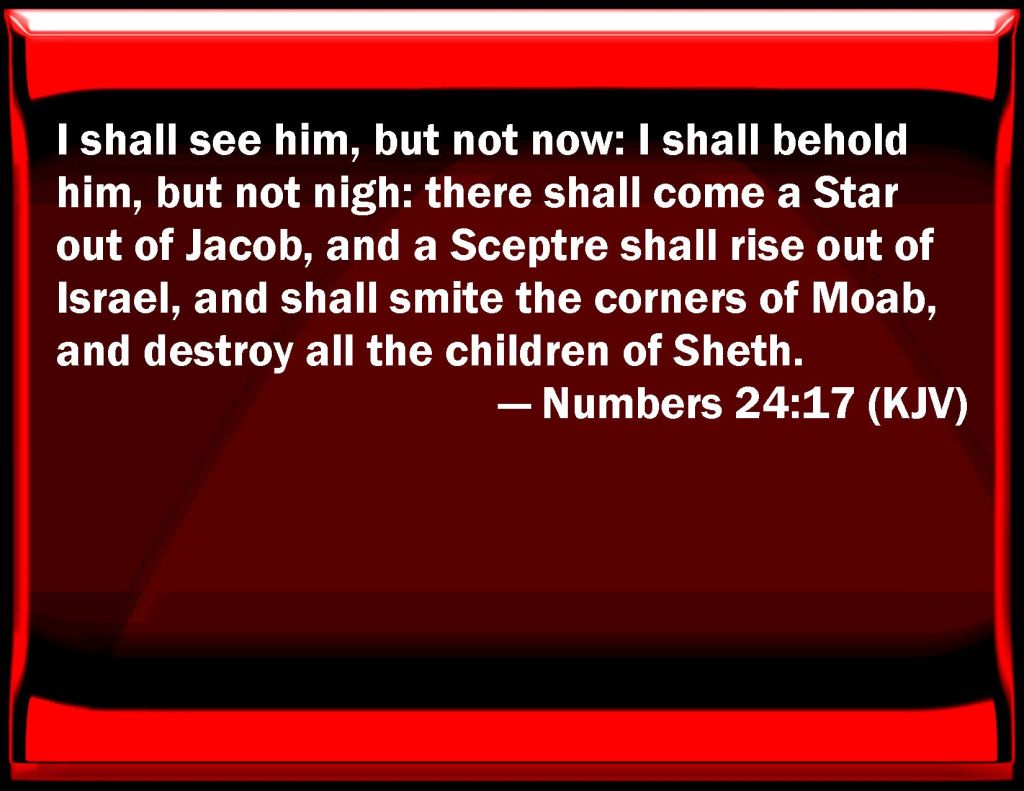



This song, has a lot of “bounce,” but it is not syncopated. The tempo is even, at a quick march beat, known as a “quick-step.” A real “foot stomper!” The offering for today was inspired by Terry Dawson’s testimony, wherein he was saved at “an old fashioned tent meeting.” The words to this hymn are outstanding – especially verses 3 and 4!
The Complete 1922 Lyrics to the song: The Old Fashioned Meeting,
By Herbert Buffman
Verse 1:
Oh how well I remember in the old fashioned days,
When some old fashioned people had some old fashioned ways
In the old fashioned meetings, as they tarried there
In the old fashioned manner, how God answered their prayer.
Chorus:
‘Twas an old fashiomed meeting, In an old fashioned place
Where some old fashioned people, had some old fashion grace
As an old fashioned sinner, I began to pray,
And God heard me and answered in the old fashioned way
Verse 2:
There was singing, such singing, of those old fashioned airs!
There was power, such power, in those old fashioned prayers
An old fashioned conviction made the sinner pray
And the Lord heard and saved him in the old fashioned way.
Repeat Chorus:
Verse 3:
Well, They say it is better, ” Things have changed, don’t you know!”
And the people in general seem to think it is so
And they call me old fashioned when I dare to say
That I like it far better in the old fashioned way.
Repeat Chorus:
Verse 4:
If the Lord never changes, as the fashion of men,
If He’s always the same, why, He is old fashioned then!
As an old fashioned sinner saved through old time grace,
Oh, I’m sure He will take me to an old fashioned place.
Repeat Chorus:
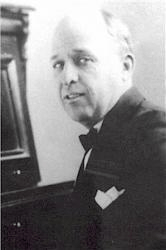
Short Name: Herbert Buffum
Full Name: Buffum, Herbert, 1879-1939
Birth Year: 1879
Death Year: 1939
Born: November 13, 1879, Lafayette, Illinois.
Died: October 9, 1939, Los Angeles, California.
Buried: Valhalla Memorial Park, Los Angeles, California. His epitaph reads “I have fought a good fight.”
After moving with his family to California and being converted to Christ at age 18, Buffum felt a call to the ministry. He held ministerial credentials with the Church of the Nazarene, and was a Holiness/Pentecostal evangelist. He was also a prolific song writer, with many songs inspired by personal experience; He had 10,000 Songs to his credit, 1,000 actually published. Ripley’s “Believe It Or Not” claimed He once wrote 12 songs in an hour. Though a talented musician, Buffum received no musical training. He sold most of his songs for five dollars or less. When he died, the Los Angeles Times called him “the king of Gospel song writers. http://www.hymnary.org/text/o_how_well_i_remember
Such a sad, sad reality for the Laodicean church age. The Body of Christ is teeming with hypocrisy. You would be very hard pressed – no – let’s go further and say it would be impossible to find a New Testament church that was free of gossip . . .

This picture shows girls gabbing, but we all know that men are just as guilty of gossiping. What is most troubling about this activity, is the lack of church discipline for such a serious offense. Damage done by gossip is tangible and far-reaching.
Do you realize – ladies and gentlemen – that when you are disparaging your spouse to others in your church family, that you are guilty of this kind of hypocrisy? That when you confide everything that your teenager does to your neighbor, coworkers, “friends” at Bible study – you are gossiping? Yes – Christians gossip about their families. Parents say terrible things about their spouses to their own children! And if your family is not your neighbor – I don’t know who is! How utterly shameful.
WE ALL NEED TO BE VIGILANT ABOUT EVERY WORD
THAT COMES OUT OF OUR MOUTHS.

Never fear beloveds. If you are being maligned by family members, church family, coworkers, neighbors . . .the truth will prevail if you are a child of God. His Truth is eternal, and completely just. As a child of God, you are covered by His righteousness, and are justified by your faith in His finished work on the cross. You will be delivered in truth, and justice.
sage


THE BIBLE BELIEVER’S UFO DEBRIEF: WHAT YOU CAN KNOW ABOUT UFO’S FROM THE BIBLE.
1. According to the Bible, other than mankind and the animals, God created different classes of spiritual beings the Bible calls angels, seraphim and cherubim. Among these is the leader of the spiritual kingdom of darkness the Bible calls Satan, the devil, Lucifer, the great red dragon, the prince of the power of the air. Revelation 12, Ephesians 2:2, Job 1-2, Isaiah 14, Ezekiel 28 KJV.
2. The Bible says that Satan was one of the cherubim in Ezekiel 28. This is very important to remember as the cherubim are a very special class of spiritual creature.
3. U.F.O. stands for Unidentified Flying Object. The United States Government now prefers Unidentified Aerial Phenomenon or U.A.P.’s for short. So technically speaking anything can be a UFO/UAP of its flying in the air and cannot be identified. Many of these are most likely natural phenomenon, living pterodactyls and dragons, or meteorological weather equipment.
4. However, some UFO/AUP activity is of such an obvious supernatural and sinister nature that a Biblical answer must be sought aside from natural explanations.
5. While the Bible does not acknowledge physical creatures in the way that humans think of physical life thriving on planets such as Venus, Mars, Pluto, Mercury etc., the Bible DOES acknowledge that man is NOT alone in the Universe. As a matter of fact, Satan and his angels frequent God’s Third Heaven everyday. See Revelation 12 KJV. In the Tribulation, they will come down to earth and will no longer have access to the Third Heaven that sits above our “Outer space”.
6. There is MUCH in the UFO literature that cannot and should not be taken seriously by the Bible believing Christian. However, since we judge everything by the word of God- Acts 17:11, Isaiah 8:20, John 5:39 KJB- there are times where UFO material does seem to have a Biblical connection to the principalities and powers and spiritual wickedness in high places-Ephesians 6.
7. A major Biblical explanation can be applied to what one reads about the “flying saucer” and “spaceship” phenomenon. Based on the Bible’s account, I believe that these vessels or flying vehicles are real actual vehicles and that we can understand something of their Satanic and Biblical nature. Cherubim, of which Satan is a part, are flying creatures that fly around in what the Bible calls wheels and rings with eyes, with wheels spinning in the middle of a wheel in Ezekiel chapters 1, 10 and 28.
The modern nomenclature of flying discs and saucers have their counterpart in the Bible’s wheels and rings. According to one UFO researcher I read years ago, these flying discs are made of a peculiar metal that seems to be alive or sentient. The Bible often speaks of things being simultaneously spiritual with the ability of being seen in the physical realm. For example, the flying locusts of Revelation 9 that come up out of the bottomless pit are obviously spiritual beings but they can also be felt physically by mankind according to what we read in that chapter. So it is with some of the UFO phenomenon. It is of a spiritual nature that manifests itself in our physical world.
Ezekiel 1:20 says “Whithersoever the spirit was to go, they went, thither was their spirit to go; and the wheels were lifted up over against them: for the spirit of the living creature was in the wheels.” See that? Those wheels had the spirit of the living creature inside of them. This obviously can be applied to what one reads in the UFO accounts, so the Bible believer has an edge that the United States Government does not have! The Government doesn’t have to declassify anything because we already have the Book on it!
The Bible believer recognizes the nature of Satan and his angels and unlike the NSA, U.S.A.F, CIA, FBI, the X-File researchers and others, we know what the UFO occupants are about. To us, they are fully identified! The UFO deception is only effective toward those who have not placed their trust and belief and knowledge in the Lord Jesus Christ, the Man Who Came From Heaven and the Creator of the Universe! John 3:13, 1 Timothy 3:16, Ephesians 3:9 KJV.
Nate Beck
“I Love You, Lord”
I love you, Lord
And I lift my voice
To worship You
Oh, my soul, rejoice!
Take joy my King
In what You hear
Let it be a sweet, sweet sound
In Your ear
I love you, Lord
(I love you, Lord)
And I lift my voice
(And I lift my voice)
To worship You
(To worship You)
Oh, my soul, rejoice!
(Oh, my soul)
Take joy my King
(Take joy my King)
In what You hear
(In what You hear)
Let it be a sweet, sweet sound
(Let it be a sweet sound)
In Your ear
I love you, Lord
And I lift my voice
To worship You
Oh, my soul, rejoice!
Take joy my King
In what You hear
Let it be a sweet, sweet sound
In Your ear
I love you, Lord
(I love you, Lord)
I love you, Lord
(I love you, Lord)
(And I lift my voice)
I love you, Lord
(Take joy my King)
(Take joy my King)
I love you, Lord
(I love you, Lord)
I love you, Lord
(Let it be a sweet, sweet sound)
Words and music by Laurie B. Klein
My Jesus, I love Thee, I know Thou art mine;
For Thee all the follies of sin I resign.
My gracious Redeemer, my Savior art Thou;
If ever I loved Thee, my Jesus, ’tis now.
I love Thee because Thou has first loved me,
And purchased my pardon on Calvary’s tree.
I love Thee for wearing the thorns on Thy brow;
If ever I loved Thee, my Jesus, ’tis now.
I’ll love Thee in life, I will love Thee in death,
And praise Thee as long as Thou lendest me breath;
And say when the death dew lies cold on my brow,
If ever I loved Thee, my Jesus, ’tis now.
In mansions of glory and endless delight,
I’ll ever adore Thee in heaven so bright;
I’ll sing with the glittering crown on my brow;
If ever I loved Thee, my Jesus, ’tis now.
Words: William R. Featherstone, 1864; Featherstone was only 16 years old at the time!!!!!!
Music: Gordon Adoniram J. Gordon, 1876
My Jesus I Love Thee,
The Song and the Story
William Ralph Featherstone Writes a Legacy of Love that Becomes My Jesus I Love Thee
The lives of most people are not captured in the history books. Memories are left to the hearts and minds of family and friends, and then all too soon fade into the tapestry of times past. And so it was with William Ralph Featherstone. He was born without fanfare on July 24, 1846, in Montreal Canada, and he died in the same city, just before his 27th birthday. Little else is known of his short life except for the fact that some time during his 16th year of life William put pen to paper to record a love poem. The love he expressed was deep and true. The words of that poem have lasted more than a century beyond Featherstone’s life and death.
In 1876, three years after Featherstone’s passing, Adoniram Gordon put music to this love poem and added it to a hymnal which was published that same year. Featherstone’s poem My Jesus I Love Thee has since been recorded in most evangelical hymnals of the past 130 years, and is loved and sung by millions of Christians yet today.

Perhaps not many view the Proverbs and Psalms as being prophetic. After so many decades of Bible study, I see Prophecy in almost every line of the Bible. As is understood, the Lord reveals things to us in stages. Most often, Old Testament events and poetry, describe an actual event such as Passover – which is a picture of something far more dramatic in the future. Such is the case with this Proverb. At face value, it does not seem to reveal much to the casual reader – but we are here to see what it really says.

Only those who are truly born-again of the Holy Spirit of God, will be delivered – because only the truly born-again – are considered righteous. When we repent, and accept Jesus Christ as our Savior, we obtain His righteousness – which guarantees our deliverance. None of the troubles, trials and tribulations of this present life and time, can compare to the Great Tribulation, and the judgments that will befall everyone on earth at that time.
Please do not allow the recent crop of preterists to worm their way into your faith in the deliverance promised to you by God in His Holy Book. It is described over and over again – even in this short Proverb. Every Word of the King James Bible is true – and you can trust it implicitly. Read it literally, and with faith.
That’s right. As soon as the church is taken up – The Wicked One will swoop in. Just as a vacuum needs to be filled – this will happen in such a way – that it will not be readily apparent to those who are not alert. Since mankind always seeks to worship something or someone they can see, it will happen all too easily. The Holy Spirit that is indwelling believers here on earth, will leave along with the righteous that are being delivered. Once this happens, the only thing that was restraining the power of anti-christ will be gone! It will happen, but, we will NOT BE HERE TO SEE IT!

PAUL, THE RAPTURE FANATIC!
I find that the Apostle Paul must’ve been as obsessed with the Rapture as much as I am. Why?
Well, let’s see……
Here are 33 different passages from just Paul himself, not even counting those of Peter, James, Jude, and John, that talk about the Rapture or some aspect thereof!!! Notice also that with the exception of Philemon, Paul mentions the Rapture in every single epistle and letter that he wrote!!!
Yes, I think about the Rapture everyday. It should be at least as important to us as it was to Paul, I would think.
Nate Beck
The sky shall unfold
Preparing His entrance
The stars shall applaud Him
With thunders of praise
The sweet light in His eyes
Shall enhance those awaiting
And we shall behold Him
Then face to face
O, we shall behold Him
We shall behold Him
Face to face in all of His glory
O, we shall behold Him
Yes, we shall behold Him
Face to face, our Savior and Lord
The angel shall sound
The shout of His coming
And the sleeping shall rise
From their slumbering place
And those who remain
Shall be changed in a moment
And we shall behold Him
Then face to face
We shall behold Him
O yes we shall behold Him
Face to face in all of His glory
We shall behold Him
Yes, we shall behold Him
Face to face
Our Savior and Lord
And we shall behold Him
Our Savior and Lord
Savior and Lord

Southern Gospel legend Dottie Rambo died on Mother’s Day, Sunday, May 11, 2008 when her tour bus ran off the highway and struck an embankment in Missouri. Dottie was on her way to North Richland Hills, Texas to perform a Mother’s Day show with Lulu Roman & Naomi Sego. Dottie was 74 at the time of her death and had spent 62 years of her life writing music and singing about her Savior.
Seven other people on the bus, including her manager Larry Ferguson and his wife and two children, were injured in the accident. They were hospitalized in Springfield, Missouri with moderate to severe injuries, according to the Missouri Highway Patrol. Representatives from her recording label confirmed that Dottie was asleep at the time of the accident.
Dottie Rambo, born Joyce Reba Lutrell in Madison, Kentucky on March 2, 1934, started writing songs at the age of 8 while sitting by a creek near her family home. By age 10 she was playing guitar and singing on local country radio. Her father dreamed of the day that young Dottie become a singer on Nashville’s WSM Grand Ole Opry. When Dottie gave her life to Christ at the age of 12, changing her path from country music to gospel, her father did not agree with the decision, fearing that she would spend her life singing in backwood churches for little or no pay. He gave her an ultimatum; either stop the Christian singing or leave his house. Dottie chose the path that Christ had laid in front of her and was taken to the bus stop by her mother with all of her belongings in a cardboard suitcase and her name and address on a tag around her neck in case she got lost.
By the 1950s she had married Buck Rambo and had her daughter, Reba. Dottie and Buck traveled across the region singing her songs in small churches. Other gospel groups, like the Happy Goodman Family, heard her songs and started singing them. The then- governor of Louisiana, Jimmy Davis, heard her music and flew her and her family to the governor’s mansion so that she could sing her songs for him. Governor Davis paid Dottie to publish her songs and soon after, Warner Brothers Records signed Dottie and her group, The Gospel Echoes, to a two-record deal. When they wanted Dottie and her group to move to folk and start singing Rhythm and Blues, Dottie declined.
How I Beat the Unpardonable Sin! By Nate W. Beck. Copyright 2024 by Nathan William Beck. All Rights Reserved. All Scripture from the Authorized King James Holy Bible.
Millions of people, including Christians, struggle with mental health issues and mine is Obsessive-Compulsive Disorder, which is caused by a chemical imbalance in the brain, which causes your mind to focus on your biggest fears and disgusts and repetitive behavior and sometimes a constant need for validation. This post isn’t about OCD, so I’m not going to go into a whole long thing about its causes, history, treatment, diagnosis etc. Suffice it to say that OCD sufferers are not responsible, for the most part, for the unwanted thoughts that pop in their heads no more than someone with a physical handicap or someone who is paralyzed can help their condition. Fast forward to the absolute hell I used to struggle with. If I had let the devil get his way, I would’ve been totally ineffective for the Lord and would’ve just given up.
Some well known Bible verses, though often little understood.
“But when the Pharisees heard it, they said, This fellow doth not cast out devils, but by Beelzebub the prince of the devils. And Jesus knew their thoughts, and said unto them, Every kingdom divided against itself is brought to desolation; and every city or house divided against itself shall not stand: And if Satan cast out Satan, he is divided against himself; how shall then his kingdom stand? And if I by Beelzebub cast out devils, by whom do your children cast them out? therefore they shall be your judges. But if I cast out devils by the Spirit of God, then the kingdom of God is come unto you. Or else how can one enter into a strong man’s house, and spoil his goods, except he first bind the strong man? and then he will spoil his house. He that is not with me is against me; and he that gathereth not with me scattereth abroad. Wherefore I say unto you, All manner of sin and blasphemy shall be forgiven unto men: but the blasphemy against the Holy Ghost shall not be forgiven unto men. And whosoever speaketh a word against the Son of man, it shall be forgiven him: but whosoever speaketh against the Holy Ghost, it shall not be forgiven him, neither in this world, neither in the world to come.
Matthew 12:24-32.
“And the scribes which came down from Jerusalem said, He hath Beelzebub, and by the prince of the devils casteth he out devils. And he called them unto him, and said unto them in parables, How can Satan cast out Satan? And if a kingdom be divided against itself, that kingdom cannot stand. And if a house be divided against itself, that house cannot stand. And if Satan rise up against himself, and be divided, he cannot stand, but hath an end. No man can enter into a strong man’s house, and spoil his goods, except he will first bind the strong man; and then he will spoil his house. Verily I say unto you, All sins shall be forgiven unto the sons of men, and blasphemies wherewith soever they shall blaspheme: But he that shall blaspheme against the Holy Ghost hath never forgiveness, but is in danger of eternal damnation. Because they said, He hath an unclean spirit.”
Mark 3:22-30 KJV.
Those passages are some of the most terrifying parts of Scripture. To think that there is one sin that, if committed, God will NEVER forgive you for. Well, of course, early in my twenties, with my OCD, I would have terrible thoughts that would get stuck in my head where I would cuss the Holy Ghost and have to fight it off by cussing Satan instead and saying over and over again Praise you Holy Ghost in place of the unwanted thought. This caused me great stress and turmoil and I would constantly doubt my Salvation and ask the Lord to take these thoughts away. It was absolute hell for me and even so today revisiting it. There are lots of reasons I never wanted to write/revisit this, but there it is. Upsetting the Holy Ghost is the last thing I would ever want to do at any point in my Christian life and such a thing should repulse any sane Christian. But a mental illness like OCD that Satan can use to his advantage presents a serious problem. A problem most Christian pastors and counselors are ill equipped to handle.
A couple things I want to point out about the passages on blaspheming the Holy Ghost. Number one, this was a sin of the tongue, not thoughts. Number two, it was the unrepentant Pharisees openly accusing Jesus of having an unclean spirit and doing healings by the power of Satan. Number three, no one ever mentions this sin again in the Bible AFTER the Cross. Many, including myself, believe this sin could only be unforgiven before Jesus paid for ALL sin on the Cross. Other Christian writers have dealt successfully with explaining the Unpardonable Sin such as Pastor James L. Melton and Joseph Dearing. See my Recommended Reading List.
A fourth thing to mention is that the Bible never says that any Pharisee who blasphemed the Holy Ghost was worried about what Jesus said about it. If you’re worried you’ve committed this sin, that’s a good indication you haven’t committed it at all. It is also strange that Paul would never feel the need to give people a repeat warning in any New Testament letter he wrote about the one sin that God could supposedly never forgive. I know some Charismatic and “Holiness” groups who take advantage of that fear today when confronted with their false doctrines. Some such self righteous snobs think you can lose your salvation if you fart in public!
Where I Found Help.
For the longest time, I would search in vain for help with this struggle and though I wrote to many ministries, I didn’t find any answers that were satisfying or any real help at all. Finally, I found help in two sources which really answered my problem. The first was a book titled Brain Lock: Free Yourself From Obsessive-Compulsive Behavior by Dr. Jeffrey Schwartz, an expert on OCD. A huge help, Dr. Schwartz explained how and why OCD works the way it does, described other historical figures who struggled with the same thing I was dealing with and explained why an OCD sufferer is not their thoughts and can’t be responsible for a thought that they cannot control or that is totally unwelcome in the first place. As evangelist Dwight L. Moody said in Secret Power, you can’t control birds flying over your head (unwanted thoughts), but you can certainly keep them from making a nest in your head!
Brain Lock is one of the best self therapy books for OCD sufferers available. Another book that is a big help that I discovered later is Dr. Ian Osborn’s Can Christianity Cure Obsessive-Compulsive Disorder? In that book, Dr. Osborn details the mental struggles of Martin Luther and John Bunyan, who most likely had OCD. As I said, there are millions of people who have struggled with this, and many Christians like me suffer in silence because they don’t have any real answers. Furthermore, many more have no Biblical training in how to conduct spiritual warfare either, to combat the devil’s tactics. I’m not saying every case of mental illness is of the devil. Not saying that at all, but Satan can certainly use such as an advantage over the Christian! I’m proof of that! Ephesians 6 KJV.
The second big help came from Dr. Peter Ruckman, one of my Christian heroes. It was around 2007-2008 that I finally got around to buying his Chalk Talk sermons on DVD and the one the Lord led me to pick first was Demons and Christians. I’ll never forget it. It was a work night (third shift) and I got up around 6PM, found it in the mail and decided to stay up and watch the whole thing before work. I was really excited because I had never seen Dr. Ruckman preach before, but just heard him on tape. A powerful sermon, and one of my favorites, about the half hour mark into it, Dr. Ruckman said something that hit me and made tears stream down my face!
Speaking of how demons can manipulate you and introduce thoughts in your head, Dr. Ruckman described being out jogging at night and hearing voices cussing the Holy Ghost. He said, “You know, it’s a good thing the Lord gives us so much to worry about sometimes and our minds just aren’t in neutral, because ANYTHING can pop in there!” He continued, “but I’ve got more sense than you’ve got, because I know that ain’t me! If it were up to me those thoughts wouldn’t be there. I know what’s going on!”. Dr. Ruckman continued to describe how unclean spirits operate, and he has some of the very best material on spiritual warfare. Since one of my all time favorite men of God went through this kind of thing, I didn’t feel so alone in the struggle as I had! This was a tremendous blessing from the Lord, very personal, and I will never forget it! God bless Brother Pete Ruckman!
Other than the inner workings of OCD, a devil, being a spirit, and Satan, being the prince of the power of the air- Ephesians 2:2, can certainly cause thoughts to pass through your head that aren’t yours. Even the Spirit of the Omnipresent Lord and the Spirit of Satan have to inhabit the same Universe! One of Satan’s favorite pass times is to get the child of God to doubt their salvation in Christ and the never ending love that the Lord has for us. Satan thrives on fear and torment. See 1 John 4:18. The best thing to do is to immediately recognize that the thought isn’t yours, rebuke it in Jesus’s Name and move on. When I finally came to the realization of the fact that these weren’t my thoughts, and that my salvation wasn’t in jeopardy, and the Blood of the Lord Jesus Christ washes ALL MY SIN AWAY anyway- 1 John 1:7, Revelation 12:11 KJV, the thoughts went away completely! That’s how I beat the unpardonable sin!
So much more could be written on this, and I probably will in an expanded publication, but don’t let the devil or anyone else deceive you into thinking that the Lord won’t forgive you of certain sins, ESPECIALLY sins you don’t have much control over. The Lord is smarter and more just than that, so give God some credit, won’t you? There are also many Scriptures, some cited below, that shows the Lord has much compassion on those who are of a contrite heart over sin and mental struggles. We have complete and total victory in the Lord Jesus Christ and You too can beat the unpardonable sin!
Recommended KJB Scriptures. The best defense to combat unwanted and unholy thoughts is to saturate your mind and heart with as much of the word of God, the King James Holy Bible, as possible! Psalm 119:11 KJB. Make sure it’s the Authorized King James Holy Bible too. All modern versions are of the devil and from corrupt Roman Catholic manuscripts and only serve to further mess your mind up!
2 Timothy 1:7
1 John 1:7-10
2 Corinthians 10:3-5
Romans 7:18 (it’s important to remember that the human brain is also flesh)
1 Thessalonians 5:14.
Isaiah 26:3
Isaiah 57:15
Psalm 34:18
Psalm 51:17
Isaiah 66:2
Recommended Reading.
Demons and Christians. by Dr. P. S. Ruckman
Brain Lock. by Dr. Jeffrey Schwartz
Can Christianity Cure Obsessive-Compulsive Disorder? By Dr. Ian Osborn.
The “Errors” in the King James Bible. by Dr. Ruckman.
Secret Power by Dwight L. Moody.
Soul Winning Crash Course. by Joseph Dearing
Martin Luther’s Obsessive-Compulsive Disorder. by Dr. Osborn.
Hard Sayings In the Bible. by James L. Melton.
Fighting Back by James L. Melton.
Eternal Security. by Dr. Ruckman.
Nate Beck
Hmm. Easier said than done – right? Not really. Of course, it is nigh impossible if one relies on their own righteousness, but the Bible implicitly states in many places, that only God is righteous, and that we, miserable sinners that we are, may receive His righteousness through faith in the death, the burial, and the resurrection of Jesus Christ. His perfect righteousness is given to us, by Grace.
We are delivered from death and judgment only by recognizing and accepting Jesus Christ as our Savior. He saves us from eternal death in the Lake of Fire, and promises us an eternity with Him.
Just as naughty children never think they will be found out – the sinner in rebellion refuses to acknowledge what needs to be done. They willfully choose the darkness of this world, and the Proverb states they will be taken in their own naughtiness. Not the misdeeds of another – but their very own misdeeds. Sinners in rebellion will not be able to blame anyone (as is the popular trend today) because the Word says the blame will be squarely laid at their own feet.
In the universities and satanically controlled media, herculean effort is made to convince the lost that their condition is not sin and damnation, but that their misery is caused by others. Hence, the creation of the blame game. The evil one does not want man to repent, and he will do everything in his considerable power to cause the sinner to either kill themselves before they can get saved – or contrive to bedazzle the sinner with psychology and fleshly enticements. But God, in His mercy, has given us a narrow pathway of escape. . .


I Have Decided to Follow Jesus
attr. to S. Sundar Singh
Copyright: Public Domain
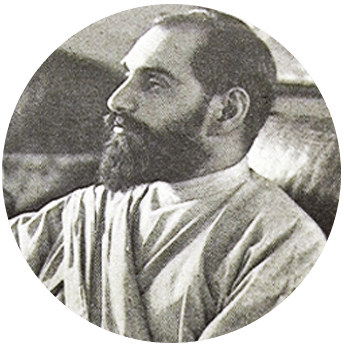
Singh was raised a member of the Sikh religion. Prior to his conversion, Sundar attended a primary school run by the American Presbyterian Mission where the New Testament was read daily as a “textbook.” Sundar “refused to read the Bible at the daily lessons…To some extent the teaching of the Gospel on the love of God attracted me, but I still thought it was false.”
In the midst of such confusion and while only fourteen years old, his mother died, and Sundar underwent a crisis of faith. His mother was a loving saintly woman and they were very close. In his anger, Sundar burned a copy of one of the Gospels in public. Within three days Sundar Singh could bear his misery no longer. Late one night in December 1903, he rose from bed and prayed that God reveal himself to him if he really existed. Otherwise — “I planned to throw myself in front of the train which passed by our house.” For seven hours Sundar Singh prayed. “O God, if there is a God, reveal thyself to me tonight.” The next train was due at five o’clock in the morning. The hours passed. Suddenly the room filled with a glow. A man appeared before him. Sundar Singh heard a voice say, “How long will you deny me? I died for you; I have given my life for you.” He saw the man’s hands, pierced by nails.
Amazed that his vision had taken the unexpected form of Jesus, Sundar was convinced in his heart that Jesus was the true Savior, and that He was alive. Sundar fell on his knees before Him and experienced an astonishing peacefulness which he had never felt before. The vision disappeared, but peace and joy lingered within him.
Despite his family’s pleas, bribes, and threats, Sundar wanted to be baptized in the Christian faith. After his father spoke words of official rejection over him, Sundar became an outcast from his people. He cut off the hair he had worn long like every Sikh man. Against great opposition, he was baptized on his birthday in 1905, in an English church in Simla.
Conventional Indian churches were willing to grant him a pulpit, but their rules were foreign to his spirit. Indeed, he felt that a key reason the gospel was not accepted in India was because it came in a garb foreign to Indians. He decided to become a sadhu, so that he could dedicate himself to the Lord Jesus. He was convinced that this was the best way to introduce the Gospel to his people since it was the only way which his people were accustomed to. As a sadhu, he wore a yellow robe, lived on the charity of others, abandoned all possession and maintained celibacy. In this lifestyle, he was free to devote himself to the Lord. Dressed in his thin yellow robe, Sundar Singh took to the road and began a life of spreading the simple message of love and peace and rebirth through Jesus. He carried no money or other possessions, only a New Testament.
Sundar journeyed much. He traveled all over India and Ceylon. Between 1918-1919, he visited Malaysia, Japan and China. Between 1920-1922 he went to Western Europe, Australia and Israel. He preached in many cities; Jerusalem, Lima, Berlin and Amsterdam among others. Despite his growing fame, Sundar retained a modest nature, desiring only to follow Jesus’ example: to repay evil with kindness and to win over his enemies by love.
He was quite independent of outward Church authority in all his religious life, thought, and work. He dropped out of a Christian seminary that he briefly attended. Neither did he attach much importance to public worship because in his experience the heart prays better in solitude than in a congregation.
He traveled in India and Tibet, as well as the rest of the world, with the message that the modern interpretation of Jesus was sadly watered down. Sundar visited Tibet every summer and in 1929, he visited there and was never seen again.
http://www.ccel.org/ccel/singh
The story of the song is covered in the Book by Dr. P.P. Job and Indian preacher in His book “Why God Why”
An excerpt from the book is given below:About 150 years ago, there was a great revival in Wales, England. As a result of this, many missionaries came from England and Germany to North-East India to spread the Gospel. At the time, north-east India was not divided into many states as it is today. The region was known as Assam and comprised hundreds of tribes. The tribal communities were quite primitive and aggressive by nature. The tribals were also called head-hunters because of a social custom which required the male members of the community to collect as many heads as possible. A man’s strength and ability to protect his wife was assessed by the number of heads he had collected. Therefore, a youth of marriageable age would try and collect as many heads as possible and hang them on the walls of his house. The more heads a man had, the more eligible he was considered. Into this hostile and aggressive community, came a group of Welsh missionaries spreading the message of love, peace and hope of Jesus Christ. Naturally, they were not welcomed. One Welsh missionary succeeded in converting a man, his wife, and two children. This man’s faith proved contagious and many villagers began to accept Christianity. Angry, the village chief summoned all the villagers. He then called the family who had first converted to renounce their faith in public or face execution. Moved by the Holy Spirit, the man instantly composed a song which became famous down the years. He sang:
I have decided to follow Jesus. (3 times)
No turning back, no turning back.
Enraged at the refusal of the man, the chief ordered his archers to arrow down the two children. As both boys lay twitching on the floor, the chief asked, “Will you deny your faith? You have lost both your children. You will lose your wife too.”
But the man sang these words in reply:
Though no one joins me, still I will follow. (3 times)
No turning back, no turning back.
The chief was beside himself with fury and ordered his wife to be arrowed down. In a moment she joined her two children in death. Now he asked for the last time, “I will give you one more opportunity to deny your faith and live.”
In the face of death the man sang the final memorable lines:
The cross before me, the world behind me. (3 times)
No turning back, no turning back.
He was shot dead like the rest of his family. But with their deaths, a miracle took place. The chief who had ordered the killings was moved by the faith of the man. He wondered, “Why should this man, his wife and two children die for a Man who lived in a far-away land on another continent some 2,000 years ago? There must be some supernatural power behind the family, and I too want that supernatural power.”
In a spontaneous confession of faith, he declared, “I too belong to Jesus Christ!” When the crowd heard this from the mouth of their chief, the whole village accepted Christ as their Lord and Savior. This is the power of [God in] demonstration.


A great many articles are written about the underground bunkers of the elites and super-rich. These fortresses amount to vast underground cities, with every comfort known to man. Even the not-so-rich, have succumbed to the notion, that they can “ride-out” Armageddon. Bible believers should know, that those who are truly born again – will not need to “hide out,” because they won’t be here. Not only that – but it would be impossible to do so. This is not to say that you should not be prepared for natural disasters, and not so natural ones like losing your job. What is being discussed here is the Day of Wrath.
Revelation 6:16-17
16 And said to the mountains and rocks, Fall on us, and hide us from the face of Him that sitteth on the throne, and from the wrath of the Lamb:
17 For the great day of His wrath is come; and who shall be able to stand?
Zephaniah 1:18
Neither their silver nor their gold shall be able to deliver them in the day of the Lord‘s wrath; but the whole land shall be devoured by the fire of His jealousy: for He shall make even a speedy riddance of all them that dwell in the land.

It is of utmost importance to understand, that you have no righteousness of your own. ZERO. When you are born again – you can possess His righteousness, and it is overflowing and enough! The good works and deeds you do after being saved, will gain you rewards at the Judgment Seat of Christ. And that is a wonderful thing to work for.
Philippians 3:9
And be found in Him, not having mine own righteousness, which is of the law, but that which is through the faith of Christ, the righteousness which is of God by faith.
Revelation 16:7
7 And I heard another out of the altar say, Even so, Lord God Almighty, true and righteous are Thy judgments.
5 Go to now, ye rich men, weep and howl for your miseries that shall come upon you.
2 Your riches are corrupted, and your garments are motheaten.
3 Your gold and silver is cankered; and the rust of them shall be a witness against you, and shall eat your flesh as it were fire. Ye have heaped treasure together for the last days.
4 Behold, the hire of the labourers who have reaped down your fields, which is of you kept back by fraud, crieth: and the cries of them which have reaped are entered into the ears of the Lord of sabaoth.
5 Ye have lived in pleasure on the earth, and been wanton; ye have nourished your hearts, as in a day of slaughter.
6 Ye have condemned and killed the just; and he doth not resist you.
7 Be patient therefore, brethren, unto the coming of the Lord. Behold, the husbandman waiteth for the precious fruit of the earth, and hath long patience for it, until he receive the early and latter rain.
8 Be ye also patient; stablish your hearts: for the coming of the Lord draweth nigh.
sage

 The Vine Vigil
