Jesus, keep me near the cross, There a precious fountain Free to all, a healing stream Flows from Calvary’s mountain.
Refrain
In the cross, in the cross, Be my glory ever; Till my raptured soul shall find Rest beyond the river.
Near the cross, a trembling soul, Love and mercy found me; There the bright and morning star Sheds its beams around me.
Refrain
Near the cross! O Lamb of God, Bring its scenes before me; Help me walk from day to day, With its shadows o’er me.
Refrain
Near the cross I’ll watch and wait Hoping, trusting ever, Till I reach the golden strand, Just beyond the river.
Refrain
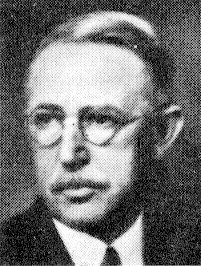
Text: Fanny J. Crosby, 1820-1915 Music: William H. Doane, 1832-1915
“It may seem a little old-fashioned, always to begin one’s work with prayer, but I never undertake a hymn without first asking the good Lord to be my inspiration.”
Galatians 6:14
But God forbid that I should glory, save in the cross of our Lord Jesus Christ, by Whom the world is crucified unto me, and I unto the world.
1.	Sing the wondrous love of Jesus;
	sing his mercy and his grace.
	In the mansions bright and blessed
	he'll prepare for us a place.
Refrain:
	When we all get to heaven,
	what a day of rejoicing that will be!
	When we all see Jesus,
	we'll sing and shout the victory!

2.	While we walk the pilgrim pathway,
	clouds will overspread the sky;
	but when traveling days are over,
	not a shadow, not a sigh.
	(Refrain)

3.	Let us then be true and faithful,
	trusting, serving every day;
	just one glimpse of him in glory
	will the toils of life repay.
	(Refrain)

4.	Onward to the prize before us!
	Soon his beauty we'll behold;
	soon the pearly gates will open;
	we shall tread the streets of gold.
	(Refrain)
The author of this text, Eliza Hewitt, was a school teacher in Philadelphia and a Christian lay worker who was deeply devoted to the Sunday school movement. Like many of the other gospel song writers during the latter half of the nineteenth century, Eliza’s goal in writing her songs was to reach children and teach them the basic truths of the gospel. She dedicated this particular song to her own Sunday school class in Philadelphia. Though an invalid for much of her life, Eliza was always active and enjoyed a long personal friendship with Fanny Crosby. These two women met often for fellowship and discussion of their new hymns.
Then we which are alive and remain shall be caught up together with them in the clouds, to meet the Lord in the air: and so shall we ever be with the Lord.
Sigh. . .can’t wait – can you? Today’s hymn selection was inspired by our sister Paulette, who we recently prayed for, and was pronounced cancer free. And now she has the news from her son, that he has felt the calling, and desires to enter ministry. Praise Him!
Refrain: Great is Thy faithfulness! Great is Thy faithfulness! Morning by morning new mercies I see. All I have needed Thy hand hath provided; Great is Thy faithfulness, Lord, unto me!
Great is Thy faithfulness, O God my Father; There is no shadow of turning with Thee; Thou changest not, Thy compassions, they fail not; As Thou hast been, Thou forever will be.
Refrain
Summer and winter and springtime and harvest, Sun, moon and stars in their courses above Join with all nature in manifold witness To Thy great faithfulness, mercy and love.
Refrain
Pardon for sin and a peace that endureth Thine own dear presence to cheer and to guide; Strength for today and bright hope for tomorrow, Blessings all mine, with ten thousand beside!
Refrain
Great is Thy Faithfulness, The Song and the Story
Composer Thomas Chisolm Writes Great is Thy Faithfulness
Thomas Obadiah Chisolm (1866-1960) had a difficult adult life. His health was so fragile that there were periods of time when he was confined to bed, unable to work. Between bouts of illness he would have to push himself to put in extra hours at various jobs in order to make ends meet.
After coming to Christ at age 27, Thomas found great comfort in the Scriptures, and in the fact that God was faithful to be his strength in time of illness and provide his needs. Lamentations 3:22-23 was one of his favorite scriptures: “It is of the Lord’s mercies that we are not consumed, because His compassions fail not. They are new every morning: great is Thy faithfulness.”
While away from home on a missions trip, Thomas often wrote to one of his good friends, William Runyan, a relatively unknown musician. Several poems were exchanged in these letters. Runyan found one of Williams’ poems so moving that he decided to compose a musical score to accompany the lyrics. Great is Thy Faithfulness was published in 1923.
For several years ,the hymn got very little recognition, until it was discovered by a Moody Bible Institute professor who loved it so much and requested it sung so often at chapel services, that the song became the unofficial theme song of the college.
It was not until 1945 when George Beverly Shea began to sing Great is Thy Faithfulness at the Billy Graham evangelistic crusades, that the hymn was heard around the world.
Click “Watch on Youtube” to hear this lovely hymn!
Sweet hour of prayer! sweet hour of prayer! That calls me from a world of care, And bids me at my Father’s throne Make all my wants and wishes known. In seasons of distress and grief, My soul has often found relief And oft escaped the tempter’s snare By thy return, sweet hour of prayer!
Sweet hour of prayer! sweet hour of prayer! The joys I feel, the bliss I share, Of those whose anxious spirits burn With strong desires for thy return! With such I hasten to the place Where God my Savior shows His face, And gladly take my station there, And wait for thee, sweet hour of prayer!
Sweet hour of prayer! sweet hour of prayer! Thy wings shall my petition bear To Him whose truth and faithfulness Engage the waiting soul to bless. And since He bids me seek His face, Believe His Word and trust His grace, I’ll cast on Him my every care, And wait for thee, sweet hour of prayer!
Sweet hour of prayer! sweet hour of prayer! May I thy consolation share, Till, from Mount Pisgah’s lofty height, I view my home and take my flight: This robe of flesh I’ll drop and rise To seize the everlasting prize; And shout, while passing through the air, “Farewell, farewell, sweet hour of prayer!”
Short Name: W. W. Walford Full Name: Walford, W. W (William W.), 1772-1850 Birth Year: 1772 Death Year: 1850
William W. Walford, a blind preacher of England, is the author of the hymn beginning “Sweet hour of prayer.” This hymn first appeared in print in the New York Observer September 13, 1845. The contributor who furnished the hymn says:
“During my residence at Coleshill, Warwickshire, England, I became acquainted with W. W. Walford, the blind preacher, a man of obscure birth and connections and no education, but of strong mind and most retentive memory. In the pulpit he never failed to select a lesson well adapted to his subject, giving chapter and verse with unerring precision, and scarcely ever misplacing a word in his repetition of the Psalms, every part of the New Testament, the prophecies, and some of the histories, so as to have the reputation of knowing the whole Bible by heart.”
Rev. Thomas Salmon, who was settled as the pastor of the Congregational Church at Coleshill in 1838, remained until 1842, and then removed to the United States, is believed to have been the contributor who says of the hymn: “I rapidly copied the lines with my pencil as he uttered them, and send them for insertion in the Observer if you think them worthy of preservation.”
I thought how this week’s studies were all focused on prayer and friendship with God, this seemed like just the right thing. Praise Him!
Click “Watch on Youtube” to hear this beloved hymn!
What a Friend we have in Jesus, all our sins and griefs to bear! What a privilege to carry everything to God in prayer! O what peace we often forfeit, O what needless pain we bear, All because we do not carry everything to God in prayer.
Have we trials and temptations? Is there trouble anywhere? We should never be discouraged; take it to the Lord in prayer. Can we find a friend so faithful who will all our sorrows share? Jesus knows our every weakness; take it to the Lord in prayer.
Are we weak and heavy laden, cumbered with a load of care? Precious Savior, still our refuge, take it to the Lord in prayer. Do your friends despise, forsake you? Take it to the Lord in prayer! In His arms He’ll take and shield you; you will find a solace there.
Joseph M. Scriven
Composer
Joseph Medlicott Scriven, was an Irish poet, best known as the writer of the poem which became the hymn “What a Friend We Have in Jesus”. wikipedia.org
Born: September 10, 1819
Died: August 10, 1886
Irish born Joseph M. Scriven (1819-1896) was 25 years old, in love and to be married. The day before his wedding his fiance died in a tragic drowning accident. Heartbroken, Joseph sailed from his homeland to start a new life in Canada. While in Canada working as a teacher, he fell in love again and became engaged to Eliza Roche, a relative of one of his students. Once again, Joseph’s hopes and dreams were shattered when Eliza became ill and died before the wedding could take place.
Although one can only imagine the turmoil within this young man, history tells us that his faith in God sustained him. Soon after Eliza’s death Joseph joined the Plymouth Brethren and began preaching for a Baptist church. He never married, but spent the remainder of his life giving all his time, money and even the clothes off his own back to help the less fortunate and to spread the love and compassion of Jesus wherever he went.
Around the same time that Eliza died, Joseph received word from Ireland that his mother was ill. He could not go to be with her, so he wrote a letter of comfort and enclosed one of his poems entitled What a Friend We Have in Jesus.
Many years later a friend was sitting with Joseph, as he was very ill. During this visit, the friend was very impressed when he ran across his poems, including What a Friend We Have in Jesus. As a result of this visit, almost 30 years after his letter of comfort to his mother, Joseph’s poems were published in a book called Hymns and Other Verses. Soon thereafter, noted musician Charles C. Converse (1834-1918) put music to one of those poems: What a Friend We Have in Jesus. http://hishymnhistory.blogspot.com/2012/11/what-friend-we-have-in-jesus.html
Daniel Whittle worked as a cashier for Wells Fargo bank as a teenager and into his early twenties. He was not a wicked man at first, on the contrary, he was quiet religious. He surrendered his life to the Lord one night while acting as a night watchman at the Wells Fargo Bank. He went into the vault, got down on his knees and gave his surrendered his life for the Heavenly Father to use as he would. He even became the Sunday School Superintendent at the great Tabernacle in Chicago where he would meet his wife, Miss Abbie Hanson. He would join the army in 1861 and be commissioned as a 2nd Lieutenant. In the summer of 1862, August as the Civil War began to intensify his unit was called to go South. August 22, 1862, the night before his departure, he and Abbie were married. It would be a year before they would be reunited. In his own words he tells of his departure, “My dear mother was a devout Christian, and parted from me with many a tear, and followed me with many a prayer. She had placed a New Testament in a pocket of the haversack that she’d arranged for me”
This little New Testament would pay a vital part in his rededication. Whittle rose to the rank of Major and while leading a charge, actually filling in, and he was wounded in his sword arm which led to the amputation of his arm and a stay in a prisoner of war camp. It was while he was in this POW camp that out of boredom he began to search for something to read. He found in his personal effects the little New Testament that his Mother had placed there. He read through the New Testament in a matter of days and started through it again. One night the nurse woke him up and told him that one of his men was dying and had been begging for someone to pray for him. The nurse told Major Whittle that he (the nurse) was a wicked man and could not pray. Major Whittle confessed that he too was wicked man with many sins in his own life and could not pray either. The nurse said that he thought Major Whittle was a Christian because he had observed him constantly reading the Scripture and the Major Whittle did not cuss as the other men. The nurse begged Major Whittle to at least accompany him to see the boy as he did not want to return alone. Moved with compassion, Major Whittle reluctantly agreed. Here, in Major Whittle’s own words, is what took place that night: “I dropped on my knees and held the boy’s hand in mine. In a few broken words I confessed my sins and asked Christ to forgive me. I believed right there that He did forgive me. I then prayed earnestly for the boy. He became quiet and pressed my hand as I prayed and pleaded God’s promises. When I arose from my knees, he was dead. A look of peace had come over his troubled face, and I cannot but believe that God who used him to bring me to the Savior, used me to lead him to trust Christ’s precious blood and find pardon. I hope to meet him in heaven.”
Ten years later at the encouragement of his close friend D.L. Moody he would enter into evangelism. Some of his first songs were set to music by Phillip Bliss. Whittle attended and participated in the memorial service for Phillip Bliss. Later he would work closely with the man who would set to music many of his later songs, and who set the music to this song, “I Know Whom I Have Believed”, James McGranahan. Major Whittle died March 4, 1901 after having written over 200 hymns. http://churchchoirmusic.com/the-story-behind-the-song-i-know-whom-i-have-believed
2 Timothy 1:7-14
7 For God hath not given us the spirit of fear; but of power, and of love, and of a sound mind.
8 Be not thou therefore ashamed of the testimony of our Lord, nor of me His prisoner: but be thou partaker of the afflictions of the gospel according to the power of God;
9 Who hath saved us, and called us with an holy calling, not according to our works, but according to His own purpose and grace, which was given us in Christ Jesus before the world began,
10 But is now made manifest by the appearing of our Saviour Jesus Christ, Who hath abolished death, and hath brought life and immortality to light through the gospel:
11 Whereunto I am appointed a preacher, and an apostle, and a teacher of the Gentiles.
12 For the which cause I also suffer these things: nevertheless I am not ashamed: for I know Whom I have believed, and am persuaded that He is able to keep that which I have committed unto Him against that day.
13 Hold fast the form of sound words, which thou hast heard of me, in faith and love which is in Christ Jesus.
14 That good thing which was committed unto thee keep by the Holy Ghost which dwelleth in us.
Rescue the perishing, care for the dying, Snatch them in pity from sin and the grave; Weep o’er the erring one, lift up the fallen, Tell them of Jesus, the mighty to save.
Refrain
Rescue the perishing, care for the dying, Jesus is merciful, Jesus will save.
Though they are slighting Him, still He is waiting, Waiting the penitent child to receive; Plead with them earnestly, plead with them gently; He will forgive if they only believe.
Refrain
Down in the human heart, crushed by the tempter, Feelings lie buried that grace can restore; Touched by a loving heart, wakened by kindness, Chords that were broken will vibrate once more.
Refrain
Rescue the perishing, duty demands it; Strength for thy labor the Lord will provide; Back to the narrow way patiently win them; Tell the poor wand’rer a Savior has died.
Refrain
As I was addressing a large company of working men one hot August evening, the thought kept forcing itself upon my mind that some mother’s boy must be rescued that very night or perhaps not at all. So I requested that, if there was any boy present, who had wandered away from mother’s teaching, he would come to the platform at the conclusion of the service. A young man of eighteen came forward and said, “Did you mean me? I have promised my mother to meet her in heaven; but as I am now living that will be impossible.” We prayed for him; he finally arose with a new light in his eyes; and exclaimed triumphantly, “Now, I can meet mother in heaven; for I have found her God.”
A few days before, Mr. Doane had sent me the subject “Rescue the Perishing,” and while I sat there that evening the line came to me, “Rescue the perishing, care for the dying.” I could think of nothing else that night. When I arrived it my home I went to work on it at once; and before I retired the entire hymn was ready for a melody. The next day my words were written and forwarded to Mr. Doane, who wrote the beautiful and touching music as it now stands.
In November, 1903, I went to Lynn, Massachusetts, to speak before the Young Men’s Christian Association. I told them the incident that led me to write “Rescue the Perishing,” as I have just related it. After the meeting a large number of men shook hands with me, and among them was a man, who seemed to be deeply moved. You may imagine my surprise when he said, “Miss Crosby, I was the boy, who told you more than thirty-five years ago that I had wandered from my mother’s God. The evening that you spoke at the mission I sought and found peace, and I have tried to live a consistent Christian life ever since. If we never meet again on earth, we will meet up yonder.” As he said this, he raised my hand to his lips; and before I had recovered from my surprise he had gone; and remains to this day a nameless friend, who touched a deep chord of sympathy in my heart. It is these notes of sympathy that vibrate when a voice calls them forth from the dim memories of the past, and the music is celestial. http://cyberhymnal.org/htm/r/e/rescuetp.htm
Isaiah 52:7
How beautiful upon the mountains are the feet of him that bringeth good tidings, that publisheth peace; that bringeth good tidings of good, that publisheth salvation; that saith unto Zion, Thy God reigneth!
The Church’s one foundation Is Jesus Christ her Lord; She is His new creation By water and the Word: From heav’n He came and sought her To be His holy Bride; With His own blood He bought her, And for her life He died.
Elect from every nation, Yet one o’er all the earth, Her charter of salvation, One Lord, one faith, one birth; One holy Name she blesses, Partakes one holy food, And to one hope she presses, With every grace endued.
’Mid toil and tribulation, And tumult of her war, She waits the consummation Of peace for evermore; Till, with the vision glorious, Her longing eyes are blest, And the great Church victorious Shall be the Church at rest.
Yet she on earth hath union With God the Three in One, And mystic sweet communion With those whose rest is won: O happy ones and holy! Lord, give us grace that we, Like them, the meek and lowly, In love may dwell with Thee.
This hymn is well known for calling the church to be a community. The basis of the text is from the Bible when Christ tells Peter that the church will be built off of the Rock that is Himself. Written by Samuel J. Stone in 1866, “The Church’s One Foundation,” was one of the most famous of hymns written by Stone. Born in 1839 in Whitmore, Staffordshire, England, Stone was the son of Reverend William Stone. As Samuel became older, he eventually attended Charter School and Oxford College where he was ordained in 1862. Immediately after he was ordained he began serving orders at various different churches until 1870., when he joined his father in his ministries at St Paul’s in Haggerston, England. Four short years later, Samuel J. Stone followed in his fathers footsteps and took over for his father as Vicar at St. Paul’s. S. Stone served as Vicar in Haggerston until 1890, and from then until his death in 1900, he served at All-Hallow-on-the-Wall in London turning it into a safe haven for working girls and women in England. This hymn came at a very important time in the history of the church, a time where there was a great dispute of how the church should work. http://etymologyofhymns.blogspot.com/2012/08/the-churchs-one-foundation.html
ISAIAH 28:16
Therefore thus saith the Lord God, Behold, I lay in Zion for a foundation a stone,
a tried stone, a precious corner stone, a sure foundation: he that believeth shall not make haste.
I will sing the wondrous story Of the Christ Who died for me. How He left His home in glory For the cross of Calvary.
Refrain
Yes, I’ll sing the wondrous story Of the Christ Who died for me, Sing it with the saints in glory, Gathered by the crystal sea.
I was lost, but Jesus found me, Found the sheep that went astray, Threw His loving arms around me, Drew me back into His way.
Refrain
I was bruised, but Jesus healed me, Faint was I from many a fall, Sight was gone, and fears possessed me, But He freed me from them all.
Refrain
Days of darkness still come o’er me, Sorrow’s path I often tread, But His presence still is with me; By His guiding hand I’m led.
Refrain
He will keep me till the river Rolls its waters at my feet; Then He’ll bear me safely over, Where the loved ones I shall meet.
Refrain
Words: Francis H. Rowley, 1886. The original lyrics began, “Can’t you sing the wondrous story…” Ira Sankey changed them before publishing the song in the 1887 edition of his Sacred Songs and Solos.
I was minister of the First Baptist Church of North Adams [Massachusetts] at the time the hymn was written in 1886, as nearly as I can remember. The church and the community were experiencing a period of unusual interest in religious matters, and I was assisted by a remarkable young singer named Peter Bilhorn. One night after the close of the service he said, “Why don’t you write a hymn for me to set to music?” During the night these most unpretentious and wholly unworthy verses came to me. Some years ago as I was going down a London street one night about eleven o’clock, I discovered ahead of me a group of Salvation Army people holding a service, and as I came nearer to them it occurred to me that the hymn they were singing was familiar. Then it dawned upon me that it was this one.
And they sing the song of Moses the servant of God, and the song of the Lamb, saying, Great and marvelous are Thy works, Lord God Almighty; just and true are Thy ways, Thou King of saints.
One day when heaven was filled with His praises, One day when sin was as black as could be, Jesus came forth to be born of a virgin— Dwelt among men, my example is He! One day they led Him up Calvary’s mountain,
Living, He loved me; dying, He saved me; Buried, He carried my sins far away; Rising, He justified freely forever: One day He’s coming—O glorious day!
One day they nailed Him to die on the tree; Suffering anguish, despised and rejected; Bearing our sins, my Redeemer is He.
One day they left Him alone in the garden, One day He rested, from suffering free; Angels came down o’er His tomb to keep vigil; Hope of the hopeless, my Savior is He.
One day the grave could conceal Him no longer, One day the stone rolled away from the door; Then He arose, over death He had conquered; Now is ascended, my Lord evermore.
One day the trumpet will sound for His coming, One day the skies with His glory will shine; Wonderful day, my beloved ones bringing; Glorious Savior, this Jesus is mine!
J. Wilbur Chapman (1859-1918) was an American evangelist, revivalist and pastor. He wrote the words to the hymns One Day, Jesus! What A Friend for Sinners (Our Great Saviour) and ‘Tis Jesus.
Romans 5:6
For when we were yet without strength, in due time Christ died for the ungodly.
He didn’t die for righteous people. He died for dirty, rotten, sinful people like me. Praise Him!
Click “Watch on Youtube” to hear this emotionally robust hymn!
O Lord my God, when I in awesome wonder Consider all the *worlds thy hands have made, I see the stars, I hear the *rolling thunder, Thy power throughout the universe displayed:
Refrain
Then sings my soul, my Savior God, to thee: How great thou art! How great thou art! Then sings my soul, my Savior God, to thee: How great thou art! How great thou art!
When through the woods and forest glades I wander And hear the birds sing sweetly in the trees, When I look down from lofty mountain grandeur, And hear the brook and feel the gentle breeze:
Refrain
And when I think that God, his Son not sparing, Sent him to die, I scarce can take it in, That on the cross, my burden gladly bearing, He bled and died to take away my sin.
Refrain
When Christ shall come with shout of acclamation And take me home, what joy shall fill my heart! Then *I shall bow in humble adoration, And there proclaim, My God, how great thou art!
Words: Stuart K. Hine. In 1885, at age 26, Swedish preacher Carl G. Boberg wrote the words only of a poem entitled O Store Gud. Several years later, Boberg attended a meeting and was surprised to hear his poem being sung to the tune of an old Swedish melody.
In the early 1920s, English missionaries, Stuart K. Hine and his wife, ministered in Poland. It was there they learned the Russian version of Boberg’s poem, O Store Gud, coupled with the original Swedish melody. Later, Hine wrote original English words and made his own arrangement of the Swedish melody, which became popular and is now known as the hymn, How Great Thou Art.
The first three verses were inspired, line upon line, amidst unforgettable experiences in the Carpathian Mountains. In a village to which he had climbed, Mr. Hine stood in the street singing a Gospel Hymn and reading aloud, John, Chapter Three. Among the sympathetic listeners was a local village schoolmaster. A storm was gathering, and when it was evident that no further travel could be made that night, the friendly schoolmaster offered his hospitality. Awe-inspiring was the mighty thunder echoing through the mountains, and it was this impression that was to bring about the birth of the first verse.
Pushing on, Hine crossed the mountain frontier into Romania and into Bukovina. Together with some young people, through the woods and forest glades he wandered, and heard the birds sing sweetly in the trees. Thus, the second verse came into being. Verse three was inspired by the conversion of many Carpathian mountain-dwellers. The fourth verse did not come about until Hine’s return to Britain.
Just a closer walk with Thee, Grant it, Jesus, is my plea, Daily walking close to Thee, Let it be, dear Lord, let it be.
I am weak, but Thou art strong, Jesus, keep me from all wrong, I’ll be satisfied as long As I walk, let me walk close to Thee.
Through this world of toil and snares, If I falter, Lord, who cares? Who with me my burden shares? None but Thee, dear Lord, none but Thee.
When my feeble life is o’er, Time for me will be no more, Guide me gently, safely o’er To Thy kingdom’s shore, to Thy shore.
The history of this beloved hymn is uncertain, the safest conclusion is that it belongs to the wonderful legacy left to us known as the “spiritual.” (hymns developed by Christian slaves)
2 CORINTHIANS 13:4
For though He was crucified through weakness, yet He liveth by the power of God.
For we also are weak in Him, but we shall live with Him by the power of God toward you.
Softly and tenderly Jesus is calling, Calling for you and for me; See, on the portals He’s waiting and watching, Watching for you and for me.
Refrain
Come home, come home, You who are weary, come home; Earnestly, tenderly, Jesus is calling, Calling, O sinner, come home!
Why should we tarry when Jesus is pleading, Pleading for you and for me? Why should we linger and heed not His mercies, Mercies for you and for me?
Refrain
Time is now fleeting, the moments are passing, Passing from you and from me; Shadows are gathering, deathbeds are coming, Coming for you and for me.
Refrain
O for the wonderful love He has promised, Promised for you and for me! Though we have sinned, He has mercy and pardon, Pardon for you and for me.
Refrain
Words & Music: Will L. Thompson, When the world-renowned lay preacher, Dwight Lyman Moody, lay on his death bed in his Northfield, Massachusetts, home, Will Thompson made a special visit to inquire as to his condition. The attending physician refused to admit him to the sickroom, and Moody heard them talking just outside the bedroom door. Recognizing Thompson’s voice, he called for him to come to his bedside. Taking the Ohio poet-composer by the hand, the dying evangelist said, “Will, I would rather have written “Softly and Tenderly Jesus is Calling” than anything I have been able to do in my whole life.”
O the deep, deep love of Jesus, vast, unmeasured, boundless, free! Rolling as a mighty ocean in its fullness over me! Underneath me, all around me, is the current of Thy love Leading onward, leading homeward to Thy glorious rest above!
O the deep, deep love of Jesus, spread His praise from shore to shore! How He loveth, ever loveth, changeth never, nevermore! How He watches o’er His loved ones, died to call them all His own; How for them He intercedeth, watcheth o’er them from the throne!
O the deep, deep love of Jesus, love of every love the best! ‘Tis an ocean vast of blessing, ’tis a haven sweet of rest! O the deep, deep love of Jesus, ’tis a heaven of heavens to me; And it lifts me up to glory, for it lifts me up to Thee!
“O the Deep Deep, Love of Jesus” is a well-known Christianhymn, written by the London merchant Samuel Trevor Francis.[1] Francis (1834–1925) had a spiritual turning point as a teenager, contemplating suicide one night on a bridge over the River Thames. Experiencing a renewal of faith, he went on to author many poems and hymns and was a preacher in addition to his merchant career.[2]
In keeping with the theme of yesterday’s Bible study on sanctification, this hymn came as the perfect enhancement.
Search me, O God, And know my heart today; Try me, O Savior, Know my thoughts, I pray. See if there be Some wicked way in me; Cleanse me from every sin And set me free.
I praise Thee, Lord, For cleansing me from sin; Fulfill Thy Word, And make me pure within. Fill me with fire Where once I burned with shame; Grant my desire To magnify Thy Name.
Lord, take my life, And make it wholly Thine; Fill my poor heart With Thy great love divine. Take all my will, My passion, self and pride; I now surrender, Lord In me abide.
O Holy Ghost, Revival comes from Thee; Send a revival, Start the work in me. Thy Word declares Thou wilt supply our need; For blessings now, O Lord, I humbly plead.
James Edwin Orr (January 15, 1912 – April 22, 1987)[1] was a Baptist Christian minister, hymn-writer, professor, author[2] and promoter of Church revival and renewal
He was a professor in the School of World Mission at Fuller Theological Seminary where he taught courses in the history of missions to career missionaries.
James Edwin Orr was born in 1912. His education includes earned doctorates from universities in Europe, Asia, Africa, and America, including the Doctor of Philosophy from Oxford University and the Ed. D. from U.C.L.A. in 1971.
In his many travels, Dr. Orr has visited a hundred and fifty countries, including the Soviet Union, and has been in two-thirds of the world’s six hundred major cities.
Despite these numerous life-long accomplishments, J. Edwin Orr will no doubt be best remembered as author of a simple, revival hymn text—“Cleanse Me.”
Dr. Orr recalls that he wrote the Cleanse Me text, in 1936, during an intense movement of the Holy Spirit at the Easter, revival convention in Ngaruawahia, New Zealand—
For some time prior to this Easter campaign, an attitude of unusual expectancy had been prevalent among these people. Prayer meetings spread throughout the city with much fervency, and intercession led to wide-spread confession and reconciliation among the believers. Great numbers of unconverted students professed faith in Christ. The next night was given over to exultant testimony, with singing such as one expects in heaven.
The revival news soon spread throughout all of New Zealand. Dr. Orr reports that as he was leaving New Zealand, four Aborigine girls approached and sang for him a beautiful Maori Song of Farewell.
Mr. Orr was so impressed with the beauty of this Polynesian melody that soon afterward he wrote new verses to the tune on the back of an envelope. The text was based on the familiar words of Scripture found in Psalm 139:23-24:
Search me, O God, and know my heart; try me, and know my thoughts; and see if there be any wicked way in me, and lead me in the way everlasting.
Further campaigns by Dr. Orr throughout Australia in the 1930s and later in nearly all of the English-speaking world, soon popularized this prayer hymn everywhere. http://www.tanbible.com/tol_sng/sng_cleanseme.htm
PSALM 139:23-24
23 Search me, O God, and know my heart: try me, and know my thoughts:
24 And see if there be any wicked way in me, and lead me in the way everlasting.
To say I need this reminder is an understatement. For those of you who read the post “Faith is a Gift and a Grace,” you will understand when I say that God did not “gift” me with faith. I believe He gave me wisdom, but not the kind of faith that George Muller was given. That is why this hymn is like getting a shot of spiritual vitamins for me. Praise Him!
Be not dismayed whate’er betide, God will take care of you; Beneath His wings of love abide, God will take care of you.
Refrain
God will take care of you, Through every day, over all the way; He will take care of you, God will take care of you.
Through days of toil when heart doth fail, God will take care of you; When dangers fierce your path assail, God will take care of you.
Refrain
All you may need He will provide, God will take care of you; Nothing you ask will be denied, God will take care of you.
Refrain
No matter what may be the test, God will take care of you; Lean, weary one, upon His breast, God will take care of you.
Refrain
Words: Civilla D. Martin, 1904; first appeared in Songs of Redemption and Praise, by John A. Davis, 1905.
I was confined to a sick bed in a Bible school in Lestershire, New York. My husband was spending several weeks at the school, making a songbook for the president of the school. “God Will Take Care of You” was written one Sunday afternoon while my husband went to a preaching appointment. When he returned I gave the words to him. He immediately sat down to his little Bilhorn organ and wrote the music. That evening he and two of the teachers sang the completed song. It was then printed in the songbook he was compiling for the school.
Good news, Chariot’s comin’ Good news, Chariot’s comin’ Good news, Chariot’s comin’ And I don’t want it to leave me behind
Good news, Chariot’s comin’ Good news, Chariot’s comin’ Good news, Chariot’s comin’ And I don’t want it to leave me behind
There’s a long white robe in Heaven I know (There’s a long white robe in Heaven I know) There’s a long white robe in Heaven I know And I don’t want it to leave me behind
Good news, Chariot’s comin’ Good news, Chariot’s comin’ Good news, Chariot’s comin’ And I don’t want it to leave me behind
There’s a starry crown in Heaven I know (There’s a starry crown in Heaven I know) There’s a starry crown in Heaven I know And I don’t want it to leave me behind
Good news, Chariot’s comin’ Good news, Chariot’s comin’ Good news, Chariot’s comin’ And I don’t want it to leave me behind
There’s a golden harp in Heaven I know (There’s a golden harp in Heaven I know) There’s a golden harp in Heaven I know And I don’t want to leave it behind
Good news, Chariot’s comin’ Good news, good news, Chariot’s comin’ Good, good news, Chariot’s comin’ And I don’t want it to leave me behind
+++++++++++++++++++++++++++++++++++++++++++++
I could find no information about the author of this song – as it is part of the musical legacy created by slaves during the Underground Railroad period. There are about 47 such songs – including Swing Low Sweet Chariot. The date of origin is unknown – and in addition – there are many variations to the verses. This wonderful genre of music is known as the Spiritual.
I hear the Savior say, “Thy strength indeed is small; Child of weakness, watch and pray, Find in Me thine all in all.”
Refrain
Jesus paid it all, All to Him I owe; Sin had left a crimson stain, He washed it white as snow.
For nothing good have I Whereby Thy grace to claim, I’ll wash my garments white In the blood of Calv’ry’s Lamb.
Refrain
And now complete in Him My robe His righteousness, Close sheltered ’neath His side, I am divinely blest.
Refrain
Lord, now indeed I find Thy power and Thine alone, Can change the leper’s spots And melt the heart of stone.
Refrain
When from my dying bed My ransomed soul shall rise, “Jesus died my soul to save,” Shall rend the vaulted skies.
Refrain
And when before the throne I stand in Him complete, I’ll lay my trophies down All down at Jesus’ feet.
Refrain
JESUS PAID IT ALL
PAID IN FULL
Jesus Paid It All was written under unusual circumstances. Did your mind ever wander during a Sunday service? Perhaps you started thinking about other things–maybe what occurred last week, or plans for the coming week or what you will be doing later that day. Something like that happened to the writer of a familiar hymn.
On a hot summer Sunday morning in 1865, Mrs. Elvina Hall (1820-1889) was found in her accustomed place in the church choir loft. But as the pious words of the Reverend Schrick’s prayer droned on and on, her thoughts drifted to other things. She pondered the meaning of the cross, and the storied scene flashed before her mind’s eye.
High upon a rocky crag, three crosses scarred the afternoon sky. On the outer gibbets, hung two notorious thieves. Below, Roman soldiers drank and gambled, waiting for death to overtake the poor wretches suspended above them. It was a public execution, but far more significant than they imagined at the time. Suddenly, the air grew dense and an eerie darkness invaded the scene.
As the soldiers gazed about them in superstitious dread, a triumphant cry pierced the gloom. It came from the figure on the centre cross. One word, in the Greek tongue: “Tetelestai!” Then He was dead. That shout of victory Christ uttered as He died is usually translated “It is finished!” (Jn. 19:30). But it had another meaning back then. It was an accounting term. When a bill was paid, it was commonly stamped with the word “Tetelestai,” meaning Paid in Full.
And that is precisely what the death of Christ accomplished. “[He] bore our sins in His own body on the tree,” says Peter (I Pet. 2:24). “He Himself is the propitiation [the full satisfaction of God’s justice] for our sins, and not for ours only but also for the whole world,” (I Jn. 2:2). The groaning weight of all the world’s sin was laid on Christ at Calvary. He bore it in our place.
As the pastor’s prayer continued, Mrs. Hall took up her hymn book and, turning to a blank page inside the cover, she began to write. Afterward, she presented the pastor with some simple lines of poetry–not likely telling him when they were written! Glancing at them, the pastor was reminded of something that had happened just that week. The church organist, John Grape (1835-1915) had composed a new hymn tune, with no words in mind. He passed it on to Pastor Schrick, suggesting they might find a use for it in future.
Stepping into his study, the pastor laid Mrs. Hall’s poem next to the lines of music. In surprise, he saw they fit one another like hand in glove. “Indeed, God works in mysterious ways!” he thought. (Little did he know!) The words and tune have been partners ever since, in the hymn, “Jesus Paid It All.”
Holy, holy, holy! Lord God Almighty! Early in the morning our song shall rise to Thee; Holy, holy, holy, merciful and mighty! God in three Persons, blessed Trinity!
Holy, holy, holy! All the saints adore Thee, Casting down their golden crowns around the glassy sea; Cherubim and seraphim falling down before Thee, Who was, and is, and evermore shall be.
Holy, holy, holy! Though the darkness hide Thee, Though the eye of sinful man Thy glory may not see; Only Thou art holy; there is none beside Thee, Perfect in pow’r, in love, and purity.
Holy, holy, holy! Lord God Almighty! All Thy works shall praise Thy Name, in earth, and sky, and sea; Holy, holy, holy; merciful and mighty! God in three Persons, blessed Trinity!
Author: Reginald Heber
Reginald Heber was born in 1783 into a wealthy, educated family. He was a bright youth, translating a Latin classic into English verse by the time he was seven, entering Oxford at 17, and winning two awards for his poetry during his time there. After his graduation he became rector of his father’s church in the village of Hodnet near Shrewsbury in the west of England where he remained for 16 years. He was appointed Bishop of Calcutta in 1823 and worked tirelessly for three years until the weather and travel took its toll on his health and he died of a stroke. Most of his 57 hymns, which include “Holy, Holy, Holy,” are still in use today. http://www.hymnary.org/text/holy_holy_holy_lord_god_almighty_early
Isaiah 6:1-3
King James Version (KJV)
6 In the year that king Uzziah died I saw also the Lord sitting upon a throne, high and lifted up, and his train filled the temple.
2 Above it stood the seraphims: each one had six wings; with twain he covered his face, and with twain he covered his feet, and with twain he did fly.
3 And one cried unto another, and said, Holy, holy, holy, is the Lord of hosts: the whole earth is full of his glory.
Revelation 4
King James Version (KJV)
4 After this I looked, and, behold, a door was opened in heaven: and the first voice which I heard was as it were of a trumpet talking with me; which said, Come up hither, and I will shew thee things which must be hereafter.
2 And immediately I was in the spirit: and, behold, a throne was set in heaven, and one sat on the throne.
3 And he that sat was to look upon like a jasper and a sardine stone: and there was a rainbow round about the throne, in sight like unto an emerald.
4 And round about the throne were four and twenty seats: and upon the seats I saw four and twenty elders sitting, clothed in white raiment; and they had on their heads crowns of gold.
5 And out of the throne proceeded lightnings and thunderings and voices: and there were seven lamps of fire burning before the throne, which are the seven Spirits of God.
6 And before the throne there was a sea of glass like unto crystal: and in the midst of the throne, and round about the throne, were four beasts full of eyes before and behind.
7 And the first beast was like a lion, and the second beast like a calf, and the third beast had a face as a man, and the fourth beast was like a flying eagle.
8 And the four beasts had each of them six wings about him; and they were full of eyes within: and they rest not day and night, saying, Holy, holy, holy, Lord God Almighty, which was, and is, and is to come.
9 And when those beasts give glory and honour and thanks to him that sat on the throne, who liveth for ever and ever,
10 The four and twenty elders fall down before him that sat on the throne, and worship him that liveth for ever and ever, and cast their crowns before the throne, saying,
11 Thou art worthy, O Lord, to receive glory and honour and power: for thou hast created all things, and for thy pleasure they are and were created.
Please share your classic hymns! Post it here or email at vinevigil@gmail.com.
How we all like to “have our own way.” Our way stinks! As an aside – most sheeple have never even heard the very deep fourth verse of this wonderful hymn. And it is very, very deep.
Have Thine own way, Lord! Have Thine own way! Thou art the Potter, I am the clay. Mold me and make me after Thy will, While I am waiting, yielded and still.
Have Thine own way, Lord! Have Thine own way! Search me and try me, Master, today! Whiter than snow, Lord, wash me just now, As in Thy presence humbly I bow.
Have Thine own way, Lord! Have Thine own way! Wounded and weary, help me, I pray! Power, all power, surely is Thine! Touch me and heal me, Savior divine.
Have Thine own way, Lord! Have Thine own way! Hold o’er my being absolute sway! Fill with Thy Spirit till all shall see Christ only, always, living in me.
Adelaide Pollard was distressed. In spite of her best efforts, she could not raise the funds she needed to go as a missionary to Africa. “Why?” wondered the forty-year-old woman.
Discouraged, she attended prayer meeting one evening in 1902. There an old woman prayed: “Lord, it doesn’t matter what you bring into our lives–just have your way with us.”
The words sank home. Adelaide went home. She meditated on the old woman’s prayer and on Bible texts in Jeremiah 18:3,4 and Isaiah which referred to God as a potter. As a result, she wrote a hymn which millions have sung:
Have Thine own way, Lord! Have Thine own way! Thou art the potter; I am the clay. Mold me and make me after Thy will, While I am waiting, yielded and still.
Adelaide was named Sarah when she was born in Bloomfield, Iowa on this day, November 27, 1862. She didn’t like her given name and adopted Adelaide in its place.
Her life was always centered on her faith. After training in Chicago, she taught in several girls’ schools and then became active as a Bible teacher, evangelist and healer. She herself had been healed of diabetes through prayer. Contemporaries saw her as a mystic and saint.
During the years that she was unable to go to Africa, she taught at the Christian and Missionary Alliance school in Nyack, New York. Shortly before World War I, she did reach Africa. However, the war forced her to retreat to Scotland. After the fighting was over, she returned to the United States where, despite failing health, she preached in New England. One of her major themes was that Christ would soon return.
Adelaide wrote over 100 other songs, but just how many we do not know for certain, since she seldom signed them, not desiring credit.
3 Then I went down to the potter’s house, and, behold, he wrought a work on the wheels.
4 And the vessel that he made of clay was marred in the hand of the potter: so he made it again another vessel, as seemed good to the potter to make it.
This stirring hymn was written to a march tempo – NOT the rockabilly way it is presented these days. I hope you feel the urgency and gusto that was intended by the composer in this faithful rendering, and I pray that it will leave you feeling breathless in anticipation for that trumpet!
When the trumpet of the Lord shall sound, and time shall be no more, And the morning breaks, eternal, bright and fair; When the saved of earth shall gather over on the other shore, And the roll is called up yonder, I’ll be there.
Refrain
When the roll, is called up yon-der, When the roll, is called up yon-der, When the roll, is called up yon-der, When the roll is called up yonder I’ll be there.
On that bright and cloudless morning when the dead in Christ shall rise, And the glory of His resurrection share; When His chosen ones shall gather to their home beyond the skies, And the roll is called up yonder, I’ll be there.
Refrain
Let us labor for the Master from the dawn till setting sun, Let us talk of all His wondrous love and care; Then when all of life is over, and our work on earth is done, And the roll is called up yonder, I’ll be there
Black started his musical career with John Howard of New York and Daniel Towner of the Moody Bible Institute. He moved to Williamsport, Pennsylvania, around 1881, and was an active member of the Pine Street Methodist Episcopal Church from 1904 until his death, serving as a song leader and Sunday school teacher. Black also found time to edit a dozen Gospel song books, write almost 1,500 songs, and serve on the commission for the 1905 Methodist hymnal. [cyberhymnal.org]
++++++++++++++++++++++++++++++++++++++++++++++++
16 For the Lord Himself shall descend from heaven with a shout, with the voice of the archangel, and with the trump of God: and the dead in Christ shall rise first:
17 Then we which are alive and remain shall be caught up together with them in the clouds, to meet the Lord in the air: and so shall we ever be with the Lord.
18 Wherefore comfort one another with these words.
O soul, are you weary and troubled? No light in the darkness you see? There’s a light for a look at the Savior, And life more abundant and free!
Refrain
Turn your eyes upon Jesus, Look full in His wonderful face, And the things of earth will grow strangely dim, In the light of His glory and grace.
Through death into life everlasting He passed, and we follow Him there; Over us sin no more hath dominion— For more than conquerors we are!
Refrain
His Word shall not fail you—He promised; Believe Him, and all will be well: Then go to a world that is dying, His perfect salvation to tell!
Refrain
Helen Howarth Lemmel
1863-1961
Lyrics and music
Born: November 14, 1863, Wardle, England.
Died: November 1, 1961, at her home in Seattle, Washington.
Daughter of a Methodist minister, Helen emigrated from England with her family to America when she was 12 years old. They first settled in Mississippi, then relocated to Wisconsin. She moved to Seattle in 1904, and for three years was music critic for the Seattle Post-Intelligencer. While interviewing German singer Ernestine Schumann-Hein, Helen was persuaded to go to Europe. A gifted singer, she studied music in Germany for four years. Upon her return to America, she began giving concerts and traveling on the Chautauqua circuit. Eventually, she became a vocal music teacher at the Moody Bible Institute in Chicago, Illinois. After retirement, she moved to Seattle, Washington, where she was a member of the Ballard Baptist Church. Among her works are a hymnal used by evangelist Billy Sunday for over a decade. Lemmel and a women’s choral group she directed were part of Sunday’s group at the peak of his career.
This hymn was inspired by a tract Helen Lemmel read – written by brilliant artist – turned missionary Lilias Trotter, who wrote:
“Never has it been so easy to live in half a dozen harmless worlds at once — art, music, social science, games, motoring, the following of some profession, and so on. And between them we run the risk of drifting about, the good hiding the best.” It is easy to find out whether our lives are focused, and if so, where the focus lies. Where do our thoughts settle when consciousness comes back in the morning? Where do they swing back when the pressure is off during the day? Dare to have it out with God, and ask Him to show you whether or not all is focused on Christ and His Glory. Turn your soul’s vision to Jesus, and look and look at Him, and a strange dimness will come over all that is apart from Him.” – Lilias Trotter , “Which Passion Will Prevail”
But we all, with open face beholding as in a glass the glory of the Lord, are changed into the same image from glory to glory, even as by the Spirit of the Lord.
Abide with me; fast falls the eventide; the darkness deepens; Lord, with me abide. When other helpers fail and comforts flee, Help of the helpless, O abide with me.
Swift to its close ebbs out life’s little day; earth’s joys grow dim; its glories pass away; change and decay in all around I see; O thou who changest not, abide with me.
I need thy presence every passing hour. What but thy grace can foil the tempter’s power? Who, like thyself, my guide and stay can be? Through cloud and sunshine, Lord, abide with me.
I fear no foe, with thee at hand to bless; ills have no weight, and tears not bitterness. Where is death’s sting? Where, grave, thy victory? I triumph still, if thou abide with me.
Hold thou thy cross before my closing eyes; shine through the gloom and point me to the skies. Heaven’s morning breaks, and earth’s vain shadows flee; in life, in death, O Lord, abide with me.
Henry Francis Lyte – Lyrics 1793-1847
Born: June 1, 1793, Ednam, Scotland. Died: November 20, 1847, Nice, France.
Buried: English Cemetery, Nice, France.
Henry Francis Lyte (1793-1847) and his wife Ann were faithful pastors of a little fishing town in Devonshire England, for 23 years. Although Henry’s health was compromised, he worked tirelessly ministering to his parish, taking care of his family, and writing poems and hymns.
In 1844, Henry was diagnosed with Tuberculosis. Over the next three years his physical condition deteriorated until finally on September 4, 1847, at the age of 54, he stood in the pulpit for the last time to deliver his farewell message.
That same afternoon, after taking a walk on the beach, Henry retired to his room. He emerged about an hour later with a written copy of Abide With Me. He left soon after for a trip to Italy, to get away from the cold, damp coastal weather. While en route to his destination, he mailed a revised copy of Abide With Me to his wife. A few days later while resting in a hotel on the French Riviera, Henry went home to be with Jesus. A fellow clergyman who was with Henry during his final hours reported that Henry’s last words were Peace! Joy!
“It is better to wear out than to rust out.” Henry Lyte
Yea, though I walk through the valley of the shadow of death, I will fear no evil: for Thou art with me; Thy rod and Thy staff they comfort me. Psalm 23:4
Rock of Ages, cleft for me, Let me hide myself in Thee; Let the water and the blood, From Thy wounded side which flowed, Be of sin the double cure; Save from wrath and make me pure.
Not the labor of my hands Can fulfill Thy law’s demands; Could my zeal no respite know, Could my tears forever flow, All for sin could not atone; Thou must save, and Thou alone.
Nothing in my hand I bring, Simply to the cross I cling; Naked, come to Thee for dress; Helpless look to Thee for grace; Foul, I to the fountain fly; Wash me, Savior, or I die.
While I draw this fleeting breath, When mine eyes shall close in death, [originally When my eye-strings break in death] When I soar to worlds unknown, See Thee on Thy judgment throne, Rock of Ages, cleft for me, Let me hide myself in Thee.
Augustus Montague Toplady (1740 to 1778), was an unusual child. His father died when he was very young and so he was raised by his mother who adored and spoiled him. He was not very well liked by his peers or his relatives, partly because they did not relate to his extreme intelligence, and partly because he was sickly and neurotic.
Controversy followed Toplady throughout his short 38 years of life, but he did not let that stop him. At a very young age he showed a keen interest in developing a relationship with God. By age 12 he was preaching sermons, and at age 14 he began writing hymns. He was ordained as an Anglican priest at the age of 22. Although some thought him to be arrogant and obstinate, excerpts from his writings verify that he was a devoted and humble follower of Christ.
an excerpt from his personal journal, at age 27: O, my Lord let not my ministry be approved only, or tend to be no more than conciliating the esteem and affections of my people to Thy unworthy messenger; but to do the work of Thy grace upon their hearts: call in Thy chosen; seal and edify Thy regenerate; and command Thy everlasting blessing upon their souls! Save me from self-opinion, and from self-seeking; and may they cease from man, and look solely upon Thee. (faithclipart.com)
1 O come, let us sing unto the Lord: let us make a joyful noise to the Rock of our salvation.
2 Let us come before His presence with thanksgiving, and make a joyful noise unto Him with psalms.
3 For the Lord is a great God, and a great King above all gods.
4 In His hand are the deep places of the earth: the strength of the hills is His also.
5 The sea is His, and He made it: and His hands formed the dry land.
6 O come, let us worship and bow down: let us kneel before the Lord our maker. Psalm 95: 1-6
6 Wherefore also it is contained in the Scripture, Behold, I lay in Sion a chief corner stone, elect, precious: and he that believeth on Him shall not be confounded. 7 Unto you therefore which believe He is precious: but unto them which be disobedient, the Stone which the builders disallowed, the same is made the Head of the corner, 8 And a Stone of stumbling, and a Rock of offence, even to them which stumble at the Word, being disobedient: whereunto also they were appointed. 1 Peter 2: 6-8
I would venture to guess, that most of you have never heard this lovely hymn as it was intended by Civilla Martin in 1905. Today, it is often presented as a soft-rock ballad. I hope this authentic rendering by a Mennonite choir will minister to your spirit.
“HIS EYE IS ON THE SPARROW”
Why should I feel discouraged, why should the shadows come, Why should my heart be lonely, and long for heav’n and home, When Jesus is my portion? My constant Friend is He: His eye is on the sparrow, and I know He watches me; His eye is on the sparrow, and I know He watches me.“Let not your heart be troubled,” His tender word I hear,
Refrain: I sing because I’m happy, I sing because I’m free, For His eye is on the sparrow, and I know He watches me.
And resting on His goodness, I lose my doubts and fears; Though by the path He leadeth, but one step I may see; His eye is on the sparrow, and I know He watches me; His eye is on the sparrow, and I know He watches me.
Whenever I am tempted, whenever clouds arise, When songs give place to sighing, when hope within me dies, I draw the closer to Him, from care He sets me free; His eye is on the sparrow, and I know He watches me; His eye is on the sparrow, and I know He watches me.
+++++++++++++++++++++++++++++++++++++++++++
Civilla Martin, who wrote the lyrics, said this about her inspiration to write the song based in the scriptures outlined above,
Early in the spring of 1905, my husband and I were sojourning in Elmira, New York. We contracted a deep friendship for a couple by the name of Mr. and Mrs. Doolittle—true saints of God. Mrs. Doolittle had been bedridden for nigh twenty years. Her husband was an incurable cripple who had to propel himself to and from his business in a wheel chair. Despite their afflictions, they lived happy Christian lives, bringing inspiration and comfort to all who knew them. One day while we were visiting with the Doolittles, my husband commented on their bright hopefulness and asked them for the secret of it. Mrs. Doolittle’s reply was simple: “His eye is on the sparrow, and I know He watches me.” The beauty of this simple expression of boundless faith gripped the hearts and fired the imagination of Dr. Martin and me. The hymn “His Eye Is on the Sparrow” was the outcome of that experience. [wikipidea.org]
+++++++++++++++++++++++++++++++++++++++++++++
4 Rejoice in the Lord alway: and again I say, Rejoice. 5 Let your moderation be known unto all men. The Lord is at hand. 6 Be careful for nothing; but in every thing by prayer and supplication with thanksgiving let your requests be made known unto God. 7 And the peace of God, which passeth all understanding, shall keep your hearts and minds through Christ Jesus. Philippians 4: 4-7
Amazing grace! How sweet the sound That saved a wretch like me! I once was lost, but now am found; Was blind, but now I see.
’Twas grace that taught my heart to fear, And grace my fears relieved; How precious did that grace appear The hour I first believed!
Through many dangers, toils and snares, I have already come; ’Tis grace hath brought me safe thus far, And grace will lead me home.
The Lord has promised good to me, His Word my hope secures; He will my Shield and Portion be, As long as life endures.
Yea, when this flesh and heart shall fail, And mortal life shall cease, I shall possess, within the veil, A life of joy and peace.
The earth shall soon dissolve like snow, The sun forbear to shine; But God, who called me here below, Will be forever mine.
When we’ve been there ten thousand years, Bright shining as the sun, We’ve no less days to sing God’s praise Than when we’d first begun.
John Newton’s Christian mother had died, leaving him to the care of his sailor father. He followed his father into the British Navy, and eventually became involved in the slave trade. Newton was a very unsavory character – leading others to follow him into debauchery. Some years later , as captain of a ship, they were struck by a storm of such severity – that it was doubtful any would survive. Newton – as many do when faced with death – cried out to God – “Lord have mercy on us.”
That was May 10, 1748, the date of Newton’s conversion. Newton continued in the slave trade for a while, though now treating the slaves with some humanity. But, in the natural course of maturing as a Christian – he gave up seafaring entirely in 1755. He eventually became a minister, teaching himself Greek and Hebrew. He died December 21, 1807, secure in his faith. He wrote the words to his own epitaph –
“John Newton, Clerk, once an infidel and libertine, a servant of slaves in Africa, was, by the rich mercy of our Lord and Saviour Jesus Christ, preserved, restored, pardoned, and appointed to preach the faith he had long labored to destroy.”
John Newton (1725 – 1807 ) left us a great legacy, perhaps the most beloved hymn of all time.
At 82, Newton said,
“My memory is nearly gone, but I remember two things, that I am a great sinner, and that Christ is a great Saviour.”
4 But God, Who is rich in mercy, for His great love wherewith He loved us,5 Even when we were dead in sins, hath quickened us together with Christ, (by grace ye are saved;) 6 And hath raised us up together, and made us sit together in heavenly places in Christ Jesus: 7 That in the ages to come He might shew the exceeding riches of His grace in His kindness toward us through Christ Jesus. 8 For by grace are ye saved through faith; and that not of yourselves: it is the gift of God: 9 Not of works, lest any man should boast. Ephesians 2: 4-9
C. Austin Miles (1868-1946) was a pharmacist turned hymn writer and church music director. He was also an amateur photographer. One day in March, 1912, while in his dark room waiting for film to develop, Miles had a profound spiritual experience in which he saw an incredible vision of Mary Magdalene visiting the empty tomb. He saw her leave the tomb and walk into a garden where she met the Master and heard Him speak her name.
When Miles came to himself his nerves were vibrating and his muscles tense; the words to a new song were filling his mind and heart. He quickly wrote out the lyrics to In The Garden and later that evening composed the musical score. The song was published that same year and became a theme song of the Billy Sunday evangelistic crusades. (faithclipart.com)
In The Garden
I come to the garden alone, While the dew is still on the roses, And the voice I hear falling on my ear, The Son of God discloses . . .
And He walks with me, and He talks with me, And He tells me I am His own, And the joy we share as we tarry there, None other, has ever, known!
He speaks and the sound of His voice, Is so sweet the birds hush their singing, And the melody that he gave to me, Within my heart is ringing . . .
And He walks with me, and He talks with me, And He tells me I am His own, And the joy we share as we tarry there, None other, has ever, known!
And the joy we share as we tarry there, None other, has ever, known!
11 But Mary stood without at the sepulchre weeping: and as she wept, she stooped down, and looked into the sepulchre,
12 And seeth two angels in white sitting, the one at the head, and the other at the feet, where the body of Jesus had lain.
13 And they say unto her, Woman, why weepest thou? She saith unto them, Because they have taken away my Lord, and I know not where they have laid Him.
14 And when she had thus said, she turned herself back, and saw Jesus standing, and knew not that it was Jesus.
15 Jesus saith unto her, Woman, why weepest thou? Whom seekest thou? She, supposing him to be the gardener, saith unto Him, Sir, if thou have borne Him hence, tell me where thou hast laid Him, and I will take Him away.
16 Jesus saith unto her, Mary. She turned herself, and saith unto Him, Rabboni; which is to say, Master.
17 Jesus saith unto her, Touch Me not; for I am not yet ascended to My Father: but go to My brethren, and say unto them, I ascend unto My Father, and your Father; and to My God, and your God.
18 Mary Magdalene came and told the disciples that she had seen the Lord, and that He had spoken these things unto her.





 James Edwin Orr (January 15, 1912 – April 22, 1987)